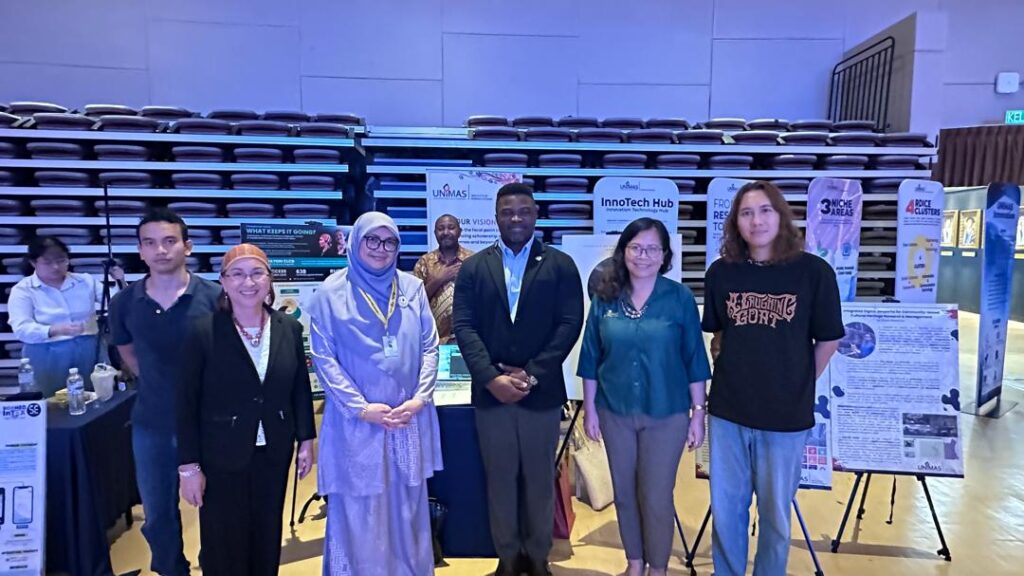
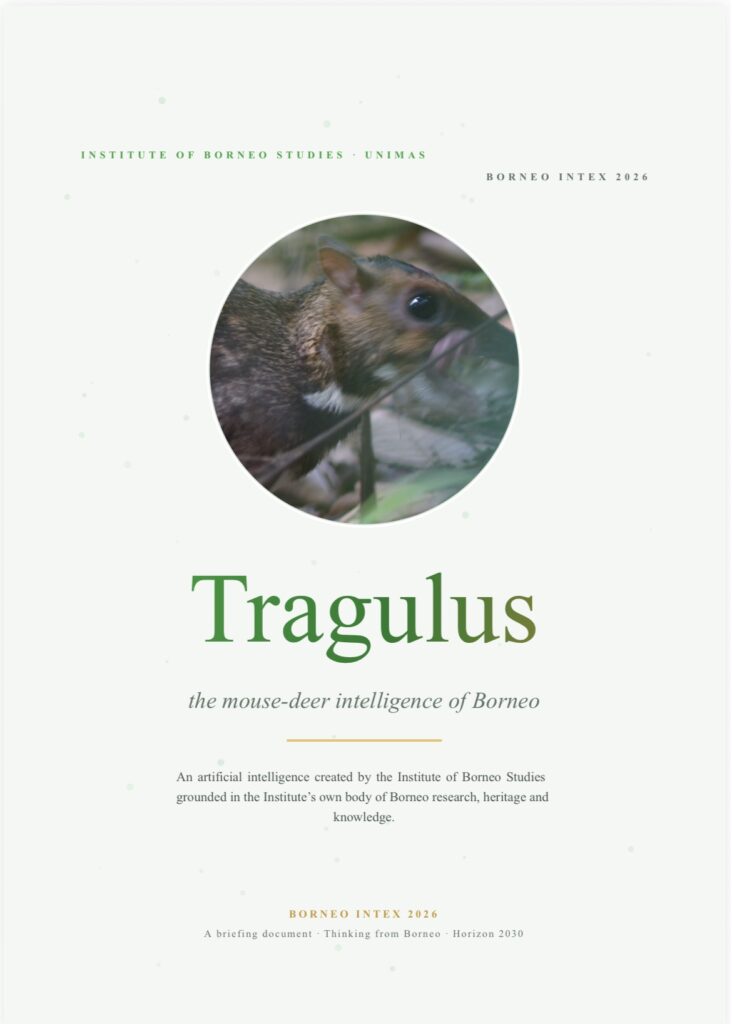
KOTA SAMARAHAN, 15 October 2026 – The Institute of Borneo Studies (IBS), Universiti Malaysia Sarawak (UNIMAS), introduced an innovative artificial intelligence (AI) application known as Tragulus: The Mouse-Deer Intelligence of Borneo during the Borneo International Technology Exposition Special Edition 2026 (Borneo InTEX26 SE), held from 14 to 15 October 2026 at Arena Gemilang, DeTAR PUTRA, UNIMAS.
The introduction of Tragulus represents a significant step forward in IBS’s efforts to strengthen the digitalisation, preservation, and dissemination of knowledge about Borneo through artificial intelligence technology. This initiative reflects UNIMAS’s commitment to connecting academic research, technological innovation, and communities, in line with the exposition’s theme, Connecting Research, Innovation and Industry for Impact.
Tragulus was created by Michael King, who developed the artificial intelligence platform based on the extensive collection of research, heritage, and knowledge resources associated with Borneo at the Institute of Borneo Studies, UNIMAS. The development of this innovation was guided by Prof. Dr. Poline Bala, Director of the Institute of Borneo Studies, who served as the Project Advisor, while Dr. Nwanesi Peter Karubi played a key role as the Project Monitor and Coordinator, overseeing and coordinating the development process to ensure its alignment with the Institute’s research objectives and institutional aspirations.
This collaboration highlights the importance of integrating technological expertise, academic leadership, and research coordination in developing digital innovations that serve not merely as artificial intelligence applications, but also as platforms for preserving and sharing Borneo’s rich knowledge heritage with a wider audience.
Tragulus is a conversational artificial intelligence platform developed using a curated body of research, cultural heritage, and knowledge about Borneo accumulated by IBS. Unlike conventional search engines and general-purpose AI chatbots, Tragulus is designed to generate responses grounded in the Institute’s curated and verified knowledge resources.
One of its key features is its bilingual conversational capability, allowing users to interact in both English and Bahasa Malaysia through text-based or voice-based queries. This approach enables users to explore information about Borneo in an accessible, interactive, and user-friendly manner without requiring advanced technical knowledge.
The name Tragulus carries a distinctive cultural and scientific significance. It refers to the scientific genus of the mouse-deer, commonly known as the pelanduk or kancil, an animal traditionally associated with wisdom, intelligence, and resourcefulness in Bornean and Malay folklore. This symbolism brings together cultural heritage and scientific knowledge, reflecting IBS’s aspiration to develop modern technology firmly rooted in local identity and intellectual traditions.
The development of Tragulus also addresses longstanding challenges in accessing Borneo’s extensive knowledge resources, which are often scattered across academic publications, archives, heritage collections, and research records. Many of these resources remain difficult for the general public to access, particularly when information is available only in specialised formats or languages. Through Tragulus, these knowledge resources can be explored through a unified conversational platform that makes scholarly information more accessible and understandable.
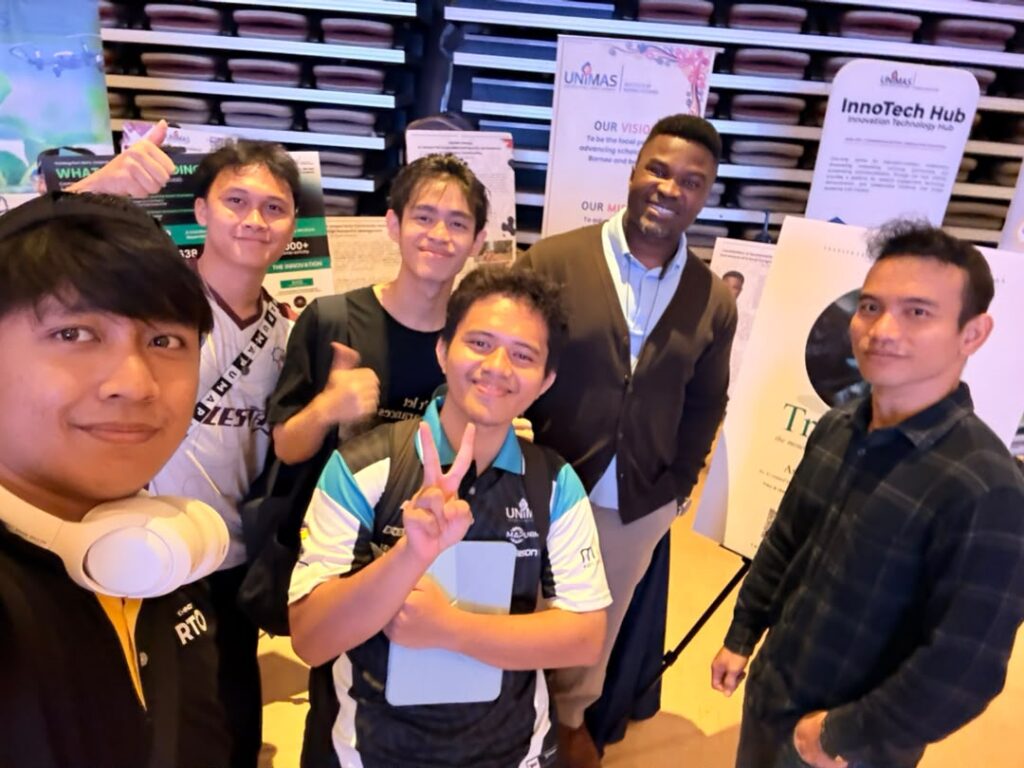
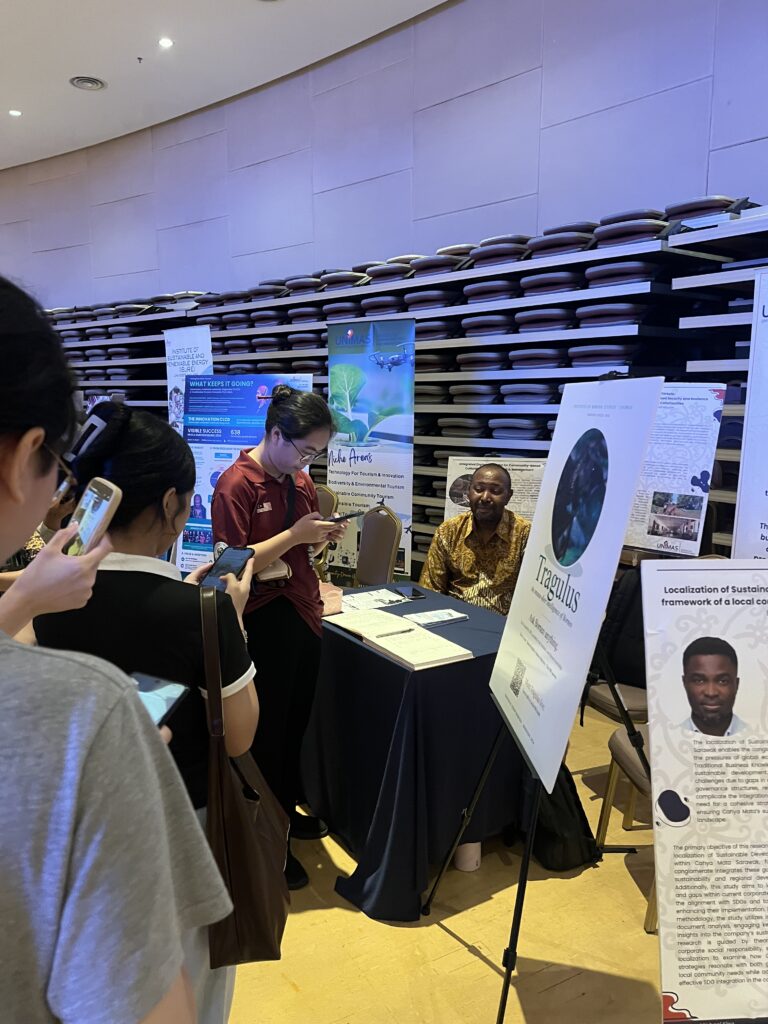
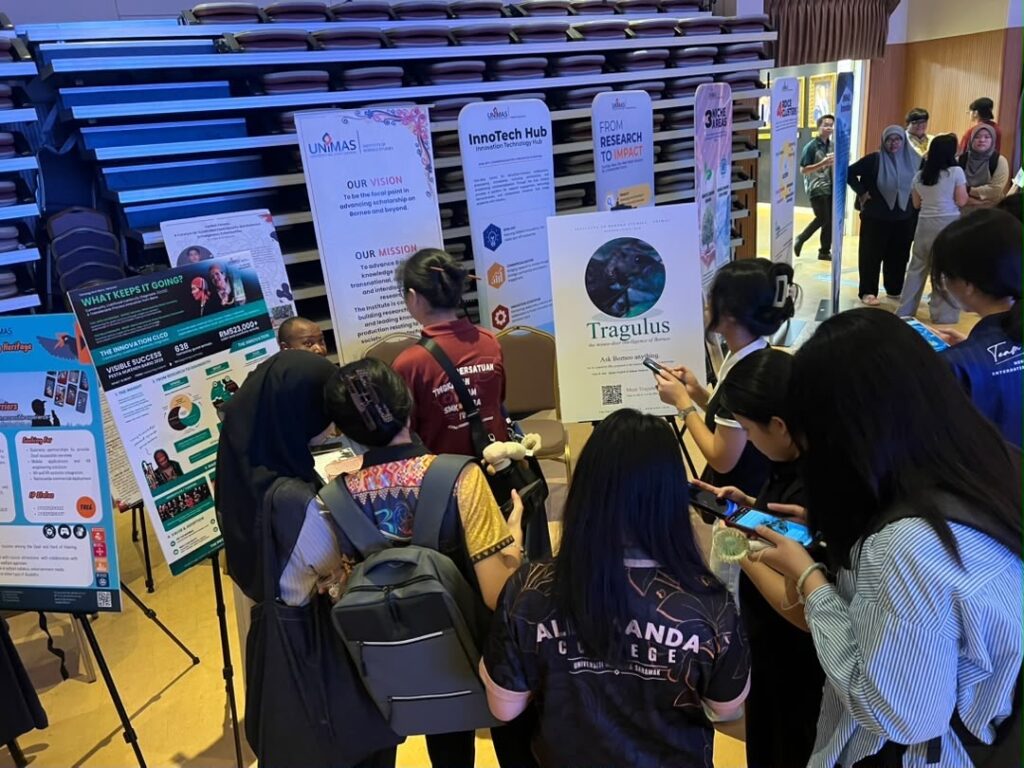
During Borneo InTEX26 SE, the IBS exhibition booth introduced Tragulus to visitors, including university staff, researchers, students, and members of the public. Visitors had the opportunity to explore the application, ask questions about Borneo, and experience demonstrations of how artificial intelligence can be used to communicate knowledge derived from local research and institutional resources.
In addition to showcasing Tragulus, the IBS exhibition booth highlighted the Institute’s research activities, publications, and knowledge-transfer initiatives. The exhibition provided opportunities for meaningful engagement between researchers and visitors while strengthening public awareness of IBS’s role as a research institution that integrates academic scholarship, cultural heritage, and digital innovation.
From an educational and research perspective, Tragulus has the potential to serve as an interactive learning companion for students, an initial reference platform for researchers, and an accessible knowledge-sharing medium for local communities. The application may also support tourism and heritage preservation by providing interactive information on Borneo’s history, culture, communities, and regional identity.
The development of Tragulus also emphasises responsible knowledge governance, with IBS maintaining institutional control over the data sources and knowledge content used by the platform. This principle is particularly important in ensuring that the application of artificial intelligence respects information accuracy, research integrity, and the value of locally grounded knowledge.
The Tragulus initiative continues IBS’s longstanding tradition of community-oriented technological innovation, including UNIMAS previous involvement in the award-winning eBario initiative, which helped connect communities in the remote Kelabit Highlands through digital technology. Through Tragulus, IBS is extending this commitment to knowledge accessibility into a new era shaped by advancements in artificial intelligence.
More than simply a digital application, Tragulus represents IBS’s effort to transform academic research outputs into accessible knowledge resources that can benefit a broader audience. This initiative aligns closely with the Institute’s philosophy of Thinking from Borneo, which emphasises recognising Borneo not merely as a geographical location for research, but also as a source of intellectual perspectives, innovative ideas, and scholarly contributions with wider global relevance.
Overall, the introduction of Tragulus during Borneo InTEX26 SE 2026 demonstrates the potential of integrating the humanities, cultural heritage, and artificial intelligence to strengthen knowledge preservation and dissemination. Through its research-driven, inclusive, and community-oriented approach, Tragulus is expected to develop into a valuable digital innovation platform that brings Borneo’s knowledge heritage closer to present and future generations.
“Thinking from Borneo, Connecting Knowledge Through Artificial Intelligence.”