The Faculty of Engineering, Universiti Malaysia Sarawak (UNIMAS), recently welcomed 18 students and one liaison officer from Jiangsu Normal University Kewen College, China, for an academic mobility programme held from 18 to 27 January 2026.
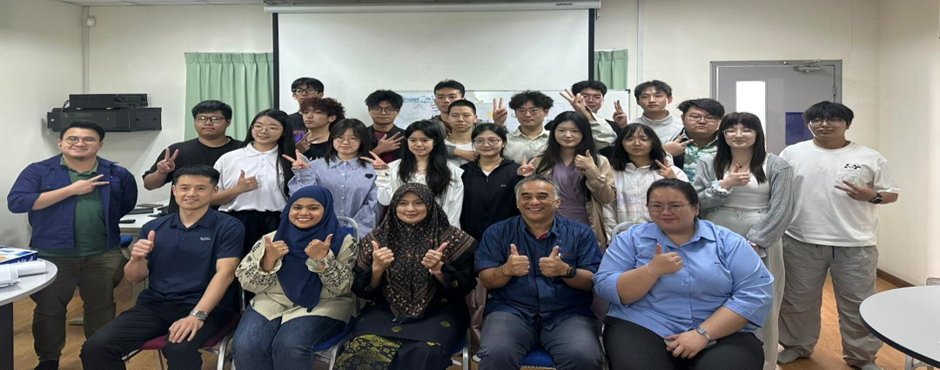
As part of the programme, the Climate Change and Engineering Solutions Module was conducted on 22 January 2026 from 9.30 a.m. to 1.00 p.m. The module was coordinated by the UNIMAS Water Centre and aimed to introduce participants to the critical role of engineering in addressing climate change challenges.
The session focused on practical, nature-based, and innovative engineering approaches across multiple disciplines. Through a combination of short lectures, case studies, and a hands-on design challenge, students were exposed to real-world climate issues and encouraged to apply engineering thinking in developing feasible solutions. Emphasis was placed on multidisciplinary collaboration, local context, and sustainable engineering interventions.
Held at Tutorial Room 5, Level 1, Faculty of Engineering, the programme began with an introductory session on climate change, highlighting its impacts on water resources, temperature patterns, energy systems, and related environmental challenges. This was followed by a series of thematic slots covering engineering adaptation and mitigation strategies.
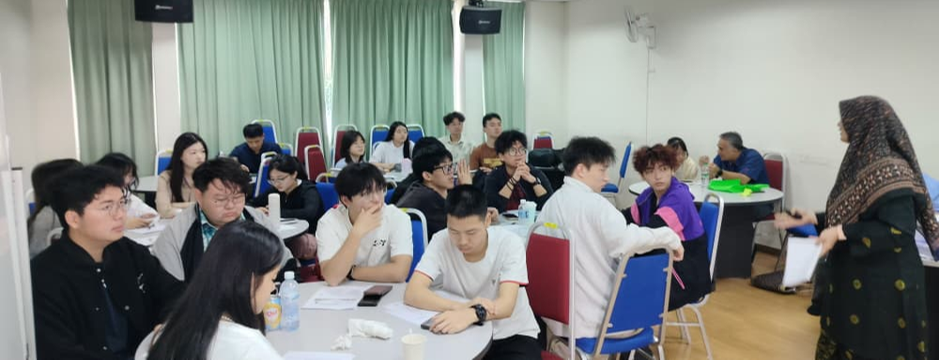
Slot 2 explored civil engineering solutions, with a focus on stormwater management and green infrastructure. Slot 3 examined climate-responsive mechanical engineering design, while Slot 4 addressed electrical and electronic engineering applications in climate solutions. Slot 5 concluded the lecture series with chemical engineering perspectives related to climate change concerns.
Following the lectures, students participated in a group-based design activity, where they were divided into four multidisciplinary teams consisting of four to five members each. The participants came from diverse academic backgrounds, including Electrical Engineering, Telecommunication, Management, Economics, and Software Engineering.
Each group acted as a strategic engineering consultancy tasked with proposing solutions to climate-related problems under four designated themes consisted of Urban Stormwater Management – addressing urban flash flooding through sustainable drainage concepts; Renewable Energy Infrastructure – improving micro-hydro system designs for remote villages; Green Mobility – implementing biodiesel (B20) fuelling stations for city bus networks and Solar Harvest – planning a large-scale solar (LSS) farm to replace coal-powered energy generation.
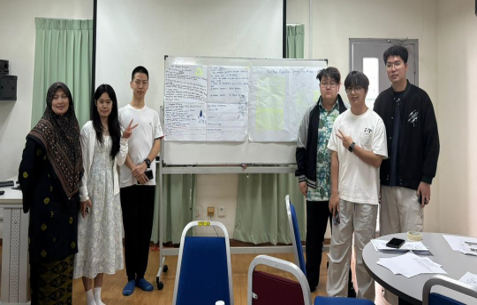
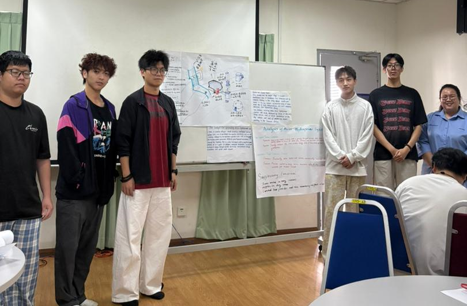
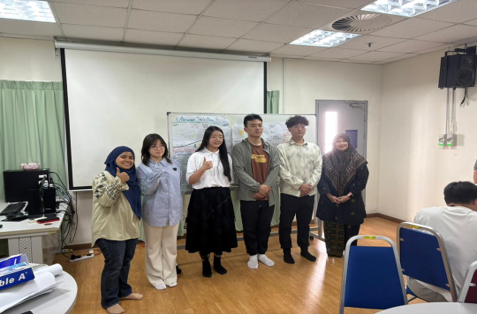
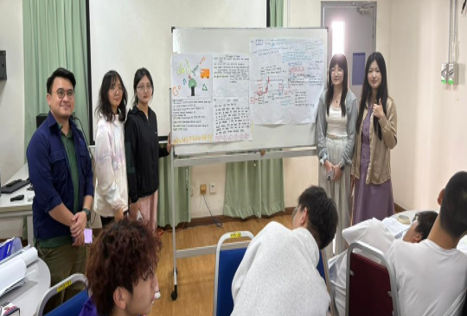
The students demonstrated strong engagement throughout the problem-solving process, which was evident during their final presentations. Each team presented a comprehensive roadmap that addressed technical feasibility, environmental impacts, and social considerations. The proposed solutions, ranging from urban flood mitigation and renewable energy systems to green mobility initiatives and large-scale solar transitions, reflected not only sound engineering principles but also a strong awareness of climate resilience and sustainability. The module successfully fostered cross-disciplinary collaboration while reinforcing the importance of engineering innovation in building a greener and more climate-resilient future.
Prepared by: Ir Dr Norazlina binti Bateni & Dr Ron Aldrino Chan