Written by Dr Cynthia Kon Mui Lian
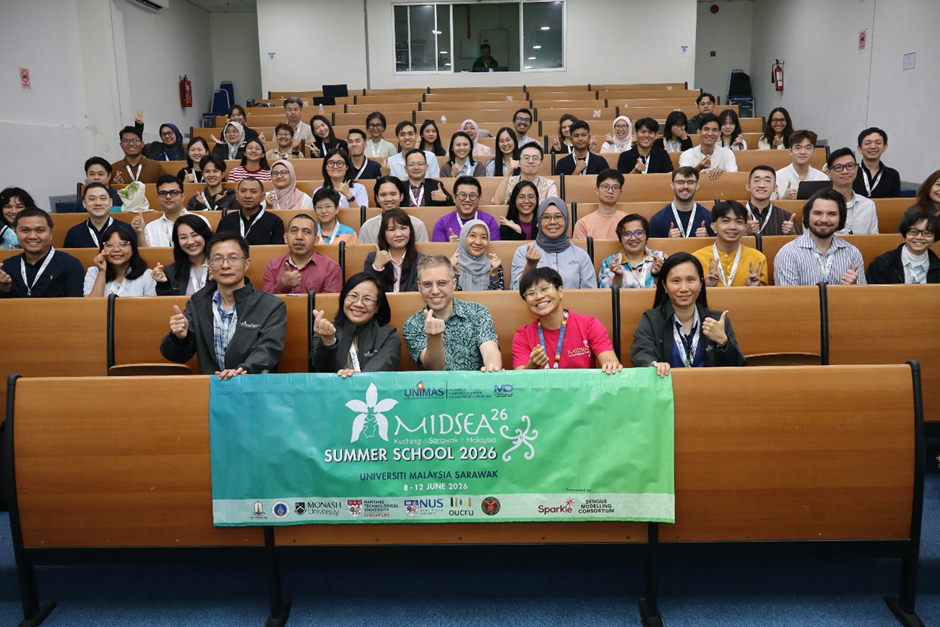
KOTA SAMARAHAN, 12 June 2026 – The Faculty of Computer Science and Information Technology (FCSIT), Universiti Malaysia Sarawak (UNIMAS), successfully hosted the prestigious MIDSEA Summer School 2026 from 8 to 12 June 2026, reinforcing its position as a regional leader in infectious disease modelling research and capacity building.
Building on UNIMAS’s long-standing tradition of organizing the Disease Modeling Workshop (DMo) since 2014, the five-day international summer school brought together emerging and experienced researchers in Applied Mathematics, Computer Science, and Public Health from across Southeast Asia.
Organised in collaboration with the Modelling Infectious Diseases in South East Asia (MIDSEA) Network, the programme served as a dynamic platform for knowledge exchange, technical training, and cross-disciplinary collaboration to strengthen infectious disease modelling capabilities across the region.
The event was officially launched at the Multimedia Theatre, FCSIT, where Advisor of MIDSEA Summer School 2026, Professor Dr Jane Labadin, welcomed participants from around the world to Sarawak.
She highlighted the importance of bringing together leading experts and young researchers, expressing confidence that the intensive discussions and collaborative research groups formed during the programme would lead to impactful regional partnerships.
Founder of the MIDSEA Network, Professor Dr Alex R. Cook, underscored the network’s commitment to advancing infectious disease modelling through regional collaboration.
Now in its third edition following successful programmes in Viet Nam (2024) and Indonesia (2025), MIDSEA Summer School 2026 featured an internationally renowned teaching faculty from institutions including the National University of Singapore (NUS), Mahidol University, Mahasarakham University, Nanyang Technological University, the University of the Philippines Mindanao, Oxford University Clinical Research Unit (OUCRU), Monash University, and UNIMAS.
Participants benefited from a comprehensive curriculum designed for both beginners and advanced researchers.
Parallel learning tracks covered fundamental disease modelling and simulation, epidemiological inference, and modelling heterogeneities, complemented by specialised plenary workshops delivered by distinguished international experts.
The programme equipped participants with practical computational skills and advanced analytical techniques for addressing real-world public health challenges.
Beyond the academic sessions, participants enjoyed an educational visit to the Semenggoh Wildlife Centre, where they experienced Sarawak’s rich biodiversity and observed orangutans in their natural habitat.
The excursion, followed by a networking dinner featuring local cuisine, provided valuable opportunities for international delegates, researchers, and students to strengthen professional relationships and foster future collaborations.
The programme concluded with a research symposium showcasing collaborative group presentations, followed by the official closing ceremony. The successful organisation of MIDSEA Summer School 2026 was made possible through the generous support of the SPARKLE Programme, funded by the Australian Government; the Dengue Modelling Consortium, funded by the Wellcome Trust; the National University of Singapore; the Temasek Foundation; and the dedicated efforts of the FCSIT Local Organising Committee.
Through hosting MIDSEA Summer School 2026, UNIMAS continues to demonstrate its commitment to advancing scientific excellence, nurturing international collaboration, and developing regional expertise in infectious disease modelling.
The event further strengthens FCSIT’s reputation as a leading digital technology institution and an active contributor to addressing public health challenges across Southeast Asia.
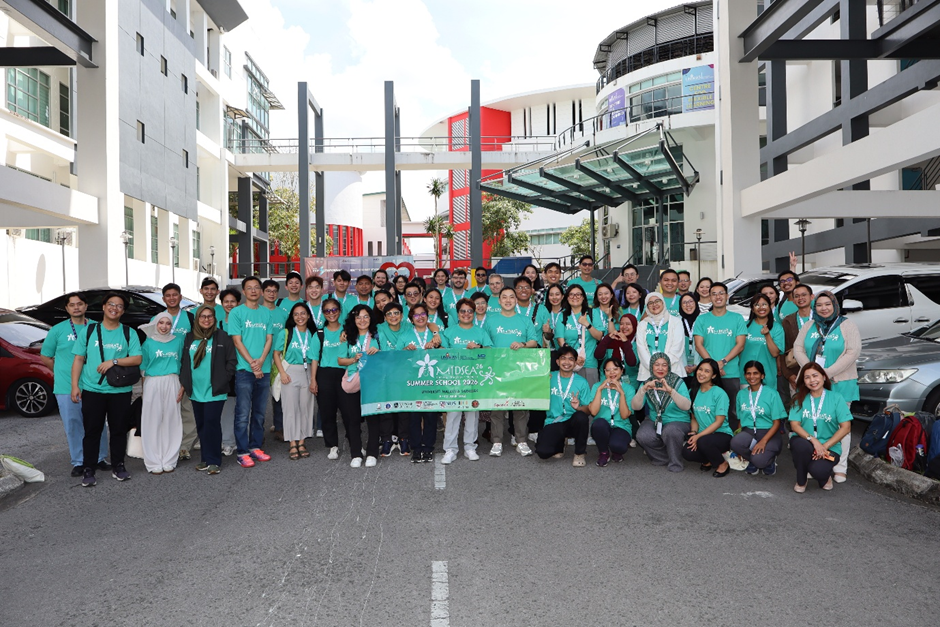
FCSIT is one of the Premier Digital Tech Institutions endorsed by Malaysia Digital Economy Corporation (MDEC)
#mypdti