Workshop charts an institution-wide roadmap for stronger governance, audit-ready evidence, strategic partnerships and measurable sustainability impact.
By University Sustainability Centre (USC), UNIMAS
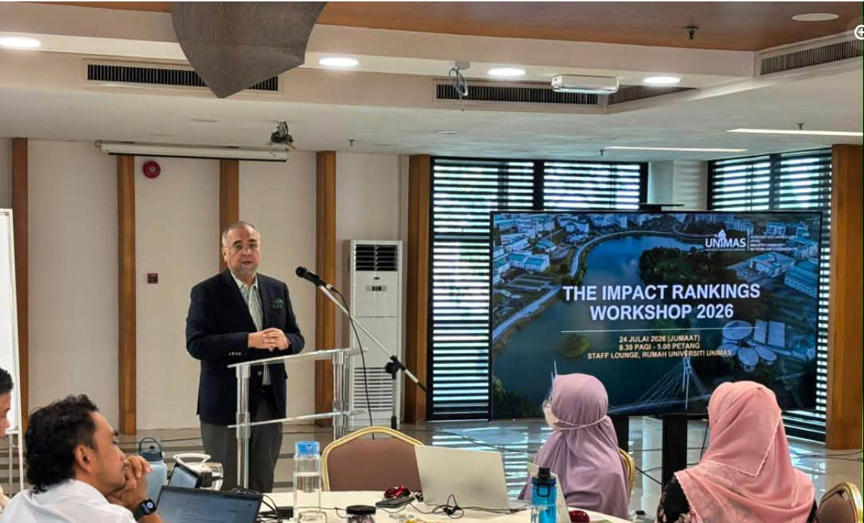
KOTA SAMARAHAN, 24 July 2026 — Universiti Malaysia Sarawak (UNIMAS) reinforced its commitment to sustainability leadership through the Times Higher Education (THE) Sustainability Impact Ratings Workshop 2026, held at the Staff Lounge, Rumah Universiti, UNIMAS. The full-day workshop brought together senior university leaders and key responsibility centres to examine performance gaps, strengthen evidence governance and formulate a coordinated institutional roadmap for future participation in the Times Higher Education Impact Rankings.
Organised by the Office of Assistant Vice-Chancellor (Industry-Community Network and Sustainability) with University Sustainability Centre as the secretariat, the workshop commenced with a welcoming address by YBhg. Dr Abdul Razak Ahmad, Member of the UNIMAS Board of Directors and Chairman of the UNIMAS University Sustainability Committee.
Associate Professor Ts. Noraziah Abdul Wahab, Assistant Vice-Chancellor (Industry-Community Network and Sustainability), subsequently presented an analysis of UNIMAS’ performance. The session established the evidence base for identifying institutional improvements needed to strengthen sustainability impact, data quality and global visibility. A key outcome was the recognition that participation in the Ratings must be supported by an explicit institutional mandate, coordinated governance, sufficient resources and shared accountability across all Pusat Tanggungjawab (PTj). Participants observed that UNIMAS has substantial achievements in research, education, community engagement, biodiversity conservation, climate action and partnerships, yet some were not fully reflected because the supporting evidence was fragmented, inconsistently documented or inaccessible
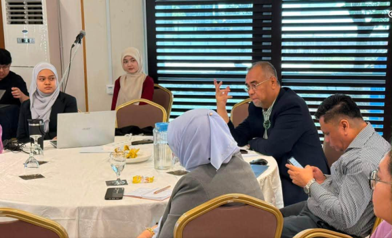
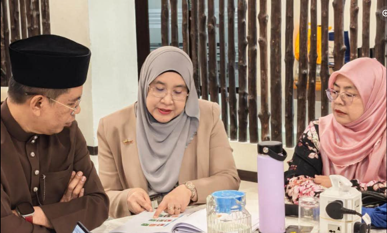
During the workshop, a focus group discussion session, titled “Shaping the Way Forward for THE Sustainability Impact Ratings was moderated by USC. Participants were organised into three strategic groups covering Leadership, Operations and Partnerships, and Impact and Evidence. Each group examined root causes and proposed action-oriented solutions.
The workshop proposed concentrating institutional effort on SDG 4 (Quality Education), SDG 13 (Climate Action) and SDG 15 (Life on Land), while strengthening SDG 17 (Partnerships for the Goals) as a cross-cutting enabler. SDG 15 consistently emerged as a strategic area because of UNIMAS’ expertise in biodiversity, tropical ecosystems and environmental research.
Participants called for stronger integration of the SDGs into research publications, grants, postgraduate activities, course documentation and community programmes. Researchers were encouraged to use relevant sustainability and SDG keywords and to clearly explain the contribution of their work to sustainable development.
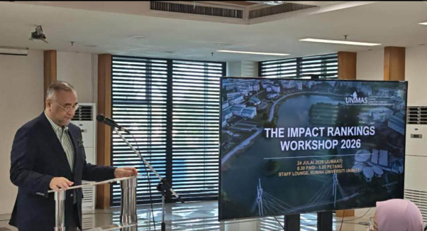
In her workshop summary, Associate Professor Ts. Noraziah Abdul Wahab emphasized the importance of institution-wide coordination. The outcomes will inform a structured action roadmap towards THE Impact Ratings 2027 and advance UNIMAS’ aspiration to be a “Community-Driven University for a Sustainable World”.
Suggested keywords
THE Impact Ratings 2026; THE Impact Ratings 2027; sustainability impact; Sustainable Development Goals; SDG 4; SDG 13; SDG 15; SDG 17; quality education; climate action; biodiversity conservation; strategic partnerships; sustainability governance; sustainability data; evidence management; institutional impact; community engagement; low-carbon campus; University Sustainability Centre UNIMAS.