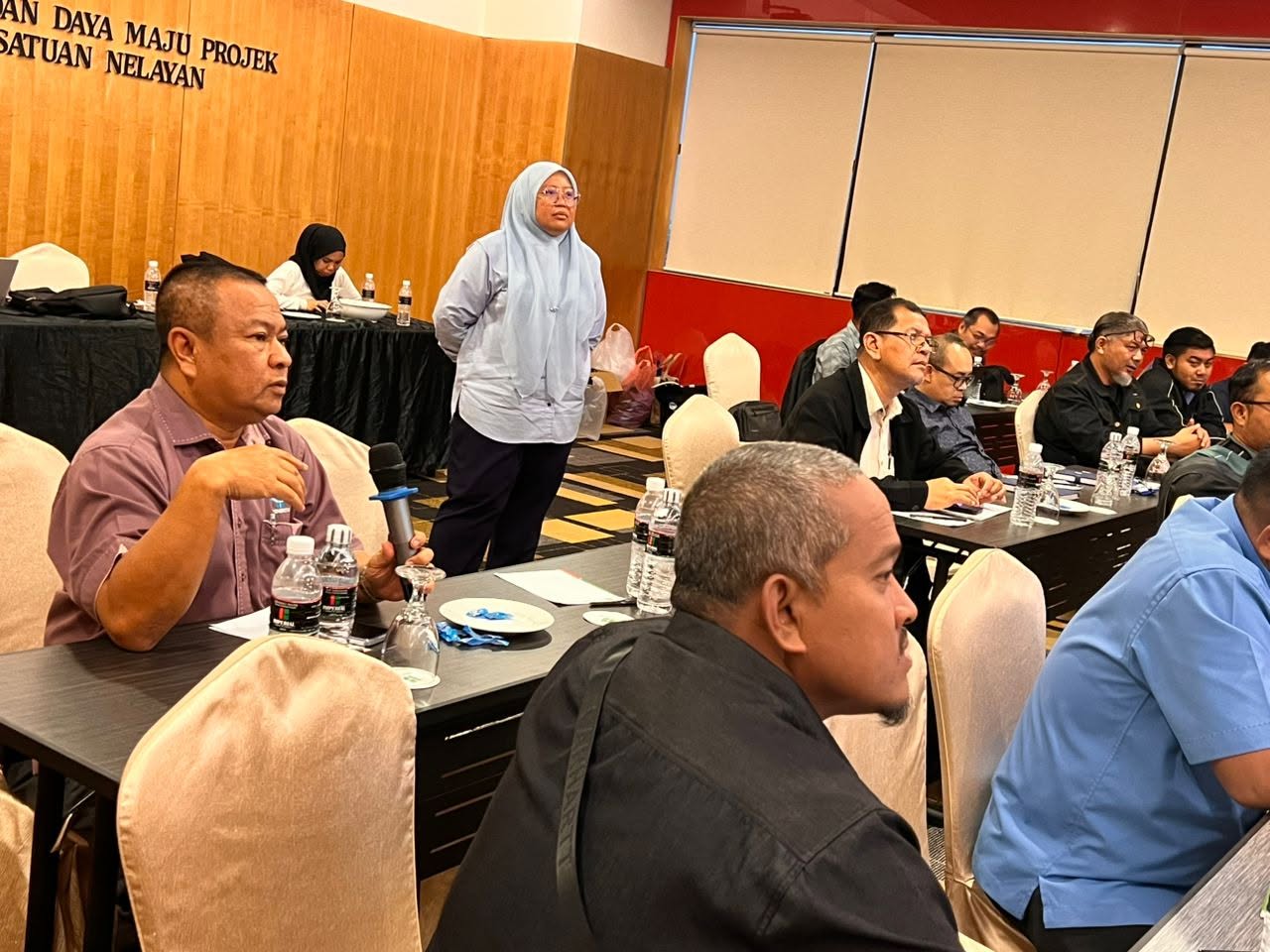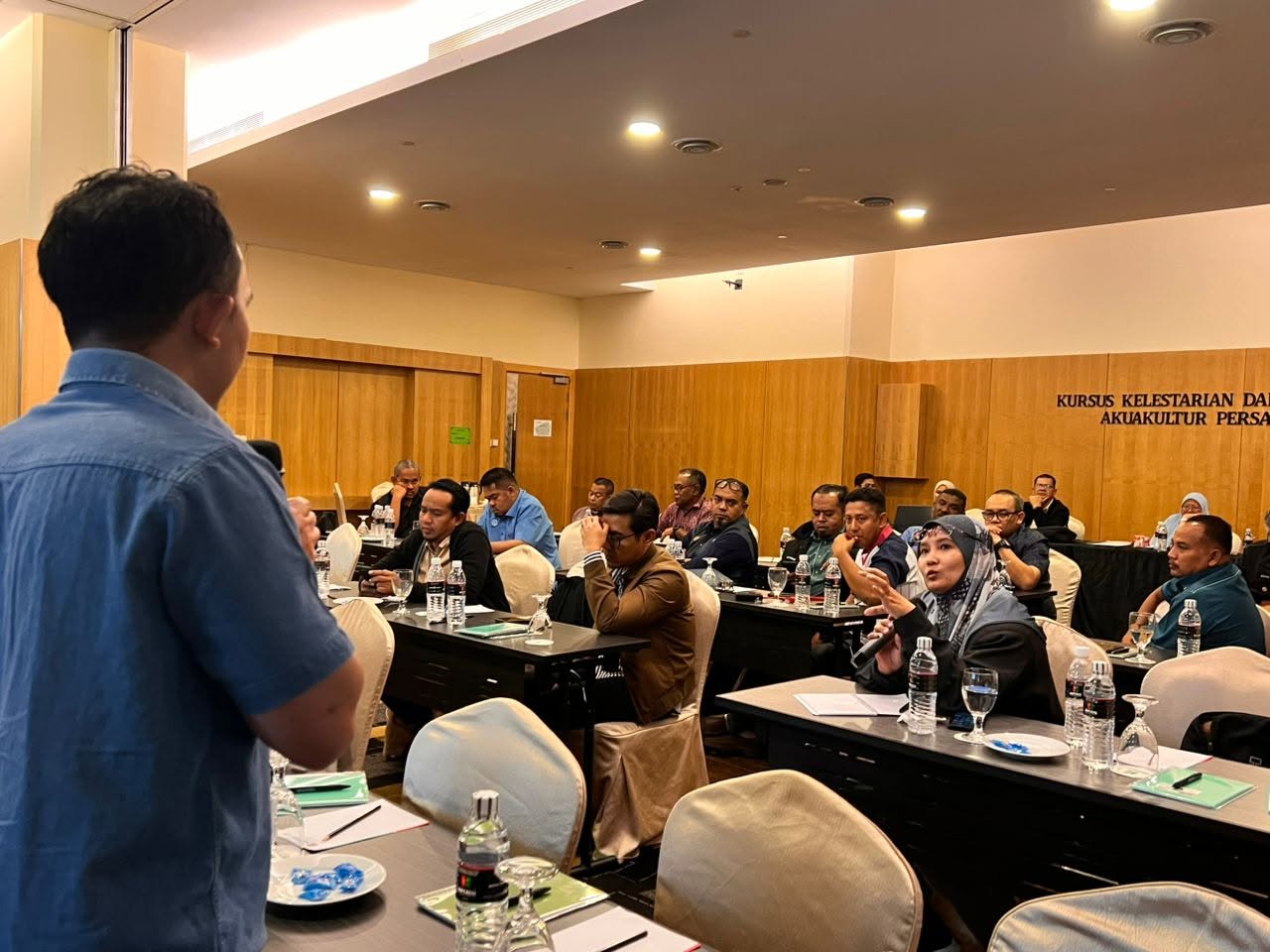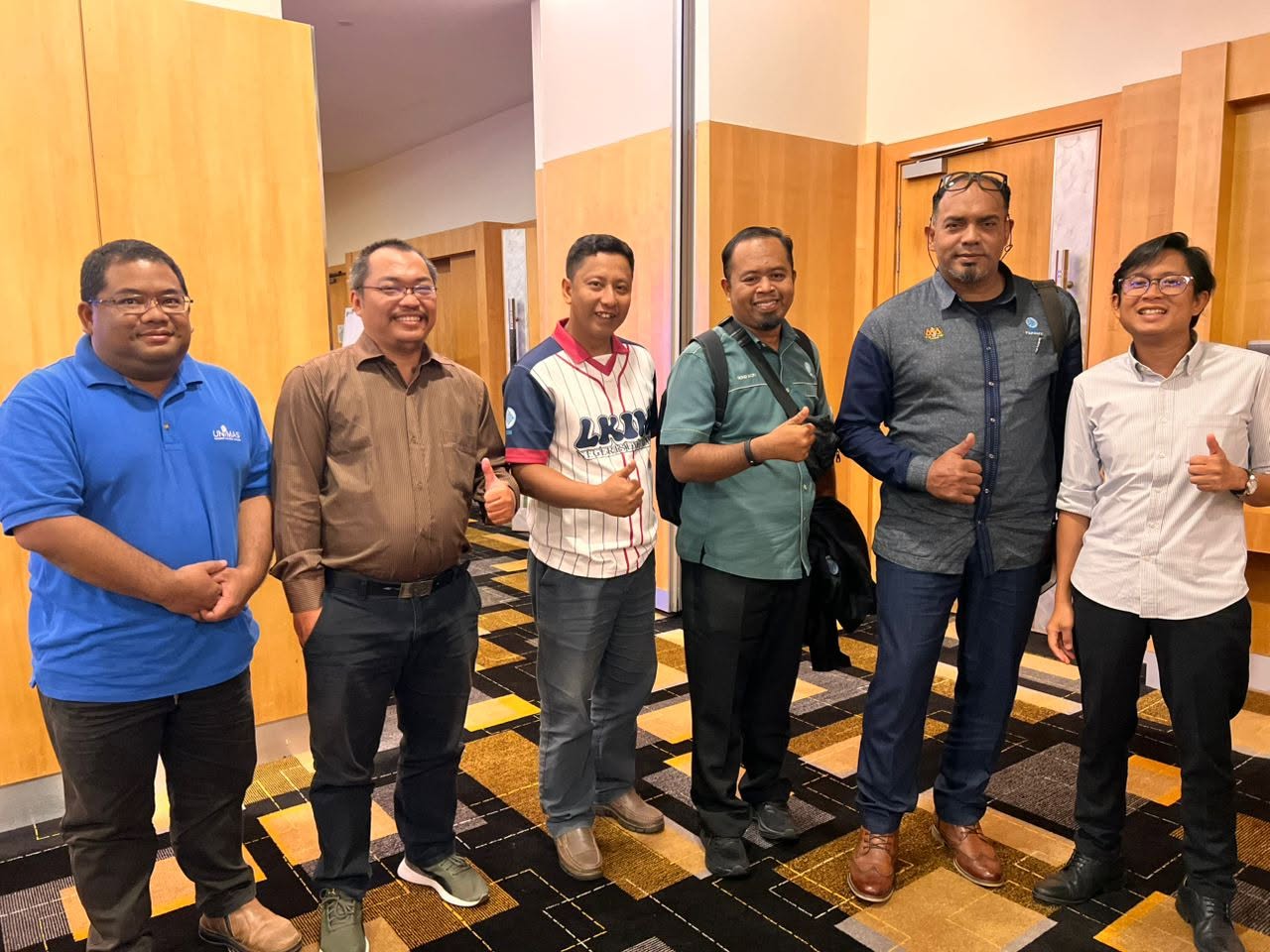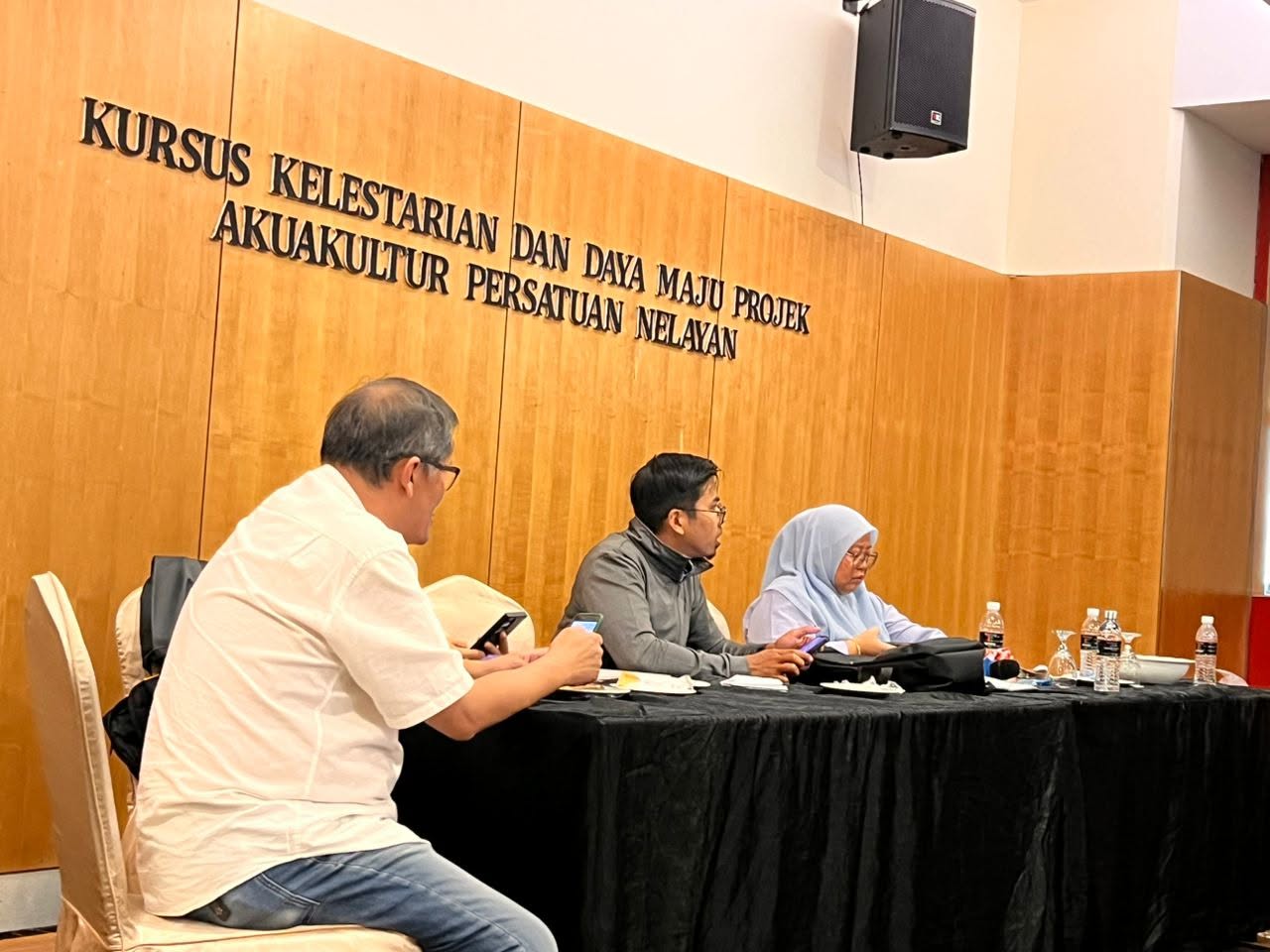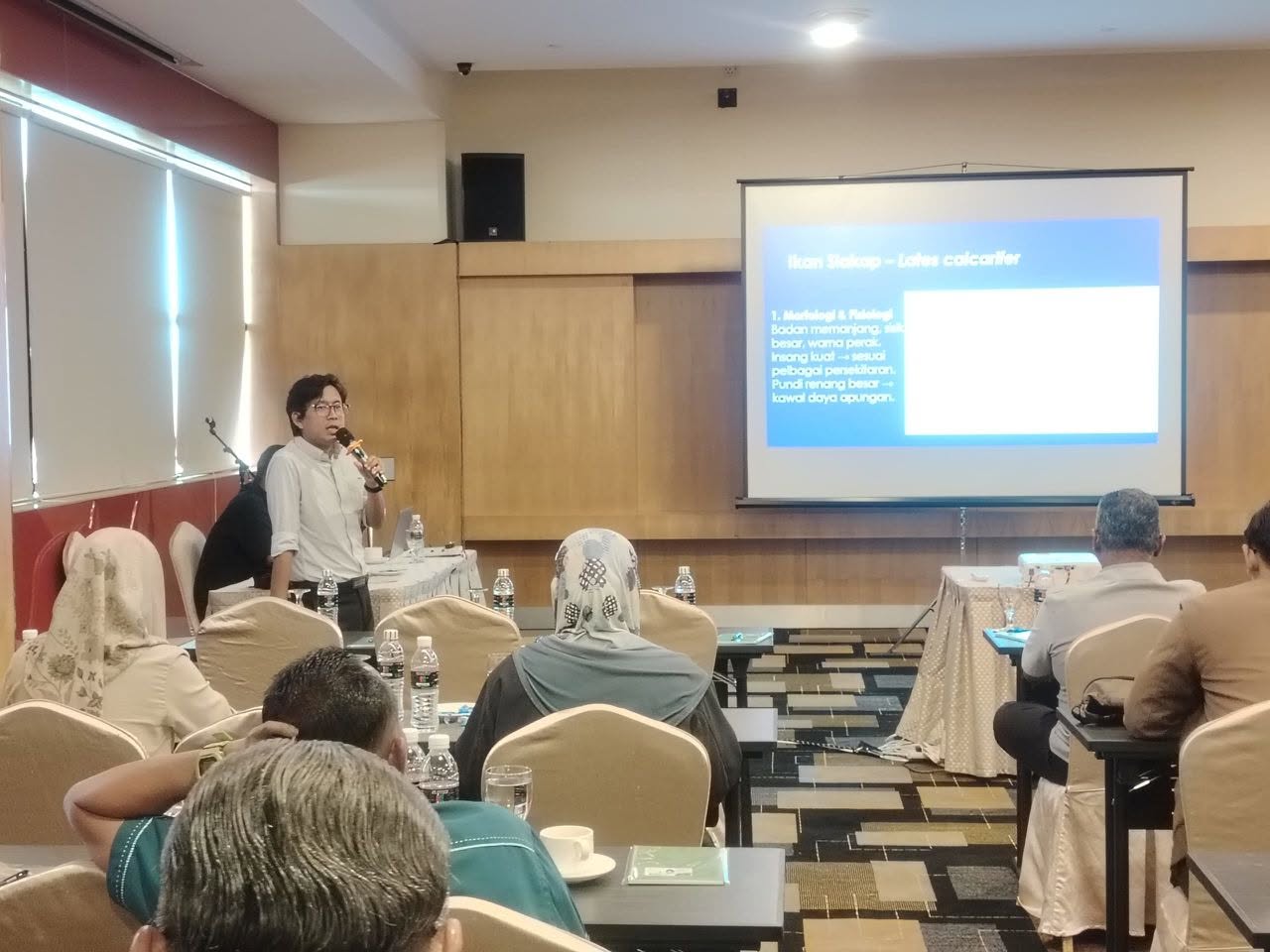
KUCHING, 24 November 2025 – Academic experts from the Faculty of Resource Science and Technology (FRST), Universiti Malaysia Sarawak (UNIMAS), delivered a series of technical sessions at the Kursus Kelestarian & Daya Maju Projek Akuakultur Persatuan Nelayan, organised by the Lembaga Kemajuan Ikan Malaysia (LKIM) Sarawak, bringing together managers of Fishermen Associations (PNK) from across Malaysia to enhance sustainable aquaculture practices.
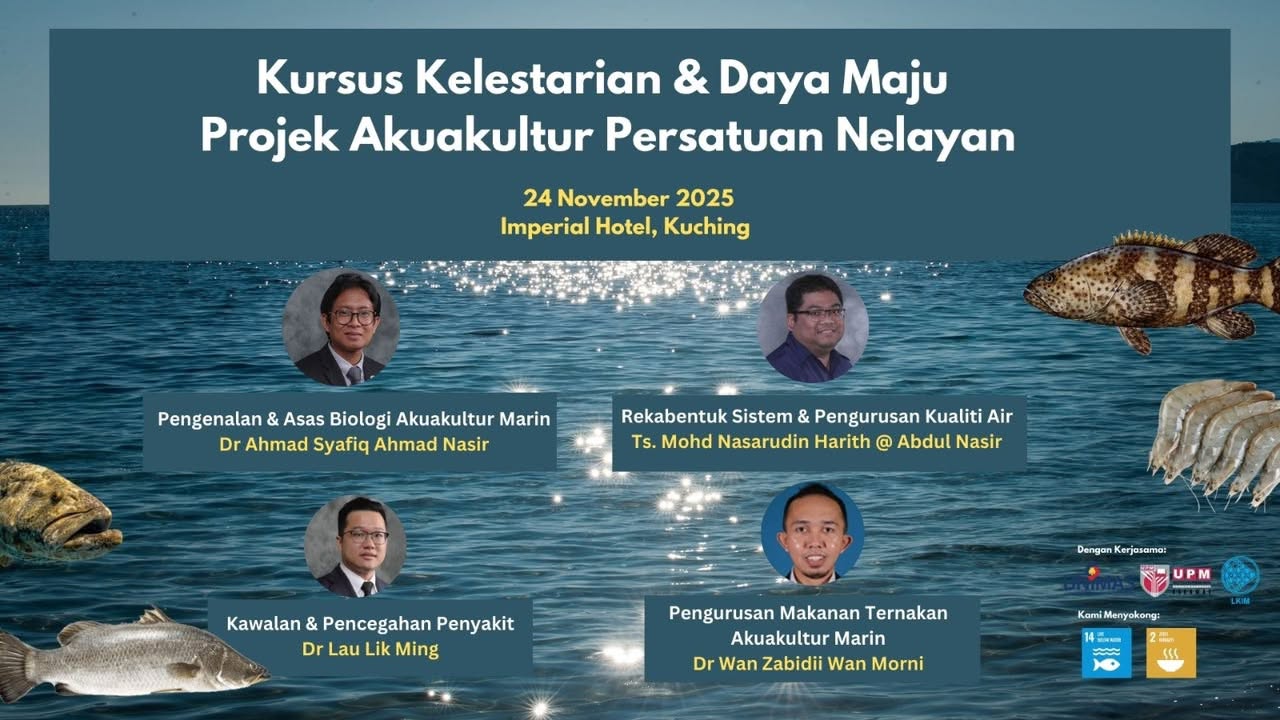
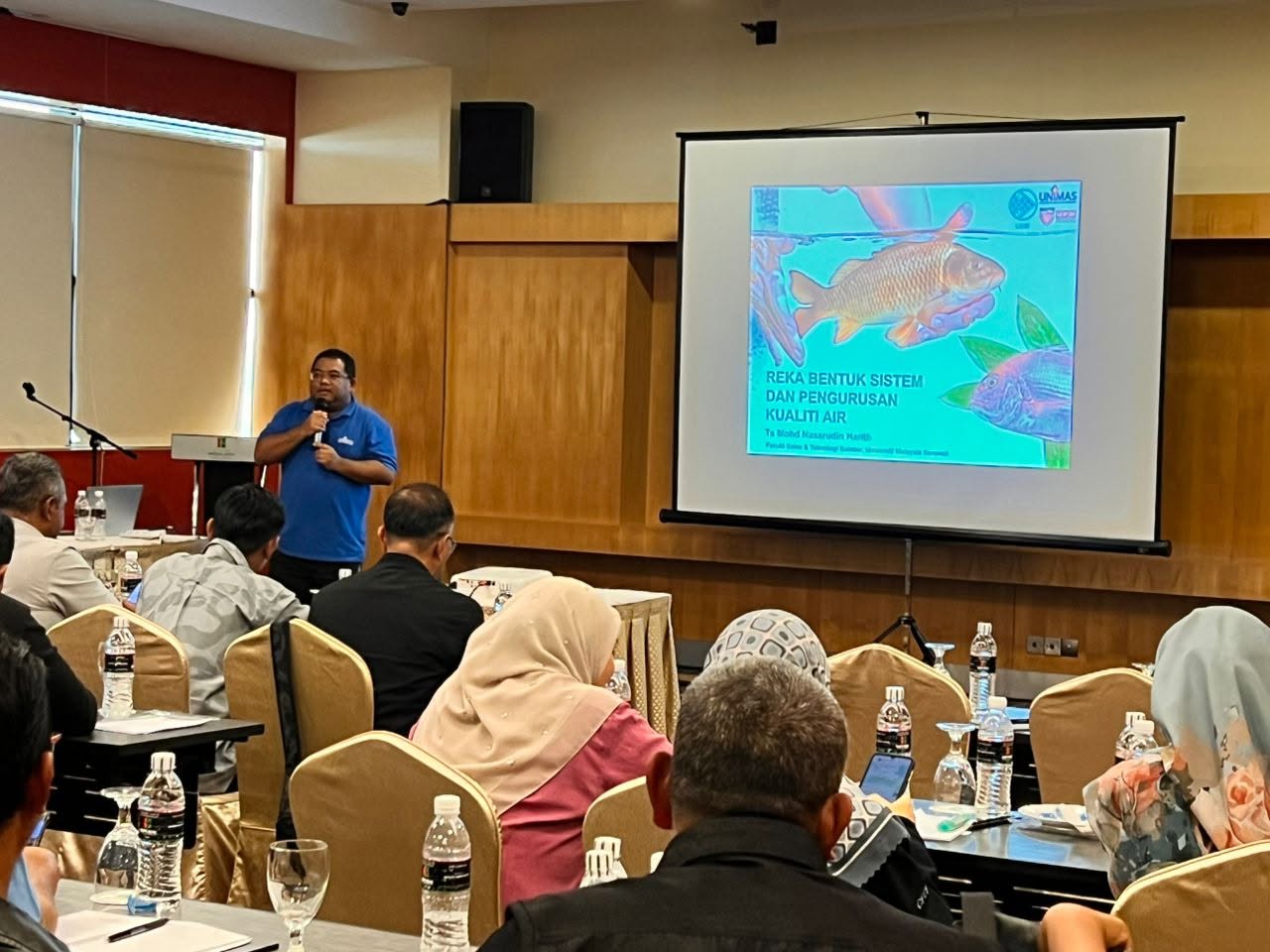
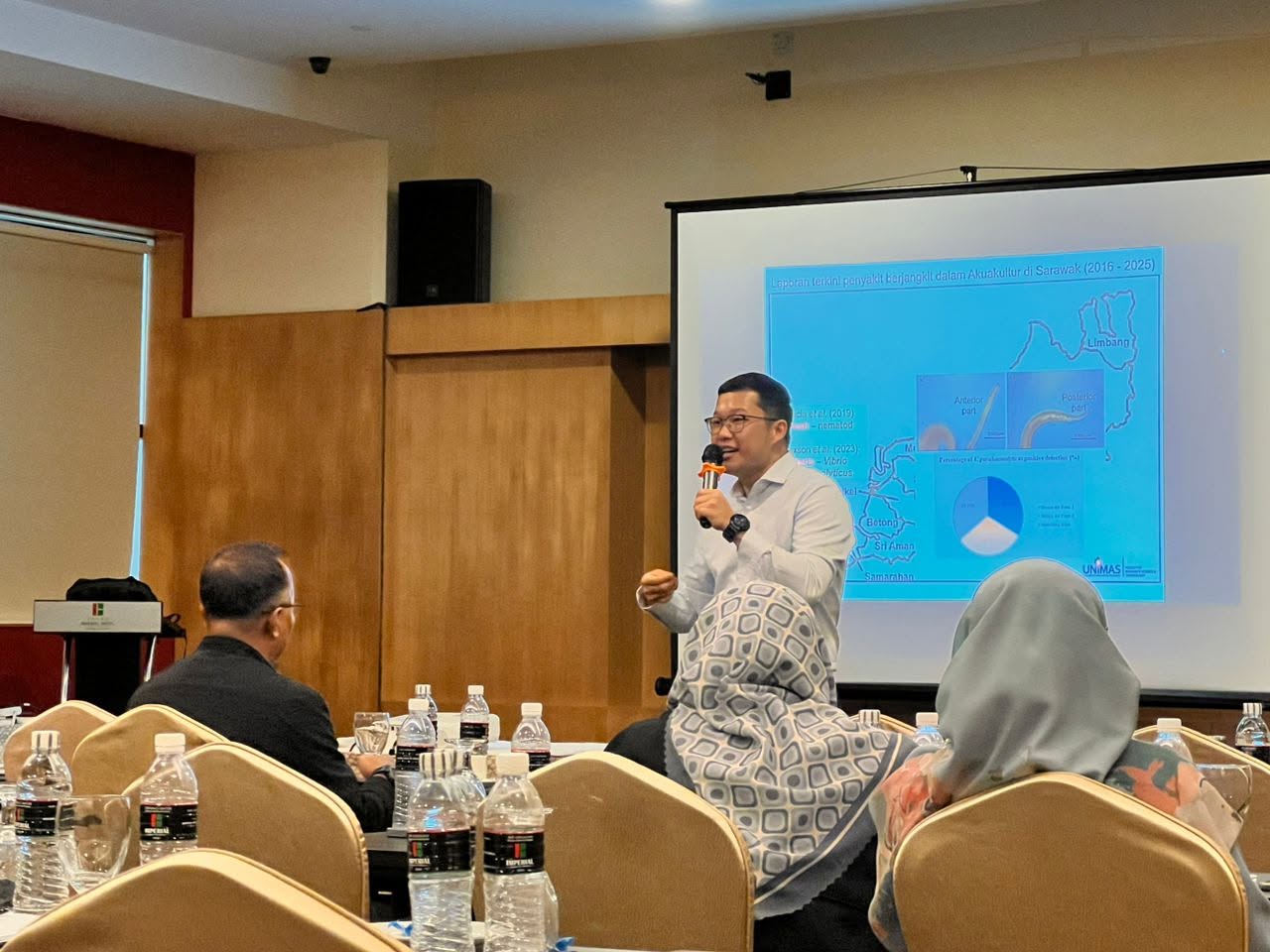
Leading the FRST UNIMAS delegation, Dr. Ahmad Syafiq Ahmad Nasir, Deputy Director (Community Transformation), University Sustainability Centre (USC) delivered a lecture on “Pengenalan & Asas Biologi Akuakultur Marin.” He was joined by fellow FRST experts, including Ts. Mohd Nasarudin Harith @ Abdul Nasir, who shared his expertise on “Rekabentuk Sistem & Pengurusan Kualiti Air,” and Dr. Lau Lik Ming, who presented on aquatic disease prevention and control. The workshop also featured Dr. Wan Zabidii Wan Morni from UPM Sarawak, who delivered a session on aquaculture feed management.
The workshop highlighted Sarawak’s strategic advantages for marine aquaculture, underpinned by its extensive coastline of over 1,000 kilometres, rich aquatic biodiversity, productive estuarine ecosystems and vast mangrove forests. These natural assets position the state as one of Malaysia’s most promising regions for developing a resilient and sustainable aquaculture industry that supports the Blue Economy, enhances rural livelihoods and contributes to national food security. Participants were also encouraged to recognise that the future of aquaculture extends beyond increasing production, requiring the integration of innovative technologies, responsible resource management, ecosystem conservation and community-driven solutions. At the same time, emphasis was placed on adopting technologies that are practical, affordable and appropriate for rural communities, ensuring that innovation remains inclusive while addressing challenges such as climate change, limited infrastructure and resource constraints.
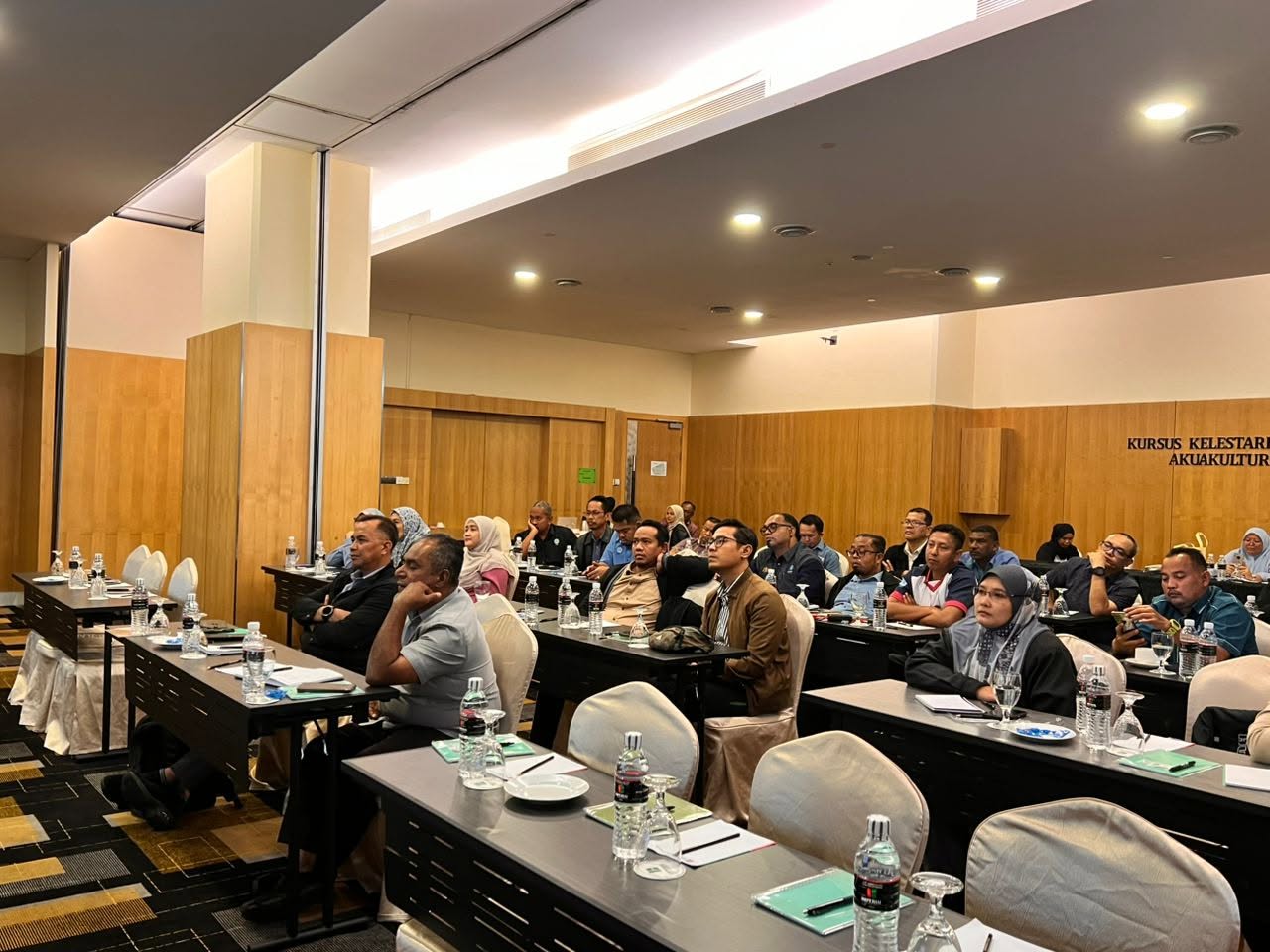
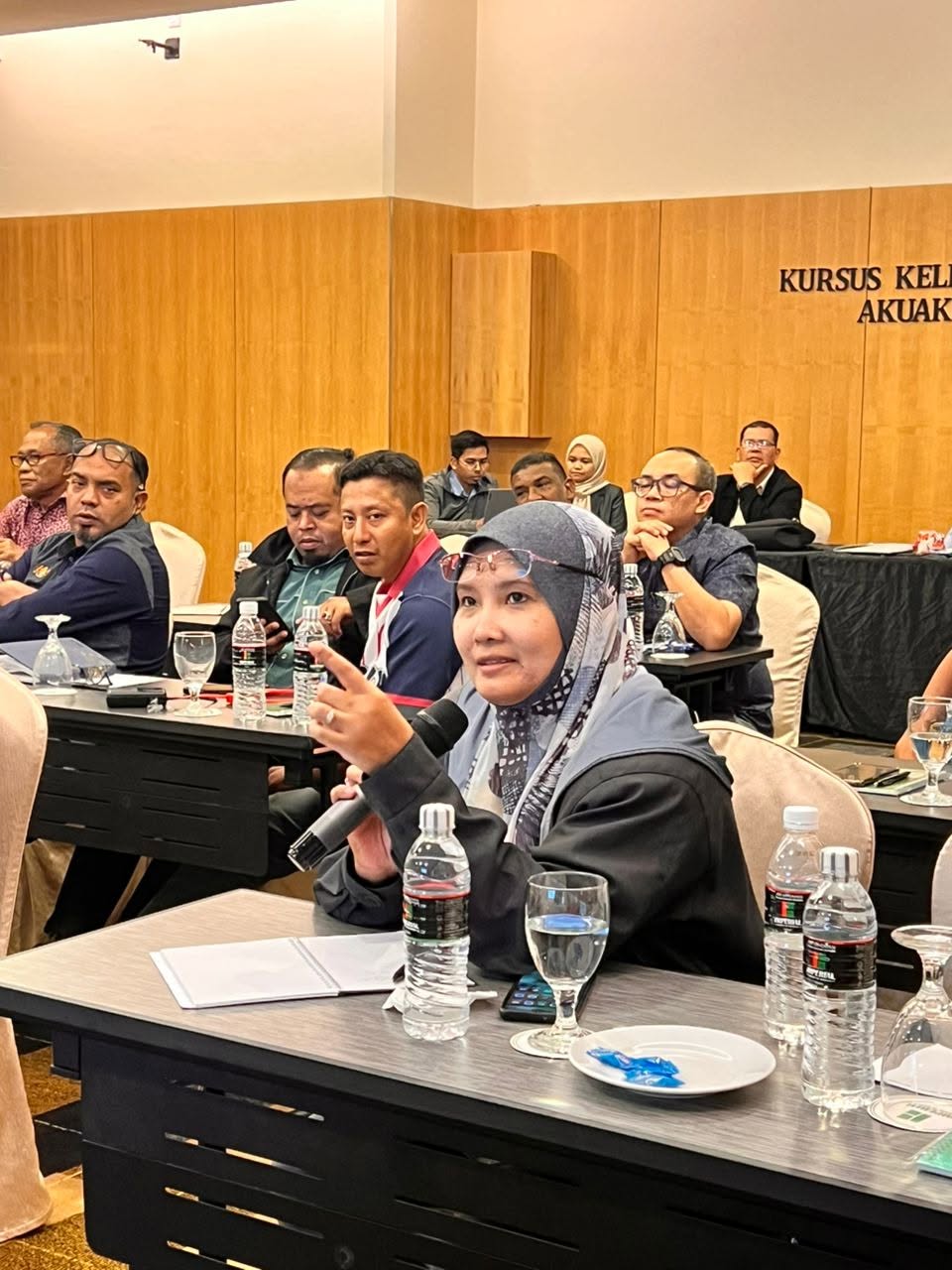
Beyond knowledge sharing, the workshop served as a valuable platform for dialogue between academia, government agencies and industry practitioners. Managers from Fishermen Associations (PNK) across Malaysia shared current challenges, operational experiences and emerging opportunities in developing sustainable aquaculture enterprises. These discussions reinforced the importance of evidence-based decision-making and continuous capacity building to enhance the competitiveness, resilience and long-term sustainability of Malaysia’s aquaculture sector.
The participation of FRST UNIMAS reflects the faculty’s continued commitment to translating scientific research into practical solutions that benefit industry and society. Through expertise in aquatic biology, sustainable aquaculture, fish health, water quality management and community-based participatory research, FRST continues to support the development of a knowledge-based aquaculture sector capable of addressing future environmental and socio-economic challenges.
The workshop also exemplifies Sustainable Development Goal (SDG) 17: Partnerships for the Goals, demonstrating how collaboration between UNIMAS, LKIM, UPM Sarawak and the nationwide network of Fishermen Associations (PNK) can accelerate knowledge exchange, innovation and capacity building. Such strategic partnerships are essential for advancing sustainable aquaculture, strengthening food security, supporting the Blue Economy and building resilient coastal communities in line with Malaysia’s sustainable development agenda.