by Dev Nath Kaushal & Nariman Singmamae
KUCHING, 26 September 2026 – The Clinical Simulation Centre (CSC), Faculty of Medicine and Health Sciences (FMHS), Universiti Malaysia Sarawak (UNIMAS), in collaboration with the Islamic Medical Association of Malaysia (IMAM) and Masjid Darulhana Patingan (MDHP), successfully organised a First Aid, CPR & AED Awareness Programme at Masjid Darulhana Patingan, Kuching.
Held in conjunction with annual Federation of Islamic Medical Associations (FIMA) International Lifesavers Day 2026, the community-based programme brought together 96 participants and provided members of the public and mosque-goers with practical knowledge and hands-on experience in responding to common medical emergencies.
The programme featured a combination of interactive lectures, demonstrations and practical skills stations. The programme covered the principles and practice of cardiopulmonary resuscitation (CPR) and automated external defibrillator (AED) use, recognition and initial management of heart attacks and strokes, choking, wounds and bleeding, as well as fractures.
Turning ordinary people into potential emergency responders
CPR, AED use and basic first aid are not skills reserved for healthcare professionals. Medical emergencies can occur anywhere – at home, in places of worship, at work, in public spaces or while participating in community activities. In such situations, members of the public who are present at the scene are often the first people able to respond before an ambulance or professional medical team arrives.
The programme therefore emphasised the importance of equipping ordinary members of the community with the knowledge, confidence and practical skills to recognise an emergency and take appropriate action.
This message was strongly echoed by Prof. Dr. Asri bin Said, Dean of FMHS, UNIMAS, a cardiologist and Chairman of the Masjid Darulhana Patingan Management Committee. In his opening address, he highlighted the connection between lifesaving skills and the Islamic principle of Hifz al-Nafs, or the protection of life, one of the objectives of Maqasid al-Shariah.
Prof. Dr. Asri emphasised that learning CPR, using an AED and providing basic first aid represents a practical expression of the responsibility to protect human life, prevent harm and assist those in need.
He further reminded participants that when a person collapses unexpectedly, a bystander may be the first person capable of making a difference while waiting for emergency medical services to arrive.
Turning Ordinary People into Potential Emergency Responders
CPR, AED use and basic first aid are not skills reserved for healthcare professionals. Medical emergencies can happen anywhere at home, in places of worship, at work, in public spaces or during community activities. In such situations, ordinary members of the public are often the first people at the scene and may be the first, and sometimes only, individuals able to provide assistance before an ambulance or professional medical team arrives.
The programme therefore focused on empowering members of the community with the knowledge, confidence and practical skills to recognise an emergency, respond appropriately and take timely action to save a life.
This message resonates strongly with the Islamic principle of Hifz al-Nafs, “the protection of life”, one of the five fundamental objectives of Maqasid al-Shariah. It reminds us of our shared responsibility to protect human life, prevent harm and assist those in need.
This connection was strongly highlighted by Prof. Dr. Asri bin Said, Dean of the Faculty of Medicine and Health Sciences (FMHS), UNIMAS, a cardiologist and Chairman of the Masjid Darulhana Patingan Management Committee, in his opening address. He emphasised that learning CPR, using an AED and providing basic first aid is more than acquiring lifesaving skills, it is a practical expression of Hifz al-Nafs, translating the responsibility to protect and preserve human life into meaningful action.
As Prof. Dr. Asri reminded the participants, when someone suddenly collapses, the person standing nearby may be the first to recognise the emergency and the first to act. A few minutes of knowledge, confidence and courage can make the difference between life and death while waiting for professional help to arrive.
From knowledge to hands-on confidence
The programme was designed to move beyond theoretical awareness by providing participants with opportunities to practise essential lifesaving techniques. Following the morning lectures, participants rotated through five practical stations covering adult CPR, infant CPR, AED use, choking management, and splinting and bandaging.
The practical sessions were facilitated by a multidisciplinary team comprising emergency and family physicians, medical and nursing educators, registered nurses and assistant medical officers.
The station-based approach allowed participants to practise skills in smaller groups, encouraging active participation and providing opportunities for direct guidance from instructors. Participants were also provided access to course materials through an online resource folder which included reading and video instructional materials, allowing them to revisit the learning materials after the programme.
Building confidence to respond in an emergency
Prof. Dr. Nariman Singmamae, Deputy Dean (Academic and International), FMHS, UNIMAS and an emergency physician, stressed that the true value of the programme extends beyond completing the training.
“I hope what we learn today will not remain only as a certificate or a training exercise. May it become a skill that we carry with us, and one day, perhaps, a skill that allows us to save someone’s life.”
Her message reflects an important objective of community CPR and first aid education transforming knowledge into the confidence and readiness to act when an emergency occurs.
Similarly, Dr. Zaitul Akmal Binti Abdullah Zawawi, an IMAM Executive Committee member and Family Physician at Klinik Kesihatan Jalan Masjid, Kuching, highlighted the importance of preparedness in overcoming the natural fear and uncertainty that may arise during an emergency.
She added that while it is natural for people to feel shocked or panic during an emergency, knowledge and preparation can help individuals remain calm, understand what needs to be done and be ready to assist.
Part of a global lifesaving movement
The programme formed part of FIMA International Lifesavers Day, a global initiative that brings healthcare professionals together with local communities to promote essential lifesaving skills. FIMA describes its Lifesavers initiative as a community-oriented effort centred on teaching basic life support and emergency response skills, including CPR, choking management and AED use.
Its distinctive approach is to bring healthcare professionals into mosques and Islamic centres, creating accessible opportunities for members of the public to acquire potentially lifesaving skills.
FIMA itself is an international, non-profit and non-governmental organisation that promotes cooperation among Muslim medical and healthcare professionals in areas including medical education, healthcare, research and humanitarian service.
The FIMA International Lifesavers Day 2026 highlighted participation from 25 countries, with activities conducted across multiple venues and streamed internationally, reflecting the growing international reach of the initiative. Locally, training was conducted across 9 venues simultaneously in Malaysia including Masjid Darulhana Patingan (Kuching, Sarawak), Masjid Bandar Seri Putra (Bangi, Selangor), Masjid Al Hasanah (Bangi, Selangor), Surau At Taqwa (Shah Alam, Selangor), Masjid UPM (Bangi, Selangor), Masjid Bukit Kapar 2 (Klang, Selangor), Surau Alhijrah (Behrang, Perak), Masjid Jamek Muhamadi (Kota Bharu, Kelantan) and Masjid Negara (Kuala Lumpur).
Strengthening community resilience through collaboration
The collaboration between UNIMAS CSC, FMHS, IMAM and MDHP demonstrates the value of partnerships between academic institutions, healthcare professionals, professional organisations and community institutions in advancing public health literacy.
For UNIMAS, the programme also represents the university’s commitment to extending healthcare education beyond the classroom and into the wider community. By bringing simulation-based learning and healthcare expertise directly to members of the public, the initiative supports the development of a community that is better prepared to respond during the critical minutes before professional help arrives.
The First Aid, CPR & AED Awareness Programme ultimately reinforced a simple but powerful message: anyone can become a lifesaver. With the right knowledge, practical training and confidence to act, an ordinary bystander can potentially become the critical link between an emergency and a person’s survival.
Through initiatives such as FIMA International Lifesavers Day, UNIMAS Clinical Simulation Centre and its partners continue to promote a culture in which lifesaving skills are not limited to healthcare professionals, but become an essential part of an informed, prepared and resilient community.
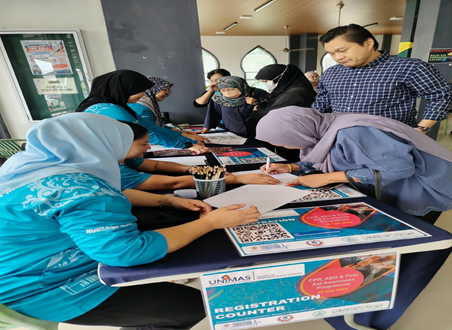
Picture: Eager participants registering for the First Aid, CPR & AED Awareness Programme at Masjid Darulhana Patingan, Kuching
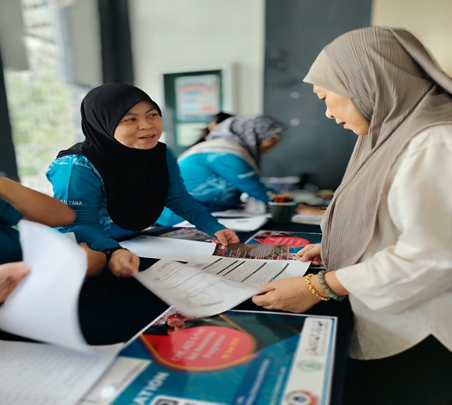
Picture: Participants receiving their training materials and resources
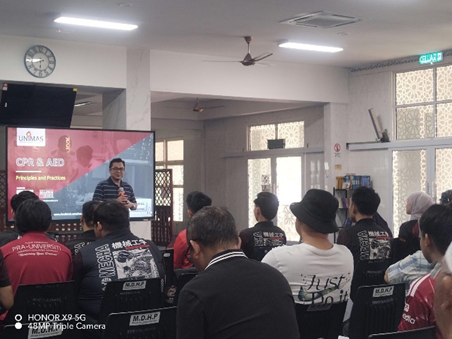
Picture: Prof. Dr. Asri delivering is welcoming address
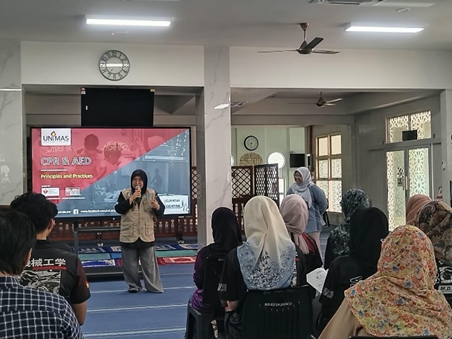
Picture: Dr. Zaitul delivering her opening remarks
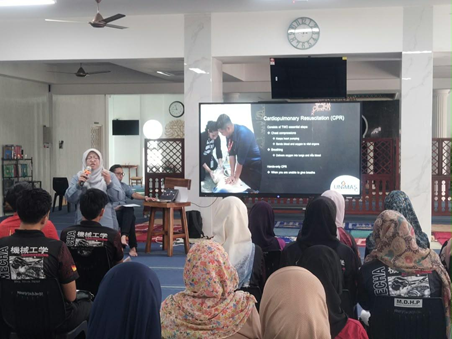
Picture: Prof. Dr. Nariman delivering her lecture on CPR & AED use to a packed audience.
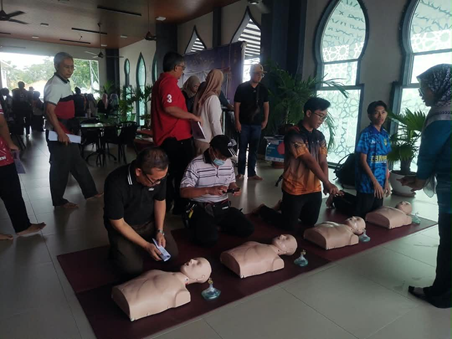
Picture: Registered Nurse, Nurul, guiding participants through adult CPR steps and techniques.
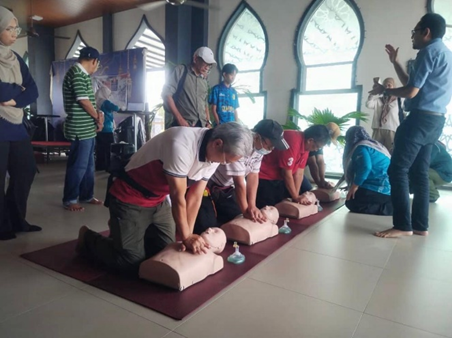
Picture: Participants of all ages practicing essential CPR skills
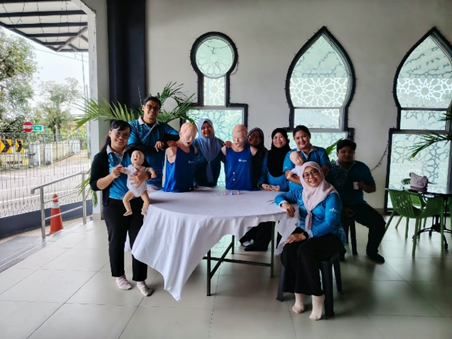
Picture: Instructors getting ready to receive participants at the choking management station
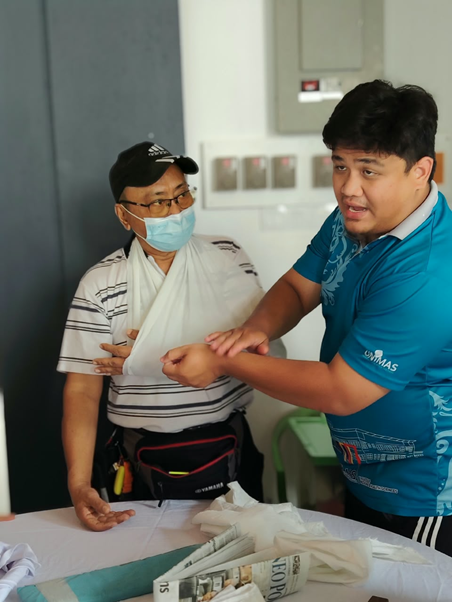
Picture: Assistant Medical Officer Muhamad Nuraizat teaching about fracture management with a participant looking on in an arm-sling.
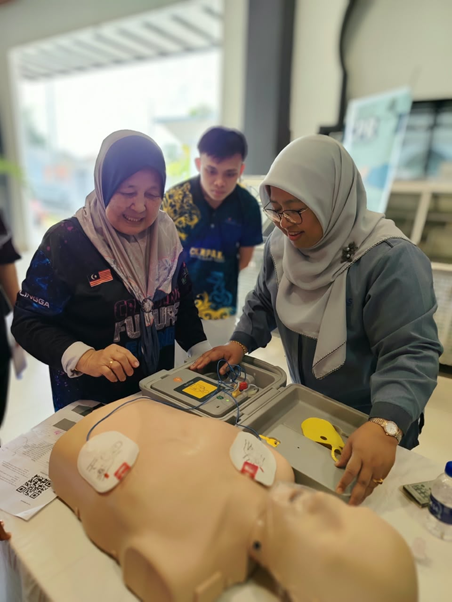
Picture: Prof. Dr. Nariman teaching participants about the steps for operating an AED.
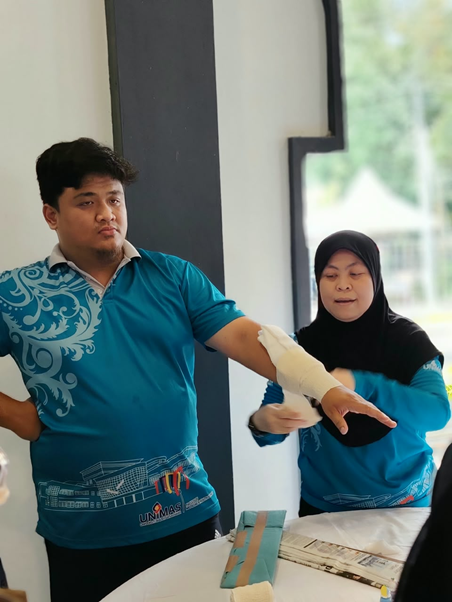
Picture: Registered Nurse, Nur Alyana demonstrating bandaging techniques
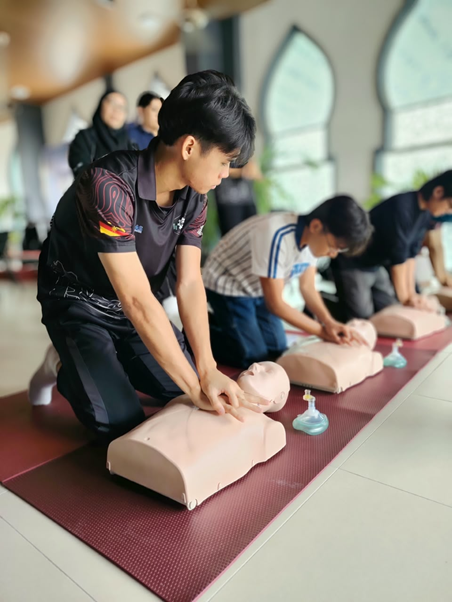
Picture: Participants practicing adult CPR techniques
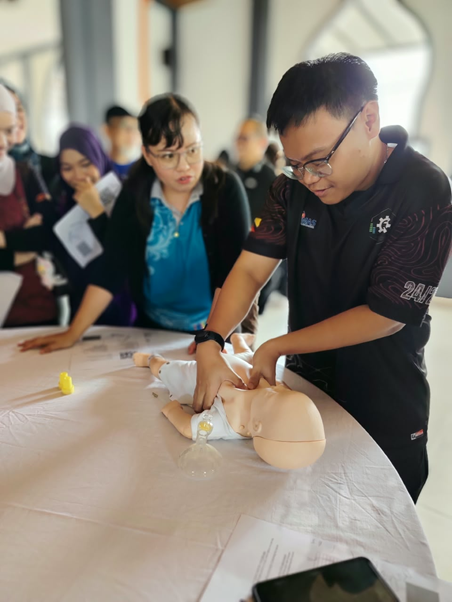
Picture: Registered Nurse, Addilia, guiding participants through infant CPR
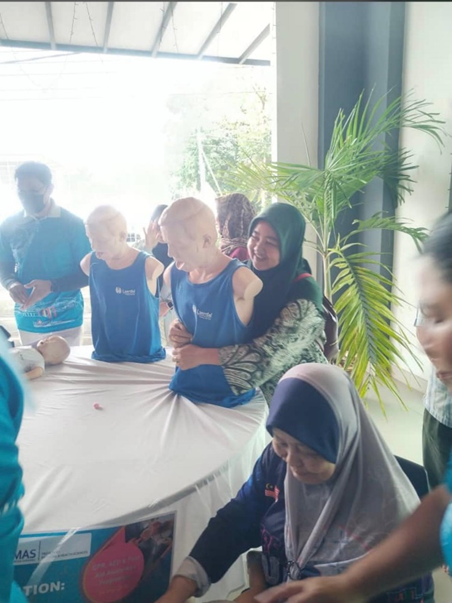
Picture: Participants learning to manage victims with foreign body airway obstruction (choking)
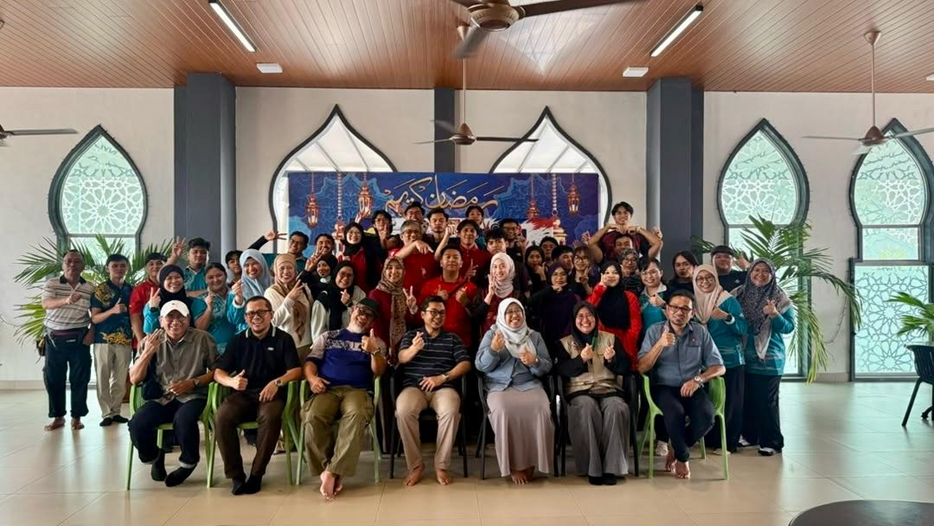
Picture: One last picture for the album with the instructor team, working committee of Masjid Darulhana Patingan and some participants before the end of the event