An Immersive Travelogue of Solar Edutourism, Pristine Rainforests, and Lifelong Intercultural Friendships in Borneo
Are you ready to step out of your comfort zone and embark on an adventure that bridges cutting-edge sustainability education, breathtaking natural wonders, and deep intercultural friendships? Welcome to Sarawak, Malaysia’s largest state located on the mystical island of Borneo. Renowned worldwide as a safe, peaceful, and incredibly welcoming cultural haven, Sarawak is a place where dense, primeval rainforests meet thriving modern academic innovation.
Every year, Universiti Malaysia Sarawak (UNIMAS) opens its doors to international students through the prestigious Solar Edutourism for Japanese Students (SEJaTi) program. Organized jointly by the Faculty of Engineering and the Faculty of Social Sciences and Humanities, this one-of-a-kind mobility initiative connects Japanese delegates with passionate UNIMAS student ambassadors. Over eight unforgettable days, participants dive into the ecological, cultural, and technological landscapes of Sarawak, building cross-cultural bonds that last a lifetime.
From Touchdown to Deep Geological Wonders: A Warm Bornean Welcome
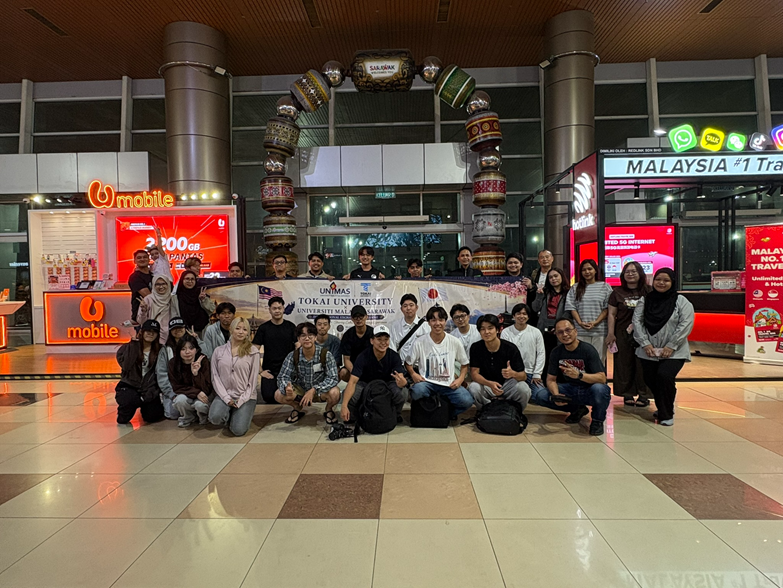
The adventure begins the moment the flight lands at Kuching International Airport. Walking through the gates, the Japanese delegation—this year featuring twenty excited delegates from Tokai University led by Professor Dr. Hiroyuki Fujimaki and Associate Professor Tomohiro Fukuda—is greeted by a cheering cohort of eight UNIMAS student facilitators. With warm smiles and cold refreshments, the delegates are immediately whisked away to Kolej Dahlia, their home-away-from-home on the lush green UNIMAS campus.
By Day 2, the academic journey blends with high-octane geographic exploration. The delegation travels to the bustling Serikin Border Market on the edge of Sarawak and Kalimantan, navigating stalls overflowing with local Bornean crafts, textiles, and street delicacies. From there, the students ascend the historic wooden stairs into the spectacular limestone chambers of the ancient Fairy Cave in Bau. As natural sunlight filters through the massive, mist-shrouded openings of the cave, students from both nations work hand-in-hand to explore the towering stalactites and geological formations.
An Outdoor ESG Classroom: Unforgettable Night at Bengoh Dam
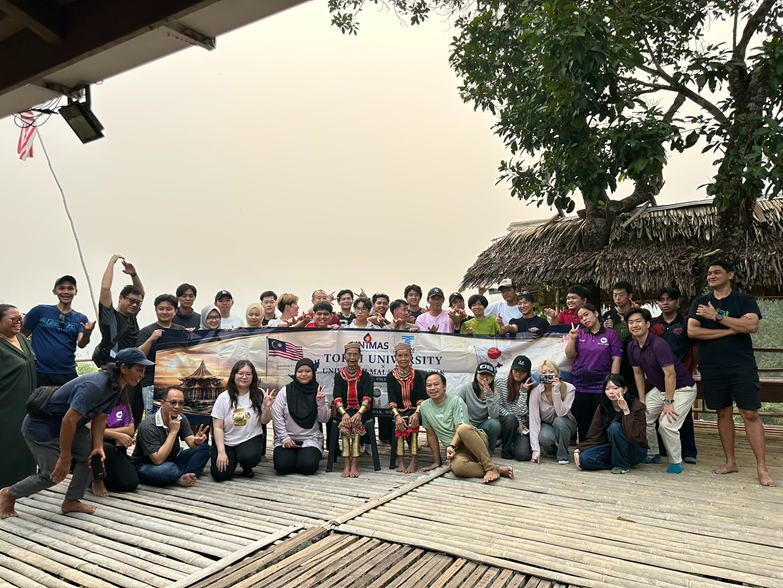
On Day 3, coinciding with Malaysia’s vibrant National Day (Hari Kebangsaan), the SEJaTi cohort transitions into the wild Padawan highlands. The destination is the stunning Bengoh Dam, a sprawling reservoir surrounded by mist-capped mountain ridges. Here, the dam serves as a living, dynamic outdoor laboratory for water conservation and ecological sustainability, aligning perfectly with UNIMAS’ landmark stance as Malaysia’s first public university to adopt a comprehensive, university-wide Environmental, Social, and Governance (ESG) policy.
Guided by local experts, students participate in hands-on edutourism sessions, learning how Sarawak manages its vital water and clean energy networks. As dusk settles over the pristine reservoir, the students check into their local highland lodgings for a cozy overnight stay. Gathering under a canopy of stars, they share stories of their respective hometowns, sing songs, and experience the warmth of rural Bornean hospitality far away from the hustle of city life.
Academic Diplomacy & Intellectual Exchange on Campus
Returning to the state-of-the-art UNIMAS campus on Day 4, the focus shifts to academic engagement and intellectual diplomacy. The Faculty of Social Sciences and Humanities (FSSH) hosts a warm welcoming ceremony, followed by an interactive seminar led by Dr. Shazani entitled ‘Politics and Governance in Malaysia: The Sarawak Dimension.’
This session sparks deep cross-cultural discussions, giving Japanese political science students a nuanced understanding of Sarawak’s unique model of multicultural harmony, administrative stability, and regional governance. The afternoon is filled with campus tours, visiting UNIMAS’ iconic library and modern research centers, concluding with a lively networking session where students exchange academic ideas and cultural perspectives.
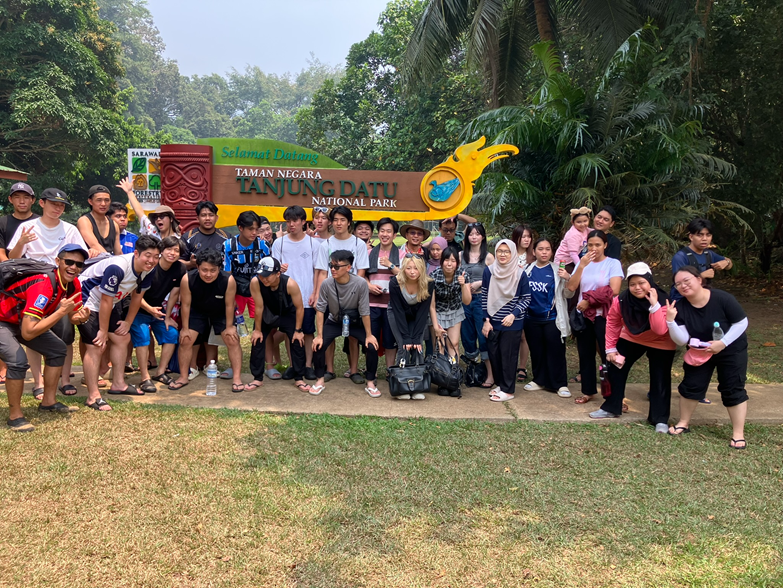
Where Solar Powers Conservation: The Pristine Coast of Tanjung Datu The crown jewel of Sarawak’s natural beauty awaits the students on Day 5 as they travel to the coastal town of Sematan. Boarding speedboats, the delegates glide across the turquoise waters of the South.
China Sea to the remote, wild shorelines of Tanjung Datu National Park—where the ancient Bornean rainforest meets pristine white-sand beaches.
At Tanjung Datu, students trek through dense jungle trails alongside experienced park rangers, mapping biodiversity and observing rare wildlife. But the most inspiring highlight of the visit lies in the park’s operational infrastructure: the Sarawak Forestry Corporation (SFC) ranger stations and research headquarters are fully powered by solar energy for their daily operations!
This provides the SEJaTi delegation with a powerful, real-world example of clean, sustainable technology operating in perfect harmony with nature to protect fragile ecosystems. In the evening, the students travel to the quiet coastal settlement of Teluk Melano, gathering for a group presentation and reflection session where each student shares their observations on how clean energy can safeguard global biodiversity.
Walking Through History: Kuching Heritage and Civic Pride
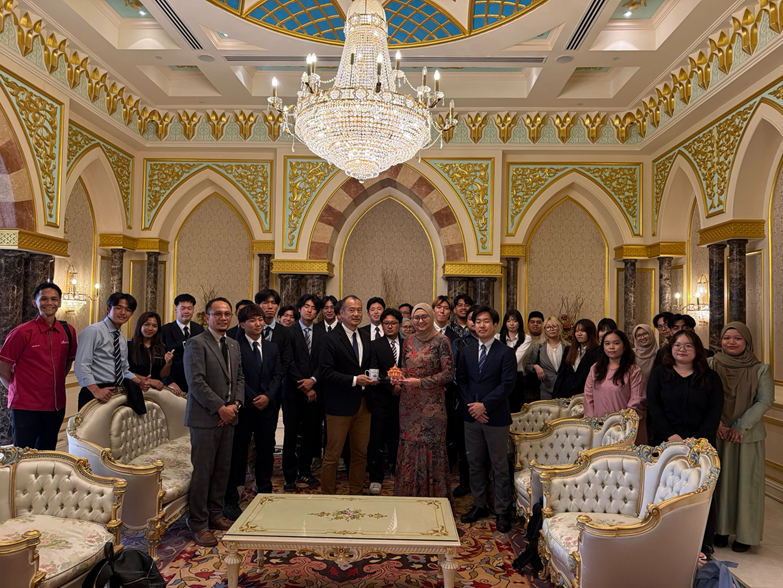
Day 6 brings the delegation back to Kuching for a blend of democratic history and heritage walks. The cohort begins with an official visit to the Sarawak State Legislative Assembly (DUN Sarawak), a majestic, golden-roofed architectural icon on the banks of the Sarawak River. Walking through the grand halls, the students learn about the legislative process and regional history.
As the afternoon cools, the students embark on a historical walking tour of Kuching’s heritage streets. Strolling down India Street, Carpenter Street, and the scenic Kuching Waterfront, they explore old colonial shophouses, Chinese temples, and traditional bazaars. The local facilitators introduce their Japanese peers to legendary Sarawakian flavors, including the rich Sarawak Laksa, sweet Gula Apong ice cream, and refreshing local teas, turning the streets into a delicious sensory classroom.
Bornean Heritage and a Heartfelt Farewell at The Reef
The final academic leg unfolds on Day 7 with a visit to the world-class Borneo Cultures Museum, the second-largest museum in Southeast Asia. Here, students lose themselves in multi-sensory exhibits showcasing the rich tribal history, musical traditions, and ancient crafts of Sarawak’s twenty-seven ethnic groups. This is followed by a visit to the Sarawak Science Center, exploring local innovations in science and technology.
The incredible journey culminates in a grand closing dinner at The Reef, a warm, cozy, and highly celebrated city-center restaurant in Kuching. Set in a lively, spirited urban atmosphere, the restaurant provides the perfect, warm environment for the delegation to celebrate their successful week.
Amid laughter and a feast of delicious local dishes, students step up to deliver emotional reflection speeches. Tears flow and smiles beam as tokens of gratitude and cultural gifts are exchanged. In this cozy city-center venue, the true meaning of SEJaTi is realized: the bridging of oceans, the sharing of knowledge, and the birth of friendships that will outlast the program by decades.
The Science of Friendship: How SEJaTi Empowers You
While the SEJaTi program is packed with adventure and fun, it is built on a solid, scientifically validated educational framework. Empirical research published in the UNIMAS Scholarhub by Nur Aqilah binti Ahmad (2025) highlights that hands-on peer-to-peer edutourism programs like SEJaTi significantly elevate students’ Multicultural Self-Efficacy (MSE).
Measuring student confidence on the Cultural Intelligence Scale (CQS), the study revealed that UNIMAS students maintain a exceptionally high baseline of multicultural confidence, with a mean score of 5.4159 out of 7.00. Most importantly, the study proved a strong positive correlation (r = 0.457) between high multicultural self-efficacy and collaborative, integrating conflict resolution styles. This means that by working together, navigating natural environments, and solving problems in diverse teams, students develop the psychological confidence and emotional intelligence to manage disagreements constructively, seeking win-win solutions that respect cultural differences. You don’t just leave Sarawak with great memories—you leave as a highly competent, globally-minded collaborative leader.
Hear from Your Peers: A Lifelong Treasure
Don’t just take our word for it—here is what previous Japanese participants from Tokai University have to say about their life-changing experience with UNIMAS in Sarawak:
“Thank you so much for all your help. It was my first time in Malaysia and I was very nervous, but with everyone’s support I was able to have a wonderful trip. The local students are incredibly kind and helpful!”
— Susukida, Tokai University
“Everything was new, surprising, and beautiful. This program is the best memory in my life. Seeing how clean energy is integrated into Sarawak’s pristine rainforests was eye-opening. If you come to Japan, please let us know!”
— Takeru, Tokai University
“This opportunity will truly be a lifelong treasure for me. I will never forget Daniel-sensei, our wonderful UNIMAS facilitators, and the amazing nights we spent sharing stories under the Bornean sky.”
— Nagisa, Tokai University
Join the SEJaTi 2027 Cohort: Your Adventure Awaits!
Are you ready to write your own chapter in the Land of the Hornbills? To hike through sun-dappled coastal rainforests powered by solar energy, to engage in deep academic debates, and to find a global family in the heart of Borneo?
The UNIMAS SEJaTi program is more than just a study tour—it is a launchpad for your global future. Applications for the SEJaTi 2027 cycle will open soon. Take the leap, discover Sarawak, and find out why this will be the best decision of your university life!
Report provided by Assoc Prof Ir Dr Mohd Danial Ibrahim