Written by Associate Professor Dr. Hamrila binti Abdul Latif
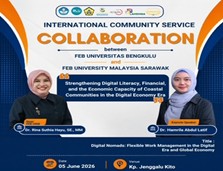
Bengkulu, Indonesia, 5 June 2026. The International Community Service Collaboration is a joint initiative between the Faculty of Economics and Business, Universiti Malaysia Sarawak (UNIMAS) and the Faculty of Economics and Business, Universitas Bengkulu (UNIB)
The programme reflects the shared commitment of both institutions to strengthening international collaboration in higher education through academic engagement, research, knowledge exchange, and meaningful community service. Held in Bengkulu, Indonesia, the programme brought together academics, researchers, students, and members of the local coastal community to promote digital literacy, encourage innovation, and support inclusive socio-economic development. The collaboration demonstrates how higher education institutions can leverage their expertise to address contemporary community challenges while fostering regional cooperation within ASEAN
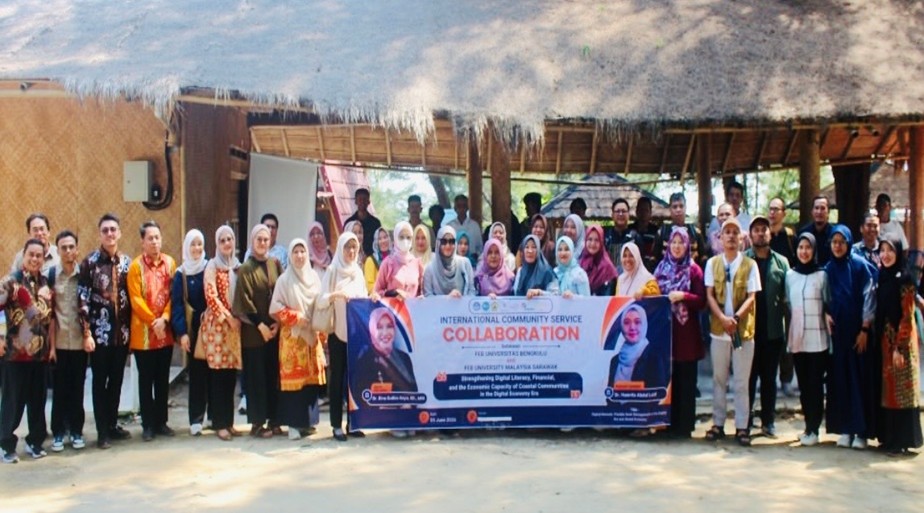
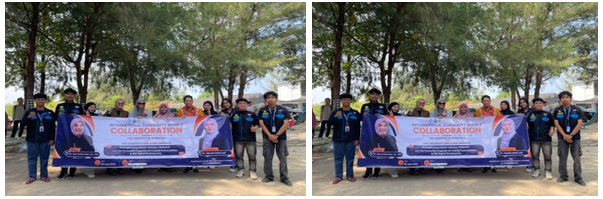
Programme participants at MD Land, Bengkulu Beach
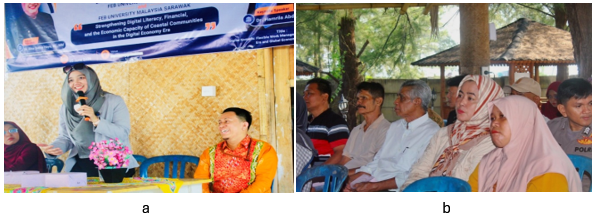
Figure (a) Community service activities fostering academic collaboration and sustainable community development. Figure (b) Community members actively participating in an interactive knowledge-sharing session on digital literacy and sustainable coastal community development
Strategic Impact on UNIMAS
The programme reinforces UNIMAS’ internationalisation agenda by strengthening its strategic partnership with Universitas Bengkulu and expanding its international academic network. It provides an invaluable platform for UNIMAS academics and researchers to engage directly with coastal communities, generating practical insights that enrich teaching, research, and innovation.
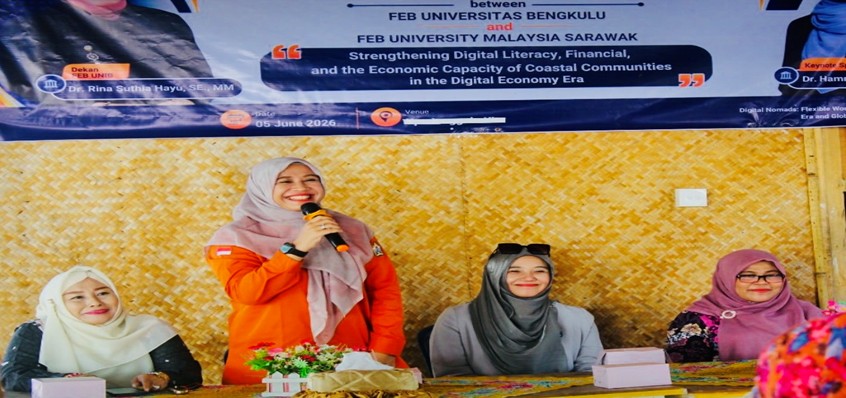
The community talk provided a platform for meaningful dialogue, promoting digital literacy, community empowerment, and sustainable socio-economic development among coastal communities. Furthermore, the initiative enhances the University’s regional visibility within the ASEAN higher education landscape while supporting interdisciplinary collaboration and knowledge transfer. By aligning its activities with the United Nations Sustainable Development Goals (SDGs), particularly those related to quality education, reduced inequalities, decent work and economic growth, and partnerships for the goals, UNIMAS continues to demonstrate its commitment to creating sustainable and meaningful societal impact.
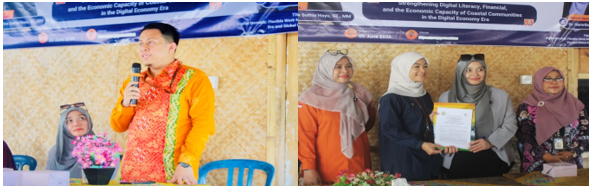
Engaging discussions between UNIMAS, Universitas Bengkulu, and the local community during the community outreach programme, fostering knowledge exchange and collaborative learning.
The community engagement sessions also highlighted the growing potential of the digital economy and the digital nomad ecosystem as catalysts for sustainable tourism development in coastal areas. Participants were introduced to strategies for leveraging digital platforms, social media marketing, e-commerce, and digital entrepreneurship to enhance the visibility and competitiveness of local tourism businesses. The discussions further explored opportunities for future Malaysia–Indonesia collaboration in developing resilient coastal communities through joint research, capacity-building initiatives, knowledge exchange, and innovation-driven tourism development. Such collaborative efforts are expected to strengthen cross-border partnerships while empowering local communities to harness digital transformation for inclusive and sustainable economic growth.
A Shared Commitment to Sustainable Development
The International Community Service Collaboration highlights the strong partnership between UNIMAS and Universitas Bengkulu in advancing academic collaboration and community engagement. More than an academic exchange, the initiative serves as a platform for empowering coastal communities through digital literacy, innovation, entrepreneurship, and inclusive economic development. By integrating research, education, and community service, the collaboration reflects the important role of higher education institutions in advancing sustainable development, strengthening regional partnerships, and contributing to the well-being and resilience of communities.