Written by Gui Hun Chuen
For a profession traditionally preoccupied with measuring quantities, scrutinising costs and administering contracts, the future demands a rather different measure of success. Carbon footprints, technological competence, commercial foresight and environmental stewardship are increasingly becoming part of the equation. Such was the premise of the QSynergy Forum held on 20th November 2026, which brought academia and industry together to examine the evolving responsibilities of the Quantity Surveying profession.
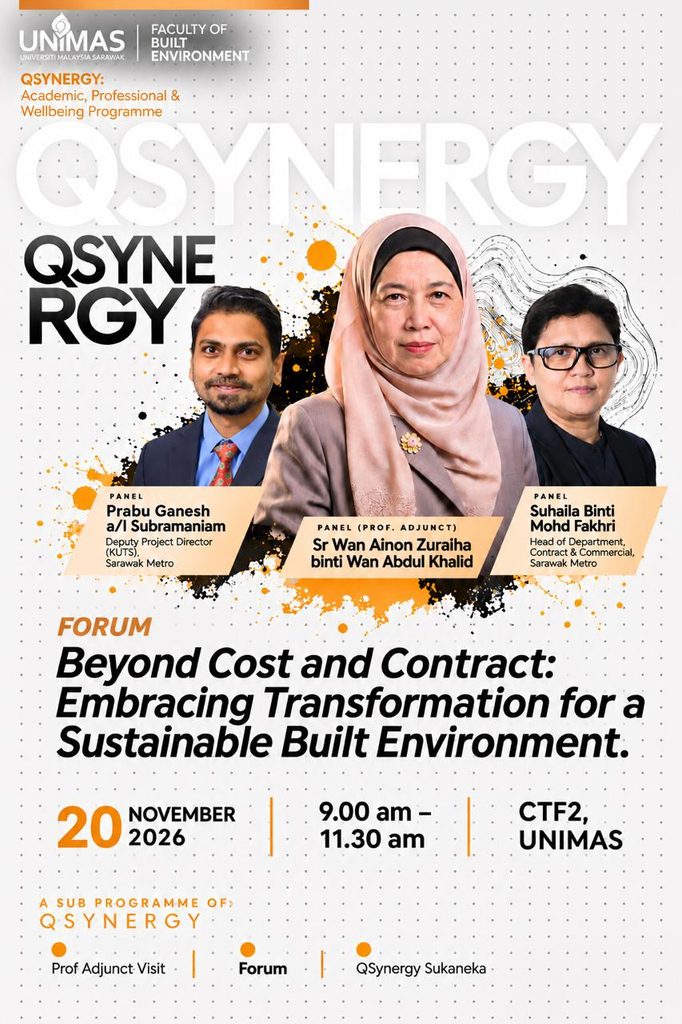
The forum featured Sr Wan Ainon Zuraiha, Adjunct Professor of the Faculty of Built Environment and immediate past President of the Royal Institution of Surveyors Malaysia (RISM); Mr Prabu Ganesh a/l Subramaniam, Deputy Project Director of the Kuching Urban Transportation System (KUTS), Sarawak Metro; and Cik Suhaila binti Mohd Fakhri, Head of Contract and Commercial Department of Sarawak Metro. Moderating the session were Sr Gui Hun Chuen, a senior Quantity Surveying lecturer, and Aviena Nyain Jinap anak Vincent, a second-year Quantity Surveying student – a fitting partnership between experience and youthful curiosity.
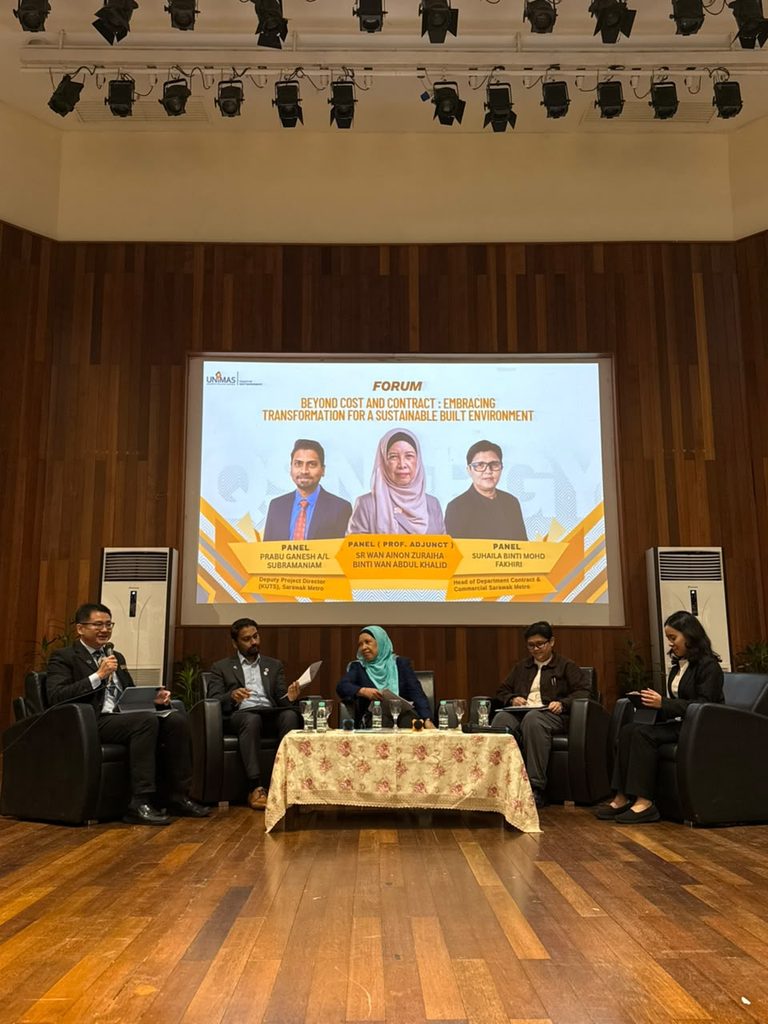
Sustainability formed the intellectual backbone of the forum. With the 2030 deadline for the United Nations’ Sustainable Development Goals drawing closer, the profession faces an increasingly pertinent question: what comes next? Net-Zero ambitions, Whole-life Carbon Assessments and responsible resource consumption are challenging conventional notions of value. The cheapest solution, after all, may prove the most expensive over its lifetime.
Sarawak offers a particularly compelling backdrop to these deliberations. Its pursuit of sustainable development under the PCDS 2030, alongside its emerging hydrogen economy and ambitious transportation infrastructure, presents both opportunities and challenges. For Quantity Surveyors, the implications extend beyond procurement and contractual obligations towards understanding unfamiliar technologies, navigating commercial uncertainties and developing home-grown specialist expertise.
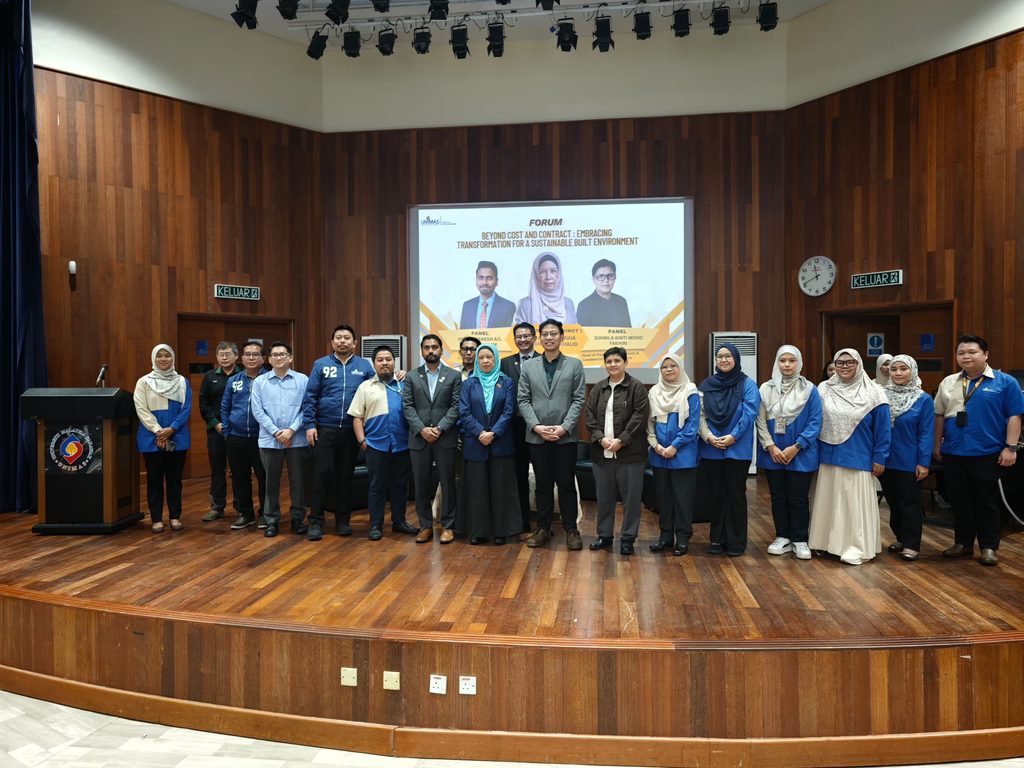
Yet technological sophistication alone is unlikely to suffice. In an age increasingly shaped by Artificial Intelligence, human judgement, communication, adaptability and professional integrity remain indispensable. The growing urgency of collaboration between universities and industry reflects a simple reality: academic qualifications are the beginning, rather than the culmination, of professional competence.
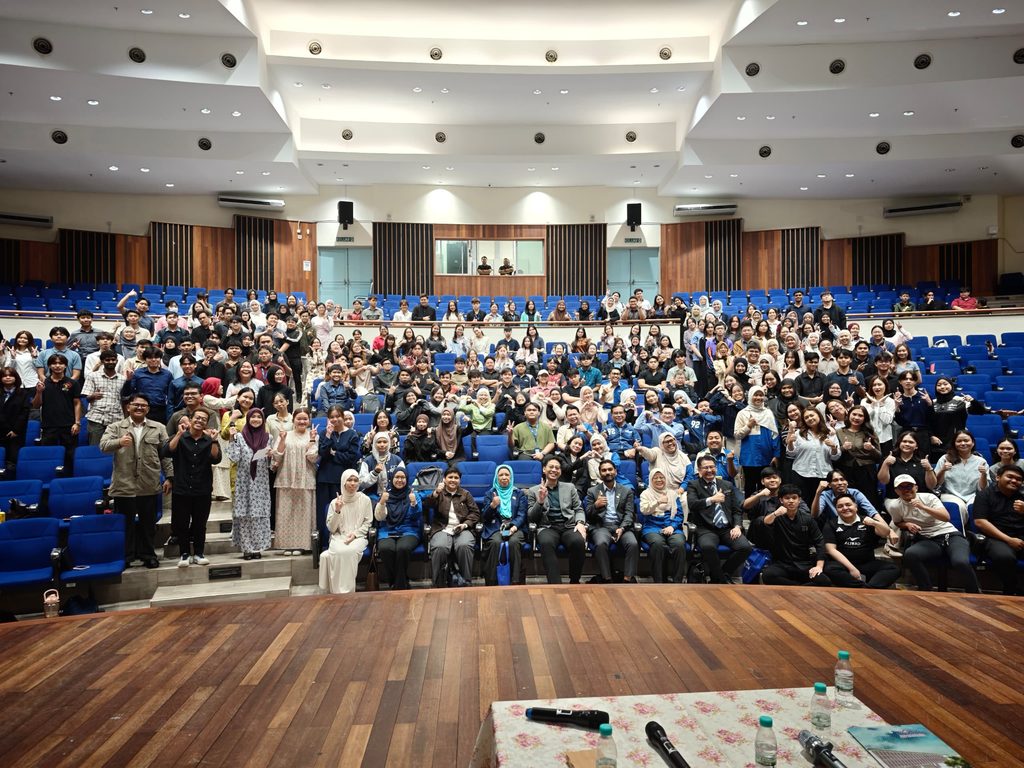
The gathering of students and practitioners offered a glimpse of a profession contemplating its own reinvention. For tomorrow’s Quantity Surveyors, success will depend not merely on mastering the arithmetic of construction, but on understanding the broader consequences of what gets built, how it is financed and whom it ultimately serves.
The profession’s future, it seems, lies not in abandoning its traditional expertise in cost and contract, but in expanding its definition of value. Counting the cost will always matter. Making what counts matter more may well be its next calling.