Faculty of Engineering, 19 January 2026 – The Faculty of Engineering, UNIMAS successfully hosted an interactive program on Green Technology and Sustainable Development for visiting mobility students from Jiangsu Normal University Kewen College, China. The 3 hours program was designed to enhance the 18 participating students’ understanding on sustainability while fostering collaborative learning through creative problem-solving.
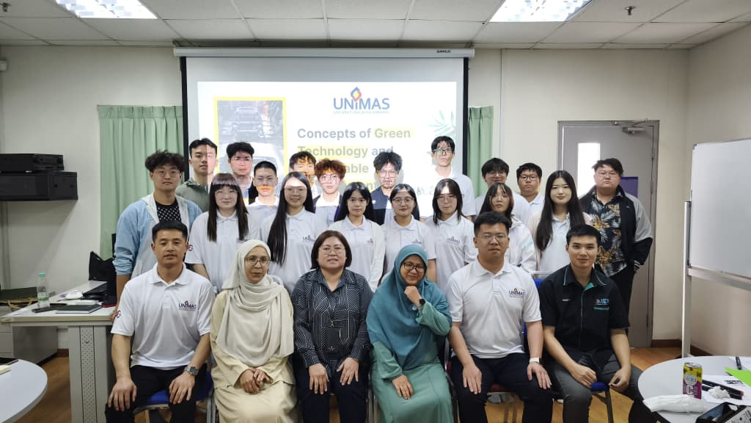
The program was held from 2:00 PM to 5:00 PM at Tutorial Room 5, Faculty of Engineering. It commenced with a lecture session given by Ir. Dr Kasumawati Lia with titled “Concepts of Green Technology and Sustainable Development.” In the lecture, participants were introduced to the fundamental principles of green technology, the three pillars of sustainable development, and the challenges involved in implementing green technologies in modern industries.
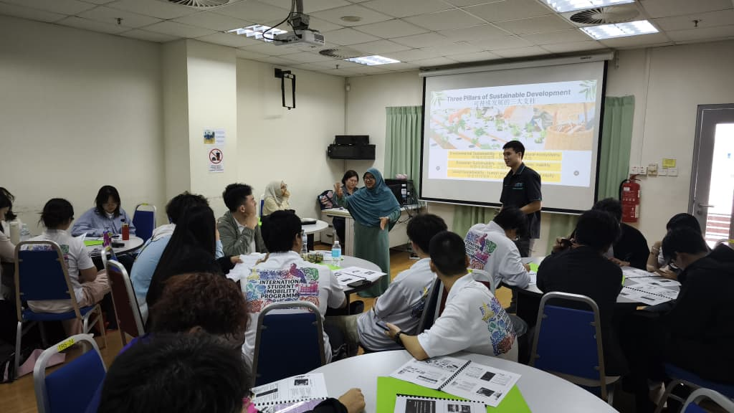
The program then continued with the activity session. Students were first divided into four groups and provided with themed flashcards highlighting sustainability challenges relevant to the Jiangsu region. Each flashcard presented a specific issue and guided students to explore potential solutions aligned with the Sustainable Development Goals (SDGs).
Each group was also given presentation materials, including cardboard paper and markers, to help them develop and present their ideas. Participants then engaged in a 30-minute design sprint, where they discussed sustainability issues in the Jiangsu region, such as green manufacturing, low-carbon cities, sustainable agriculture, circular economy practices, and healthy urban living. Guided by the flashcards, each group identified a key environmental or societal challenge and proposed an innovative green solution.
Following the discussion phase, groups presented their ideas in a short sharing session. Each team explained the sustainability problem they selected, their proposed solution, and how the idea aligned with relevant SDGs. The presentations encouraged peer learning and allowed students to exchange perspectives on sustainability challenges and potential solutions.
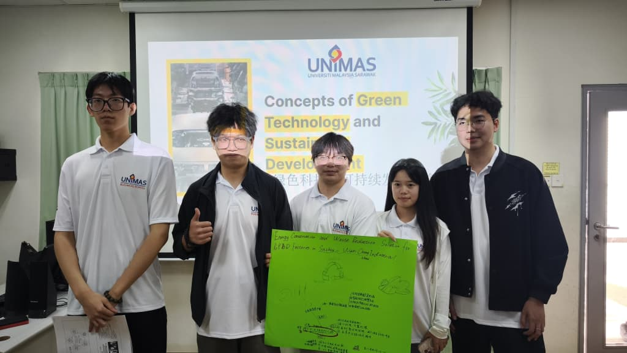
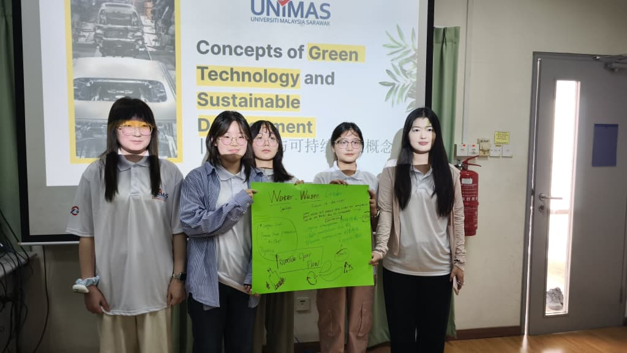
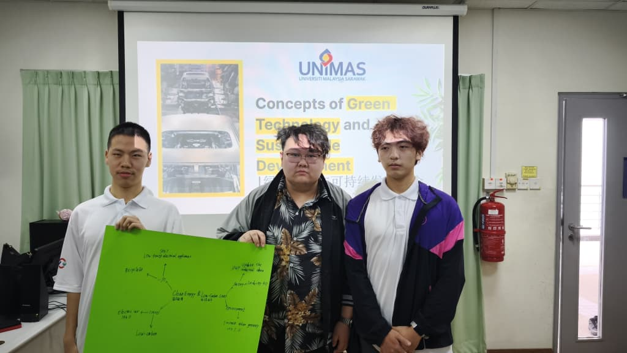
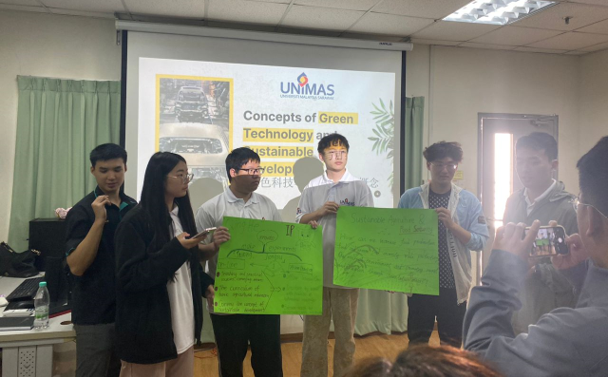
The activity concluded with a reflection session led by the facilitator, where students discussed the importance of individual responsibility in promoting sustainable practices. The session emphasised the programme’s key message “Think Green, Act Smart” encouraging participants to adopt sustainable thinking in both their academic and daily lives.
The programme was led by Ir. Dr. Kasumawati Lias, with valuable assistance from two lecturers from the Department of Electrical and Electronic Engineering, Shirley Rufus and Nur Alia Athirah Binti Hj. Mohtadzar, as well as two students who also serve as IEM student representatives, Dennilson Illai Marvin@ Impi and Nicholas Lau Lik Jie.
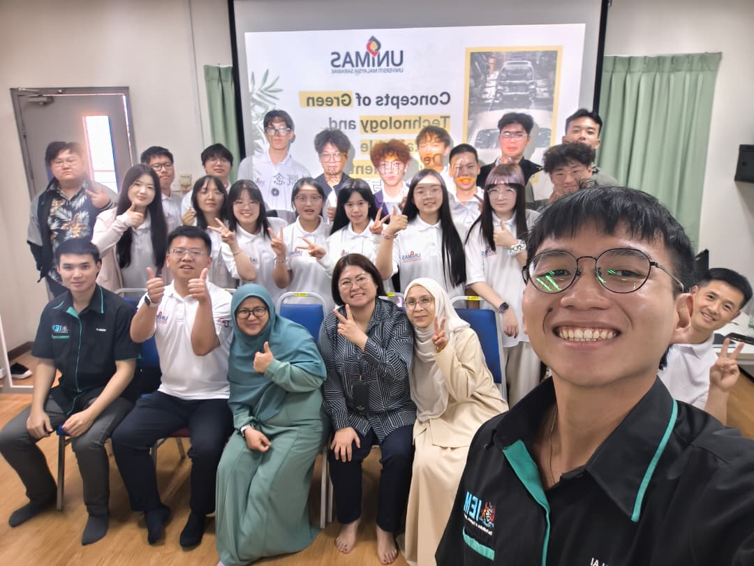
Through this interactive activity, students gained valuable experience in teamwork, communication, and sustainability awareness. The session also complemented the broader objectives of the UNIMAS mobility programme by promoting experiential learning and strengthening academic engagement between UNIMAS and its international partner institutions.
Prepared by: Nur Alia Athirah Binti Hj Mohtadzar, Faculty of Engineering, UNIMAS