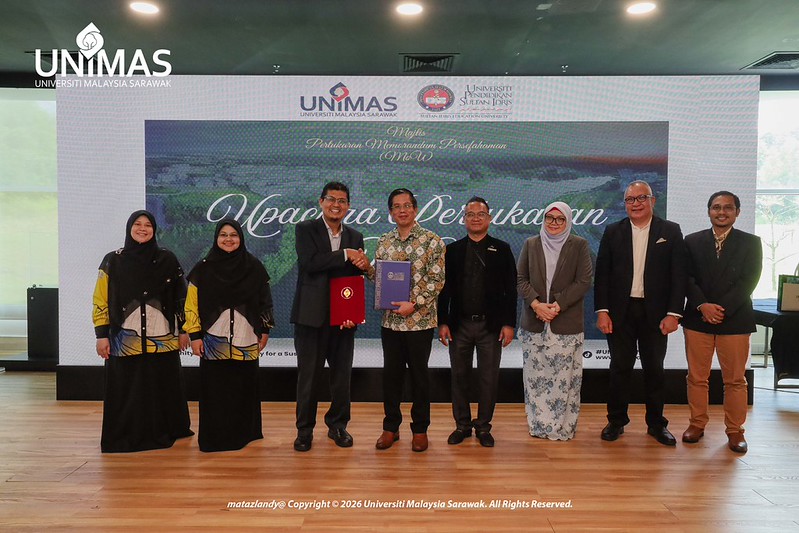
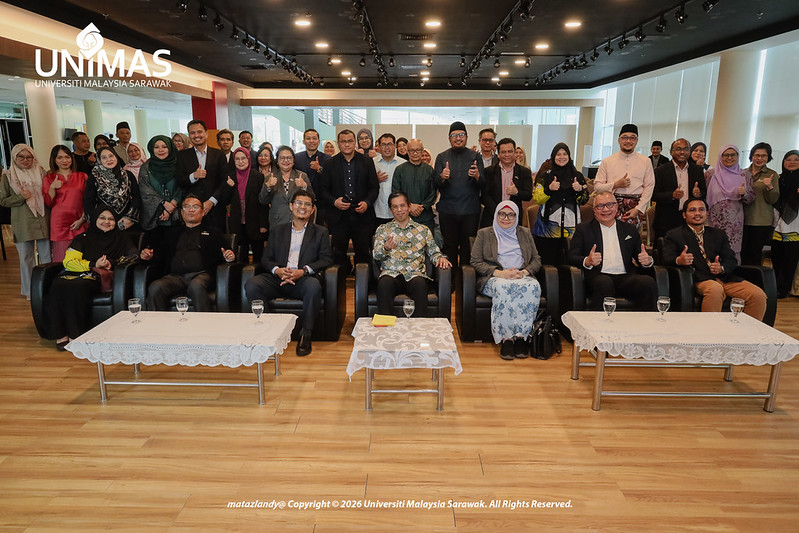
KOTA SAMARAHAN: Universiti Malaysia Sarawak (UNIMAS) and Universiti Pendidikan Sultan Idris (UPSI) recently signed a Memorandum of Understanding (MoU) to bolster strategic collaboration. The partnership aims to advance initiatives in education, research, innovation, and community development.
The UNIMAS delegation was led by its Vice-Chancellor, Professor Dr. Ahmad Hata Rasit. Also present at the event were Professor Ir. Dr. Siti Noor Linda Taib, Deputy Vice-Chancellor (Research and Innovation), UNIMAS, and Professor Ir. Ts. Dr. Al-Khalid Haji Othman, Deputy Vice-Chancellor (Student Affairs and Alumni), who is also carrying out the functions of Deputy Vice-Chancellor (Academic and International), UNIMAS.
The UPSI delegation was led by Mr. Helmi Zaifura Abdul Rahman, Registrar of UPSI, representing the Vice-Chancellor of UPSI, Professor Dato’ Dr. Md Amin Md Taff. The delegation also included Associate Professor Dr. Mazlina Che Mustafa, Director of the National Child Development Research Centre (NCDRC), UPSI; Dr. Intan Farahana Abdul Rani, Deputy Director (Research and Innovation), NCDRC, UPSI; and Ms. Shahaniza Shamsuddin, Deputy Registrar of NCDRC.
The Faculty of Cognitive Sciences and Human Development (FCSHD), UNIMAS, was represented by Associate Professor Mohamad Hardyman Barawi, Deputy Dean of Research and Commercialisation, on behalf of Dr. Hana Hamidi, Dean of FCSHD, UNIMAS.
The collaboration was initiated by FCSHD, UNIMAS. It brings together two key research centres: the National Child Development Research Centre (NCDRC), UPSI, and the Child and Adolescent Learning and Wellbeing Centre (CALW), UNIMAS, led by its Director, Associate Professor Dr. Julia Lee Ai Cheng. The partnership combines expertise in child development, learning, wellbeing, cognitive science, psychology and human development.
Through this MoU, both universities will collaborate in the following areas:
Joint Research – Studies in areas such as children’s cognitive and emotional development, inclusive education, mental wellbeing, learning difficulties, early childhood development, evidence-based interventions and the use of technology in education.
Human Capital Development – Joint training programmes, researcher exchanges, student supervision and academic mobility.
Knowledge Sharing – Joint seminars, conferences, publications and innovations that benefit the academic community and society.
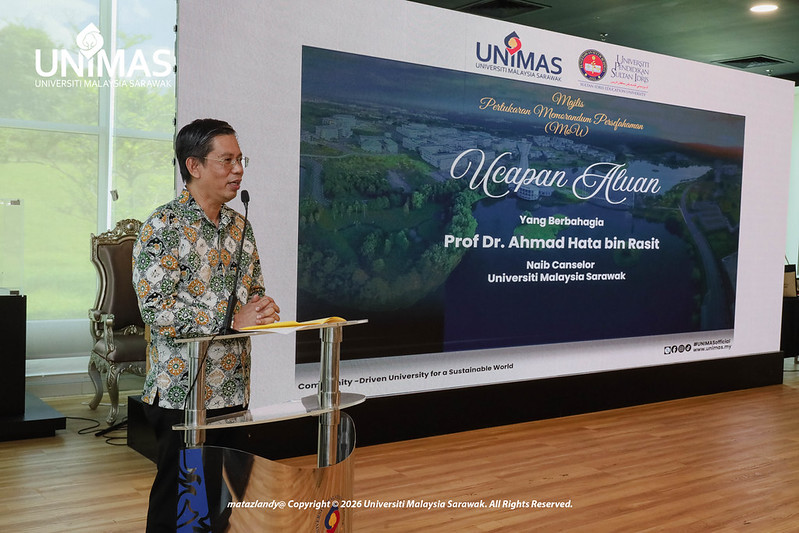
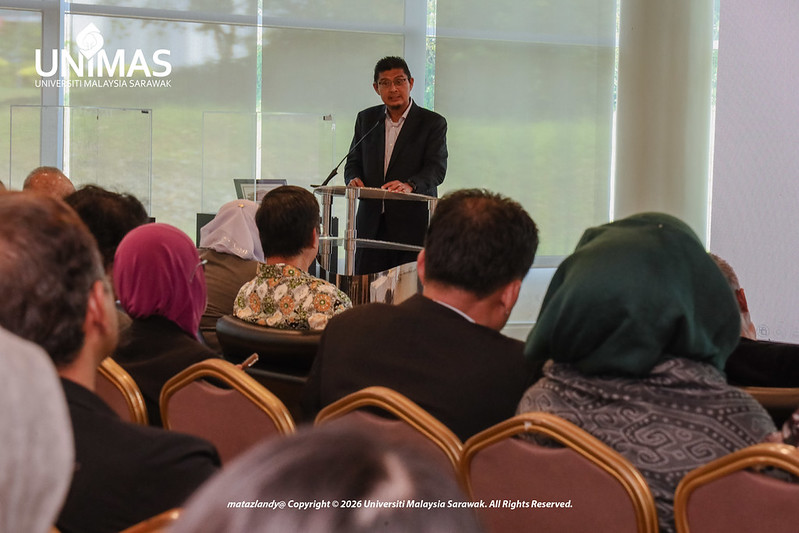
In his speech, Professor Dr. Ahmad Hata said that the MoU exchange was more than a formal ceremony. It marked an important step towards building a strong partnership between two universities with complementary strengths and expertise. He stressed that research under this partnership should go beyond academic publications and bring real benefits to children, families, educators, schools and the wider community.
He also expressed hope that the MoU would be translated into clear action plans and ongoing programmes, noting that the success of an MoU is measured by the results and impact achieved following its exchange.
UNIMAS extends its appreciation to FCSHD, led by its Dean, Dr. Hana Hamidi; the CALW team; and the secretariat for making this collaboration possible. UNIMAS also expresses its appreciation to UPSI and NCDRC for their commitment to building a wider network of cooperation with UNIMAS.