Written by Aimi Shahirah Fisol
A building model, a portfolio or a presentation can reveal a great deal about what a student has learned. Designing the task and deciding how to assess it, however, call for careful thought. These practical questions shaped the Effective Student Assessment and Rubrics Development Workshop series held by the Faculty of Built Environment on 20th August and 1st October of 2026. The two sessions connected assessment design with the development of rubrics to guide marking and communicate expectations to students.
Organised by the Faculty Quality Management Committee (FQMC) and coordinated by the faculty’s Academic Quality Coordinator (PKA), the series brought together FBE lecturers to explore more effective ways of assessing student learning. Professor Dr. Soubakeavathi A/P Rethinasamy from the Faculty of Education, Language and Communication led both sessions, combining assessment principles with practical work on participants’ own teaching materials.
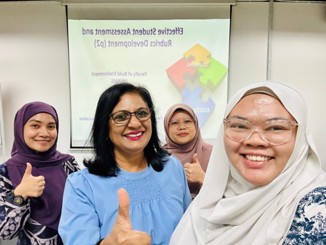
Professor Dr. Soubakeavathi A/P Rethinasamy with workshop participants at the Faculty of Built Environment
Prof. Souba’s engaging approach encouraged discussion throughout the session. She worked individually with participants to review their assessment tasks and offer guidance. These exchanges gave lecturers opportunities to clarify their ideas and consider how their assessments could better reflect the intended learning outcomes.
The first session explored what makes assessment valid, consistent, manageable and beneficial to learning. Lecturers revisited learning outcomes and examined alternative assessments that allow students to apply their knowledge through activities such as model building, fieldwork and presentations. The emphasis was on aligning the intended learning outcomes with a clearly defined task, an appropriate submission format and instructions that students could follow.
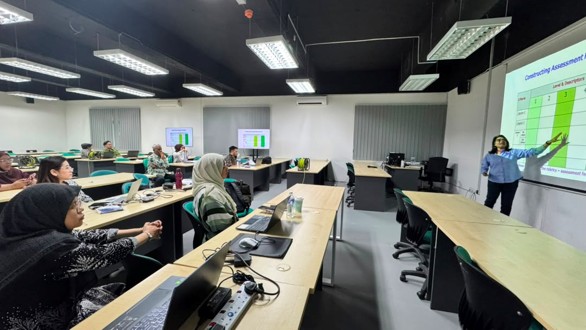
Prof. Dr. Souba discusses assessment criteria and performance descriptors during the first session
The second session focused on developing assessment rubrics, building on the earlier work from the assessment tasks. Participants explored the differences between holistic and analytic rubrics and how each approach describes student performance. Clear criteria identify the aspects of a task being assessed, while performance descriptors explain the different levels of achievement. In built environment courses, where students may submit designs, models, portfolios or presentations, these elements help lecturers explain what constitutes good work and give students a clearer basis for improvement.
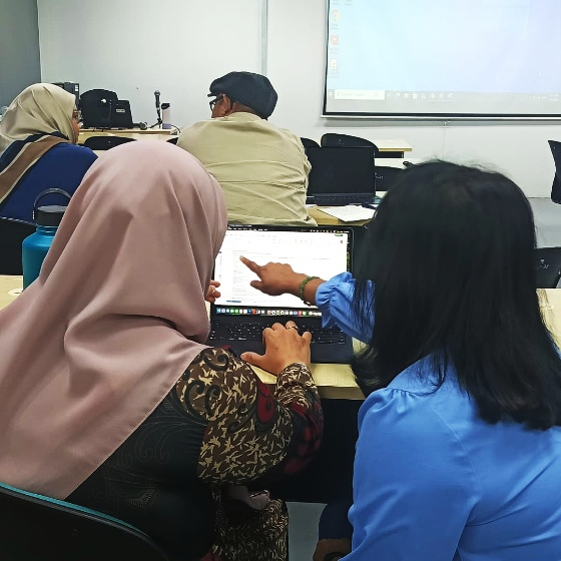
Individual guidance by Prof. Dr. Souba during the second session
Together, the two sessions supported the faculty’s efforts to strengthen assessment practices aligned with Course Learning Outcomes (CLOs) and Programme Learning Outcomes (PLOs). By linking task design with rubric development, the series encouraged clearer expectations, more consistent marking and feedback that helps students improve.
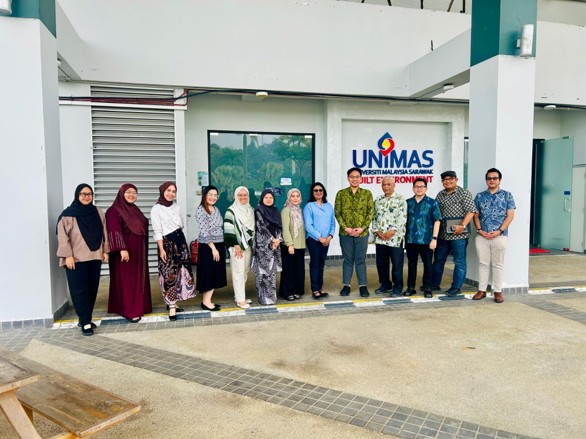
Group photo with Prof. Dr. Souba upon the completion of the workshop
The final step is to apply the approaches discussed during the workshop in the classroom. As lecturers apply and refine their assessment tasks and rubrics, discussions with colleagues can help identify areas for further improvement. This ongoing reflection can extend the value of the workshop beyond the two sessions and inform future teaching across the faculty.