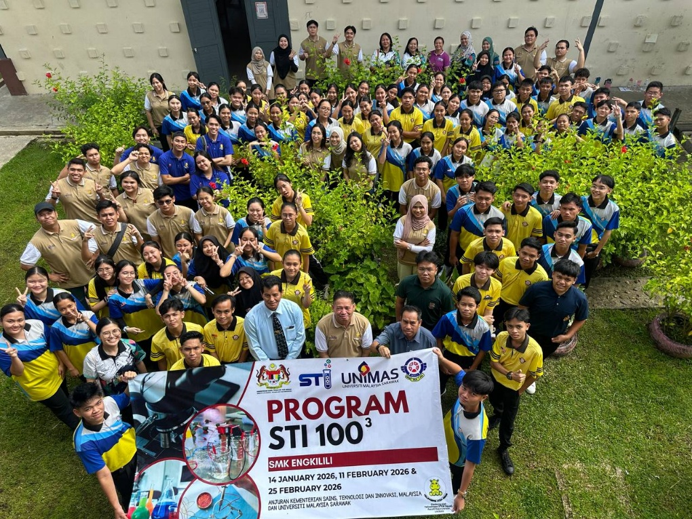
A Science, Technology and Innovation (STI) 1003 Programme, an initiative by the Ministry of Science, Technology and Innovation Malaysia, was successfully conducted at SMK Engkilili on 14 January 2026. The programme aims to strengthen interest in Science, Technology, Engineering, and Mathematics (STEM) among Malaysian students through direct engagement with scientists to applied scientific learning. Moreover, STI involves 100 scientists engaging with more than 100 schools nationwide over a 100-day period, with the objective of cultivating critical thinking, creativity, and problem-solving skills among students while fostering sustained interest in STEM.
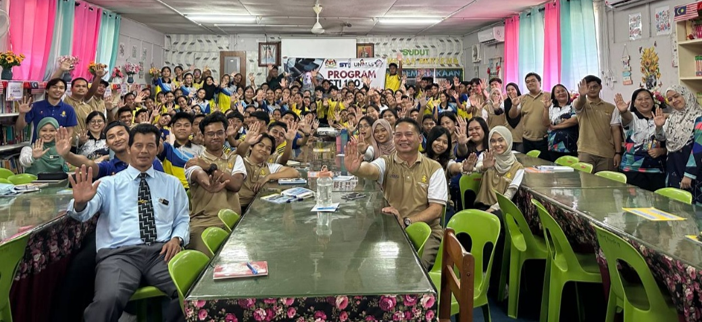
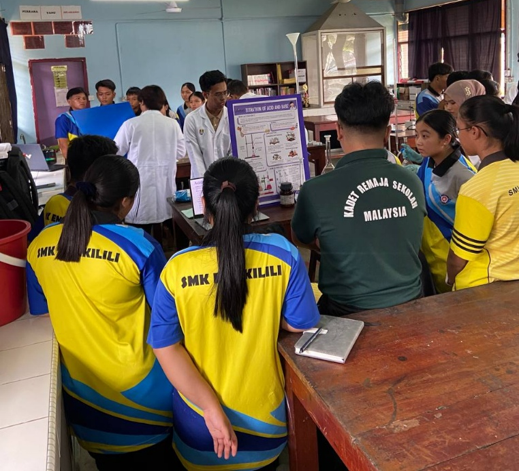
The STI 1003 programme at SMK Engkilili was led by the Faculty of Engineering, Universiti Malaysia Sarawak through its Department of Chemical Engineering and Energy Sustainability. Under the guidance of Dr Nazeri Abdul Rahman, the programme was conducted under the theme “The STEM Journey” which involved 97 students from Form 4 and Form 5 classes. Several STEM experiments were implemented which including peat water treatment using an electrocoagulation system, extraction of essential oils, biodiesel production, an introduction to the saponification process, as well as acid-base titration. These experiments where structured to emphasize engaging learning experiences while enabling students to understand scientific principles. The principle of SMK Engkilili, Mr Haji Hamdan bin Haji Juli expressed appreciation for the selection of the school by noting that the programme demonstrated inclusive outreach despite the school’s rural location.
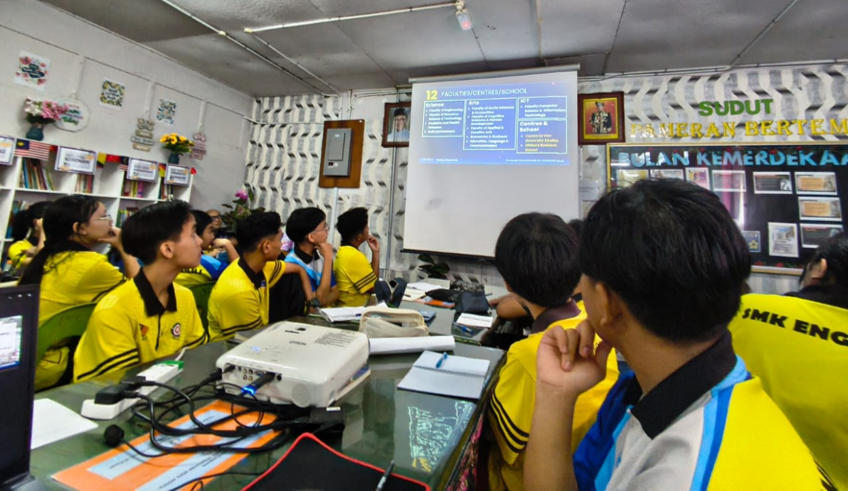
In addition to the experimental sessions, Dr Nazeri Abdul Rahman delivered a STEM talk that highlighted the importance of science and engineering in national development while also introducing UNIMAS as a potential pathway for students pursuing higher education. The involvement of the UNIMAS Yellowhippo STEM Squad from the Department of Chemical Engineering and Energy Sustainability which comprised approximately 25 student volunteers added significant value to the programme.
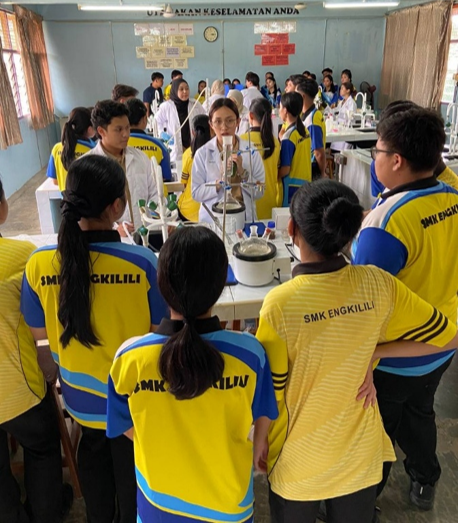
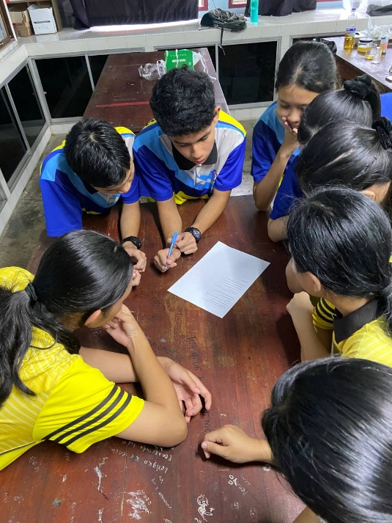
One of the volunteers, Mr Alyne Renno Stephen, a final year student from the department, shared that participation in the programme provided an opportunity to contribute local communities, share scientific knowledge with students, and develop essential soft skills such as communication and teamwork. Mdm Norasikin Roslan, the STEM Coordinator at SMK Engkilili, emphasized that the programme supports Malaysia education agenda to increase student participation in STEM-related fields. Similar views were mentioned by STEM teacher Miss Cheryl Kuan Mei, who highlighted the value of real-life applications in enhancing student understanding and interest.
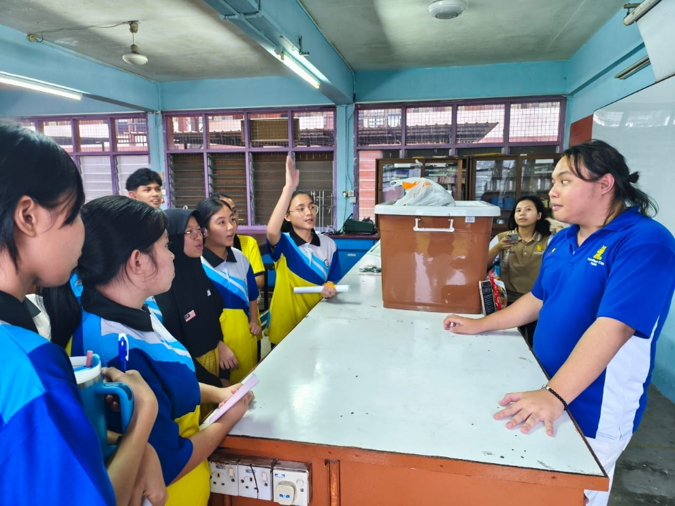
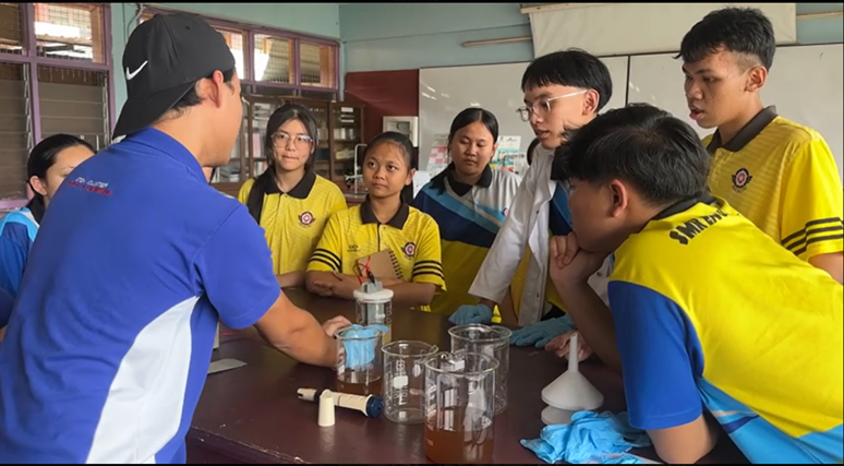
Overall, the STI 1003 programme at SMK Engkilili was conducted smoothly and achieved its intended objectives. The continuation of the programme through Cycle Two and Cycle Three in February 2026 will focus on introducing the basic scientific research concepts with the aim of further strengthening STEM interest among secondary school students.
Report provided by Dr Nazeri Abdul Rahman