The Faculty of Cognitive Sciences and Human Development (FCSHD), Universiti Malaysia Sarawak (UNIMAS), in collaboration with the Special Education Integration Programme (PPKI) of SMK Lundu, successfully conducted a field visit on 6 May 2026 at PPKI SK Bumiputera Lundu and PPKI SMK Lundu as part of the KMK2263 Database Management System course project for the 2025/2026 semester.
Organised under the UniMADANI initiative, the programme reflects a strategic collaboration between UNIMAS and schools in Lundu to support inclusive education and bridge the digital and skills gap within the Orang Kurang Upaya (OKU) community. The visit centred on the modern greenhouse projects at both schools, which implement fertigation and hydroponic systems under the guidance of Ts. Ahmad Sofian bin Shminan.
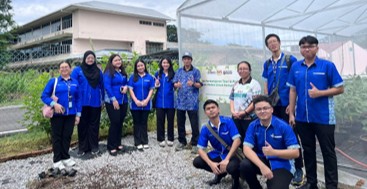
The field visit formed a mandatory component of the KMK2263 Database Management System project, which requires students to design and develop a mobile-based learning application prototype using FlutterFlow with a Firebase cloud database backend. The site visit served as the requirements analysis phase of the project, enabling students to conduct structured interviews and direct observations to gather empirical data for system and content development.
A total of ten student representatives travelled from UNIMAS, Kota Samarahan, to Lundu to engage directly with teachers, greenhouse coordinators, and OKU students involved in the programme. Through structured interview sessions, students explored existing operational workflows, record-keeping practices, and challenges in greenhouse management. Discussions focused on crop monitoring, nutrient scheduling, harvest recording, inventory management, student participation, and the limitations of current manual documentation methods.
The teachers also shared insights into how greenhouse activities contribute to the development of teamwork, responsibility, practical skills, and self-confidence among OKU students. These findings provided valuable direction for the development of the application’s learning modules and activity management features.
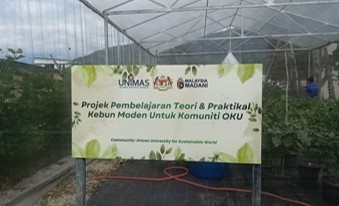
In addition to the interviews, students conducted direct observations at the greenhouse sites to better understand day-to-day operations and assess how information is currently recorded and utilised. Several operational challenges were identified, including damaged hydroponic pipes, unsuitable fertiliser usage, and inconsistent manual record-keeping practices. These observations highlighted the potential role of a systematic database management solution in improving operational efficiency and supporting inclusive agricultural learning environments.
The programme exemplifies the active learning philosophy embedded within the course, emphasising the importance of real-world engagement in the development of meaningful information systems. The field experience enabled students to collect authentic qualitative data that will directly inform the design of their database structures, learning content, and mobile application features.
Beyond its academic objectives, the visit strengthened engagement between UNIMAS students and the OKU community, fostering greater awareness of the importance of inclusive technology design. Students also gained exposure to sustainable agriculture practices through the observation of fertigation and hydroponic systems, aligning the project with broader sustainable development goals.
The collaboration between UNIMAS, PPKI SK Bumiputera Lundu, and PPKI SMK Lundu demonstrates how inclusive education and digital innovation can advance together to create meaningful community impact. It is hoped that the mobile learning applications developed through the project will contribute towards enhancing greenhouse operations, supporting skills development among OKU students, and promoting a more inclusive educational ecosystem in Sarawak.
Contributed by Ashley Thian Tze Ting