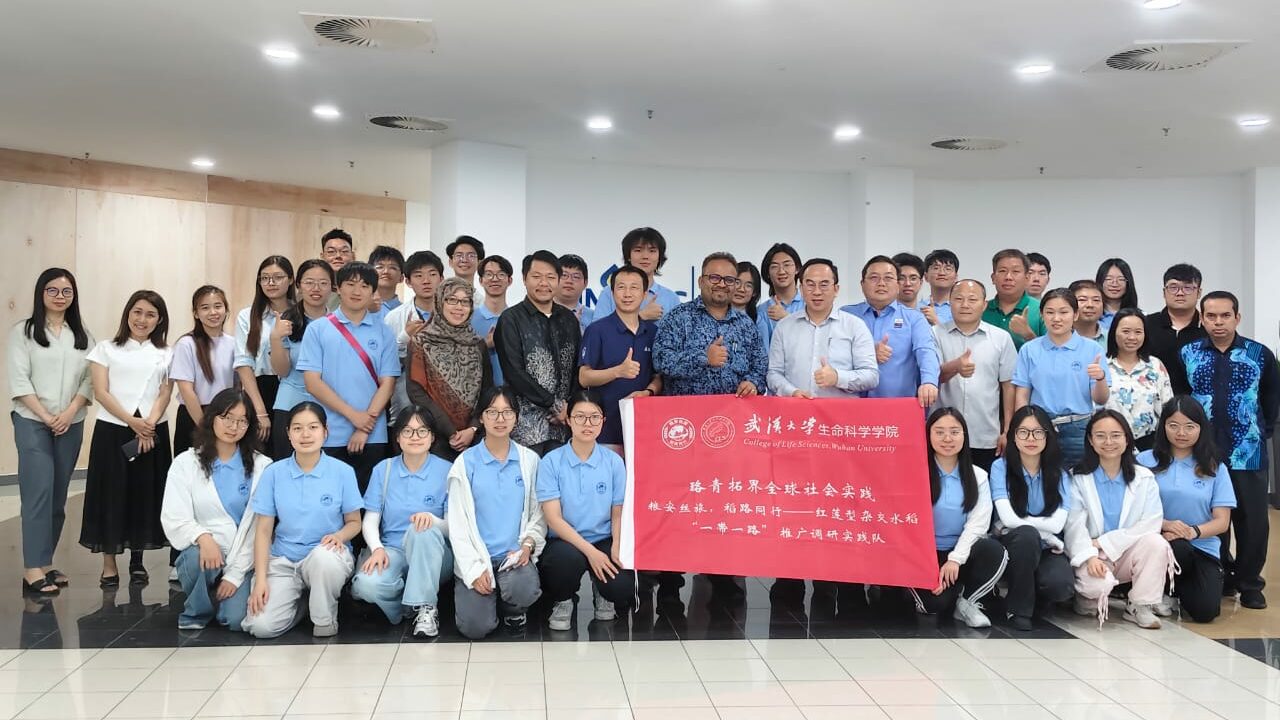
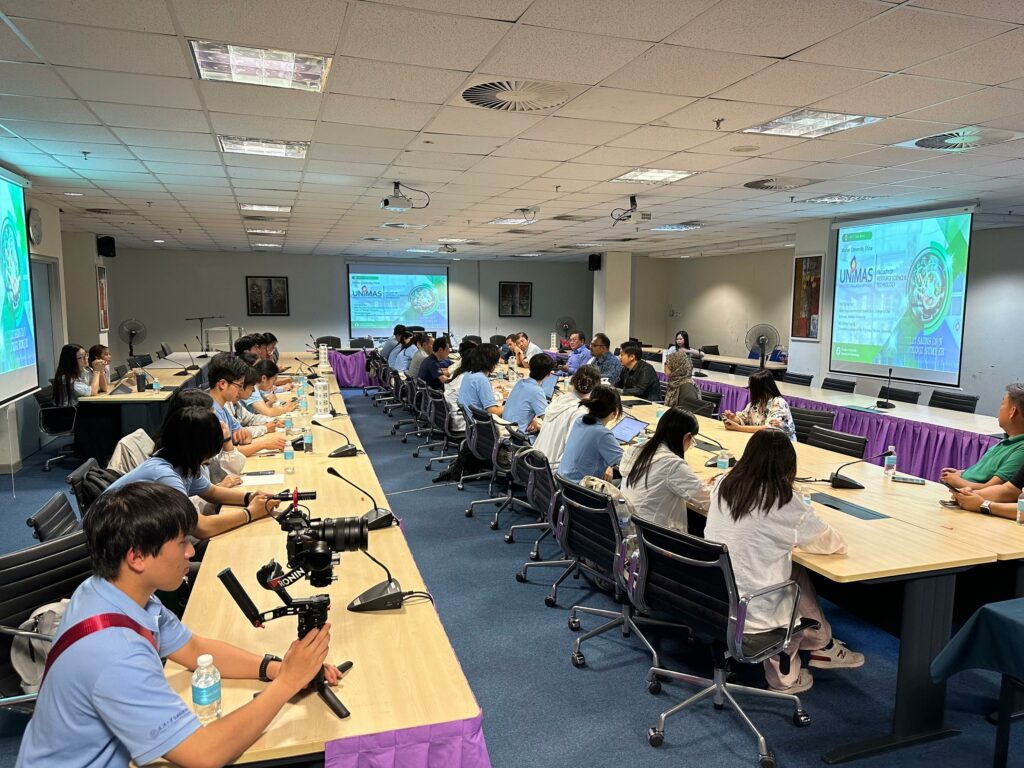
In a significant step towards deepening international academic engagement in agricultural science, the Faculty of Resource Science and Technology (FRST), Universiti Malaysia Sarawak (UNIMAS), hosted a delegation from Wuhan University, China, on 9 April 2026 for an official academic visit and research dialogue centred on rice science, breeding innovation, local germplasm resources, and potential future collaboration. Held in the Main Meeting Room of FRST, the programme brought together academic leaders, researchers, students, and a strategic industry representative from Onemas Agriculture Sdn Bhd to exchange views on rice research issues of growing importance to Sarawak and the wider region. The dialogue focused on how rice research can progress from biodiversity and scientific discovery towards field-validated innovation that supports long-term food security.
A Dialogue Anchored by Academic Excellence
Wuhan University is a leading comprehensive research university in China, with a strong international standing and established research capacity. Ranked among the top 10 universities in Mainland China and 122nd in the Times Higher Education World University Rankings, the university brings considerable academic prestige and research strength. In the context of this visit, its participation enhanced the academic value of the dialogue and underscored the benefits of engagement between institutions with complementary scientific capabilities.
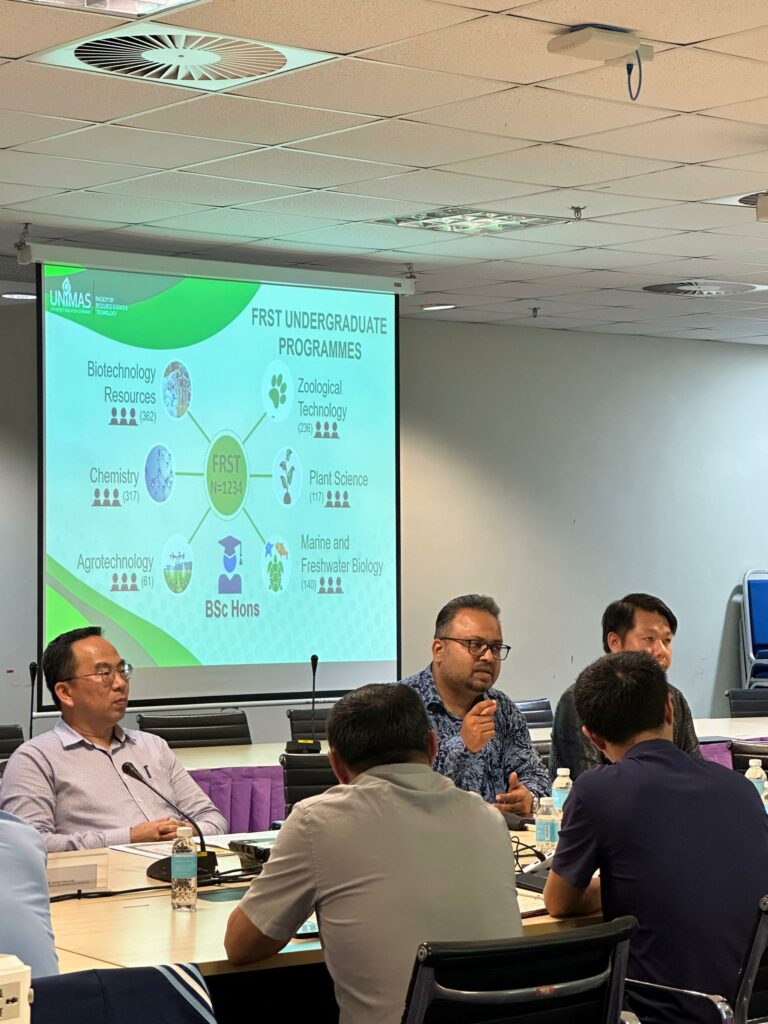
The programme opened with welcoming remarks from Prof. Dr Faisal Ali Bin Anwarali Khan, Dean of FRST, UNIMAS, who warmly received the Wuhan University delegation and highlighted the growing importance of agricultural science, food security, and regional development as priority areas for inter-university collaboration. This was followed by remarks from Prof. Dr Hu Jun, head of the Wuhan University delegation, who emphasised the importance of sustained academic exchange and continued cooperation in rice research and crop improvement.
Wuhan University Showcases a Mature Hybrid Rice Research Platform
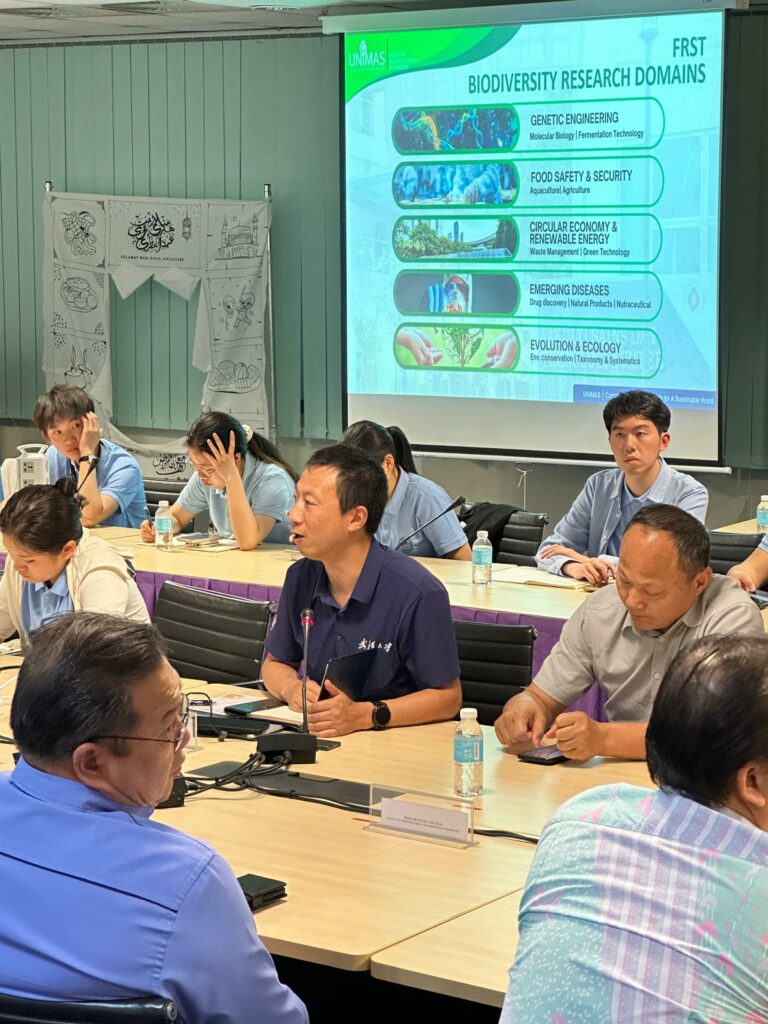
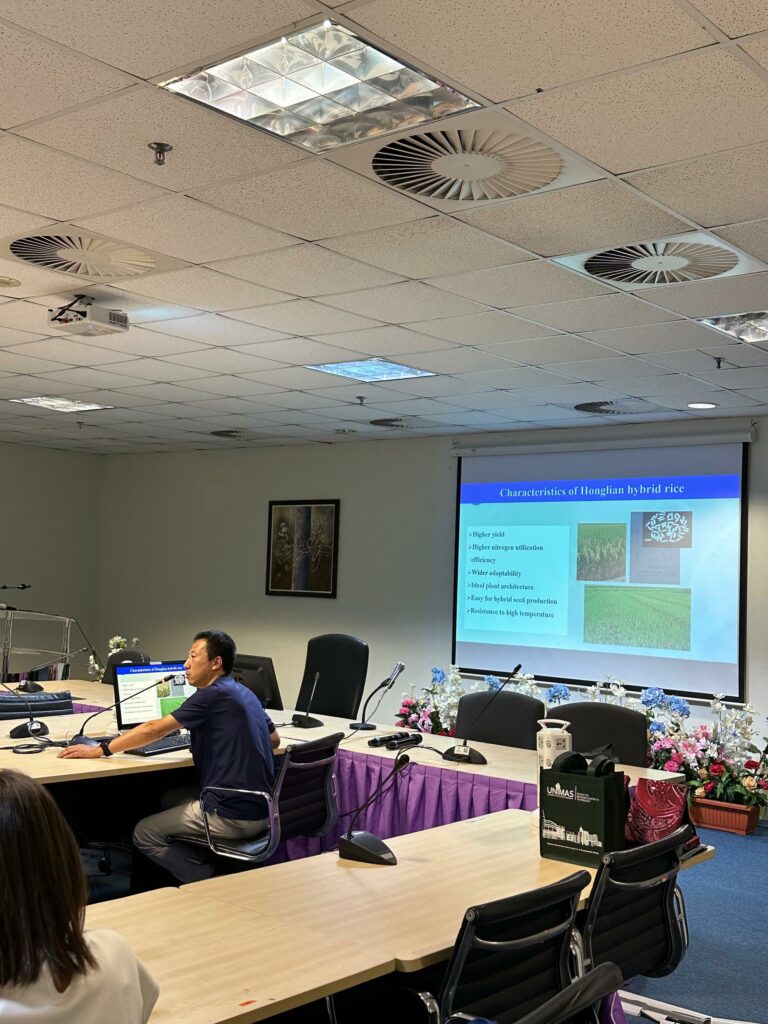
The first major presentation was delivered by Prof. Dr Hu Jun on behalf of the State Key Laboratory of Hybrid Rice at the College of Life Sciences, Wuhan University. His presentation provided an overview of a well-established hybrid rice research platform, supported by scientific depth, technological integration, and long-term breeding development.
Prof. Dr Hu Jun noted that China had faced serious food security challenges in earlier decades, but that sustained advances in hybrid rice technology have played an important role in improving yields, grain quality, and food security outcomes. His presentation covered the broader mission of hybrid rice breeding, including the development of high-yielding, widely adaptable, and resilient rice varieties, as well as technical progress in restorer line development and marker-assisted selection (MAS).
A key part of the presentation focused on Honglian hybrid rice, particularly its yield potential, heat tolerance, high nitrogen-use efficiency, ideal plant architecture, ease of hybrid seed production, and broad adaptability. Together with the presentation of key gene studies, such as Rf5, the session demonstrated Wuhan University’s systematic research capability and technological strength in hybrid rice breeding.
Prof. Dr Hu Jun further noted that, in line with China’s ongoing Belt and Road Initiative, Wuhan University is willing to use hybrid rice as a bridge to foster scientific exchange and international cooperation, with the broader aim of contributing to food security in neighbouring countries and beyond.
Addressing Rice Blast Disease Under Sarawak Conditions
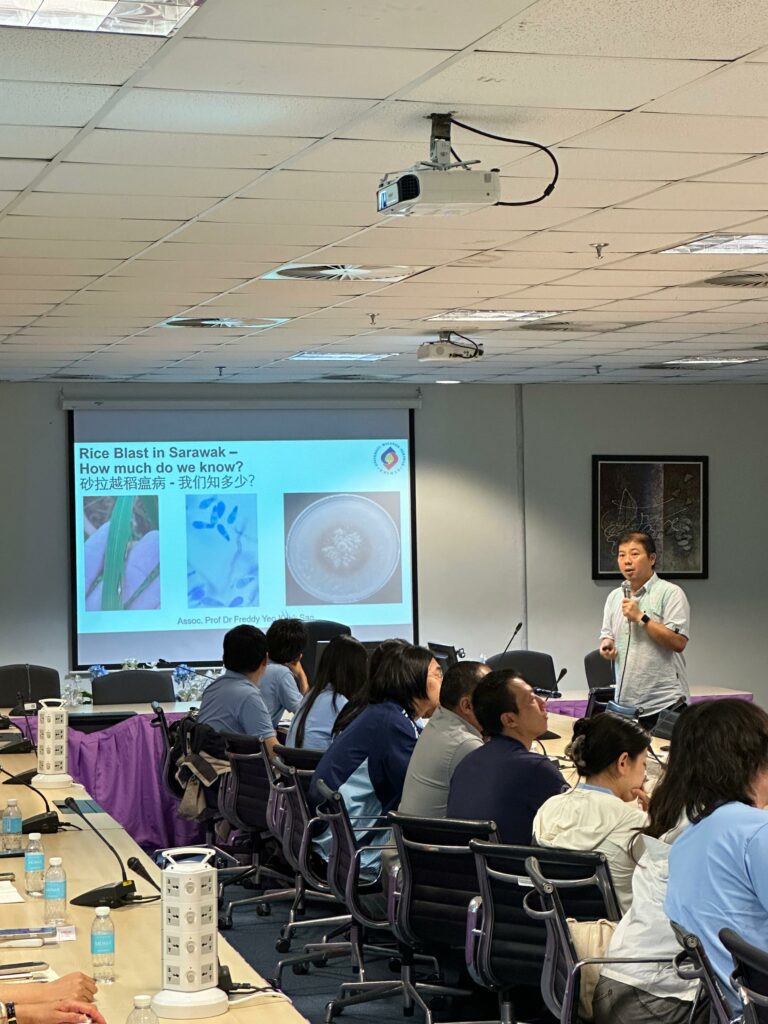
The dialogue then turned to one of the key biological constraints on rice production in the region. Associate Professor Dr Freddy Yeo Kuok San presented ongoing research on rice blast disease in Sarawak, highlighting the complexity of disease expression across the state’s diverse rice varieties.
He explained that although the disease shows considerable morphological variation under Sarawak conditions, its impact remains consistently damaging, particularly through reductions in yield and grain quality. He also highlighted ongoing collaborative work with Nanjing Agricultural University to identify effective strategies for outbreak management, with the longer-term aim of supporting the breeding of rice varieties with improved blast resistance under local conditions.
This segment grounded the dialogue in a major production constraint in Sarawak and highlighted the importance of breeding for local adaptation and field-level resilience.
Framing the Sarawak Rice Research Landscape
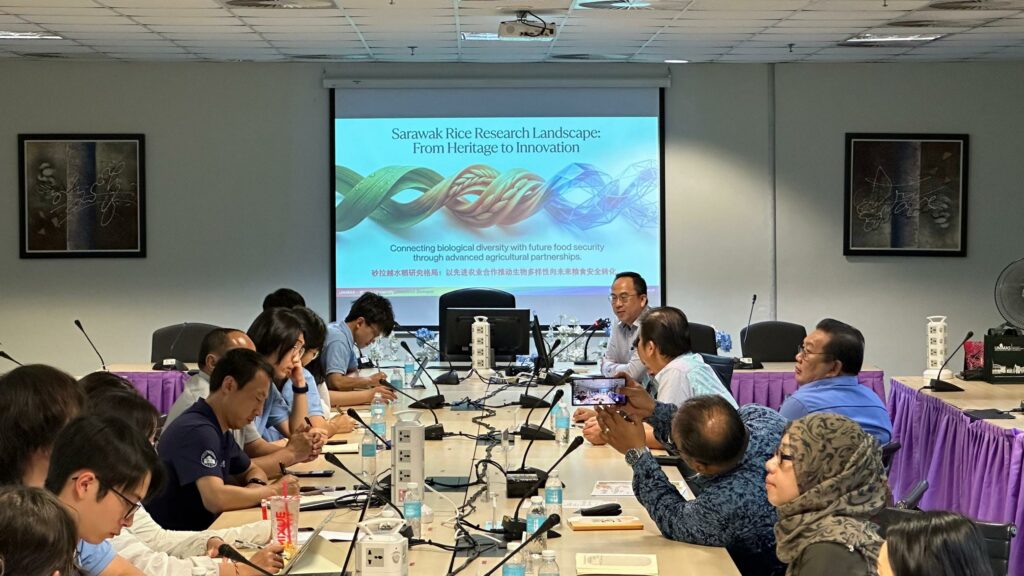
The broader Sarawak perspective was subsequently presented by Prof. Dr Ho Wei Seng. His presentation framed the discussion around the need to link local rice resources to innovation-led improvement and future food security.
His presentation highlighted the dual reality facing Sarawak. On the one hand, the state continues to face pressing challenges in rice self-sufficiency, import dependence, and climate-related risks. On the other hand, it possesses rich and valuable local rice germplasm resources with significant potential for adaptation, resilience, grain quality, and future breeding improvement.
Prof. Dr Ho Wei Seng underscored that research on Sarawak rice landraces has already accumulated a substantial scientific foundation (1980-2025), spanning molecular diversity, plant pathology, microbial ecology, and physiological traits. However, a key bottleneck remains in translating these findings into validated outcomes. The critical challenge is no longer merely identifying resources, but converting useful traits from local germplasm into improved materials that are tested under field conditions and deployable within wider breeding and production systems.
To address this gap, he introduced the concept of Sarawak PADI, a platform designed to integrate agricultural technologies, digital tools, climate-smart agronomy, and field validation within a coordinated improvement pathway spanning local germplasm, breeding advancement, seed production, and scalable agricultural solutions.
Complementary Strengths, Shared Strategic Direction
Taken together, the presentations indicated clear complementarity of research strengths and potential for collaboration.
Wuhan University brings to the dialogue a robust foundation in hybrid rice breeding systems, restorer line development, molecular mechanism studies, and marker-assisted improvement. By contrast, UNIMAS contributes a strategically important tropical research environment characterised by rich local rice germplasm, ecological diversity, and a pressing need for adaptive, field-oriented innovation.
In practical terms, one side contributed advanced hybrid rice technology and breeding expertise, while the other provided a scientifically valuable and regionally significant setting in which such technologies could be tested, interpreted, and localised. This convergence gave the discussion clear scientific and strategic relevance, particularly regarding the future of rice research in Sarawak.
Toward Structured Collaboration
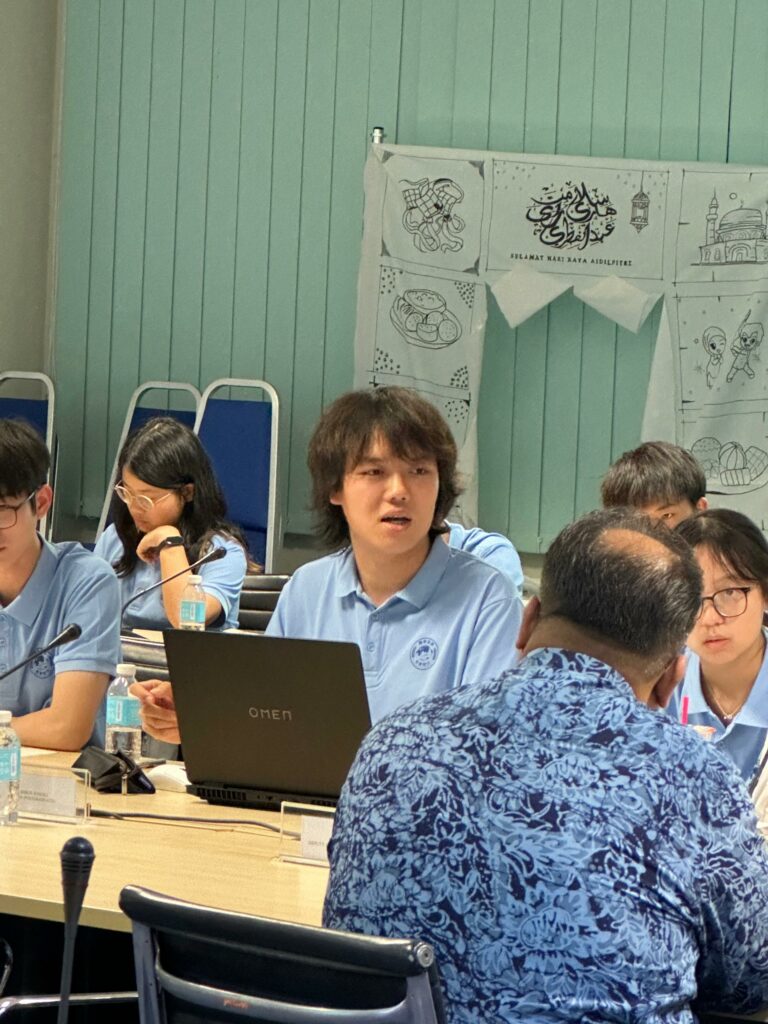
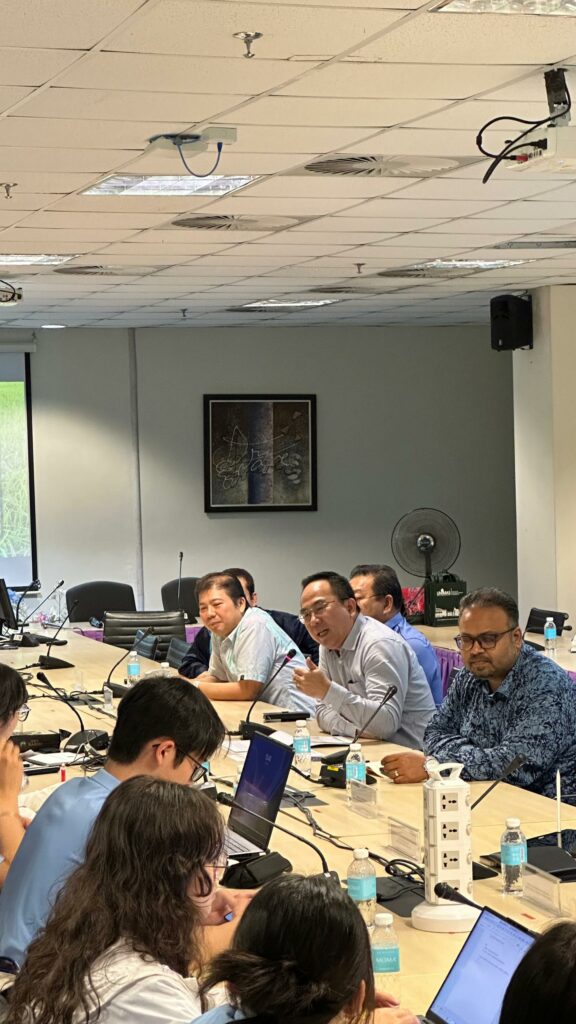
The formal presentations were followed by an in-depth discussion, during which both institutions explored potential pathways for future cooperation. Topics included joint evaluation of local germplasm, validation of adaptation, collaborative hybrid rice breeding, joint trials, postgraduate training, and broader academic exchange.
The exchange identified a credible basis for further collaboration, grounded in complementary scientific strengths, practical research needs, and a shared commitment to food security. As an immediate follow-up, both parties may consider a technical discussion to identify priority themes for cooperation, including local germplasm evaluation, hybrid rice adaptation to Sarawak conditions, and postgraduate academic exchange. Any future collaboration, however, will require further alignment on research scope, trial conditions, institutional roles, and expected deliverables.
Significance of the Engagement
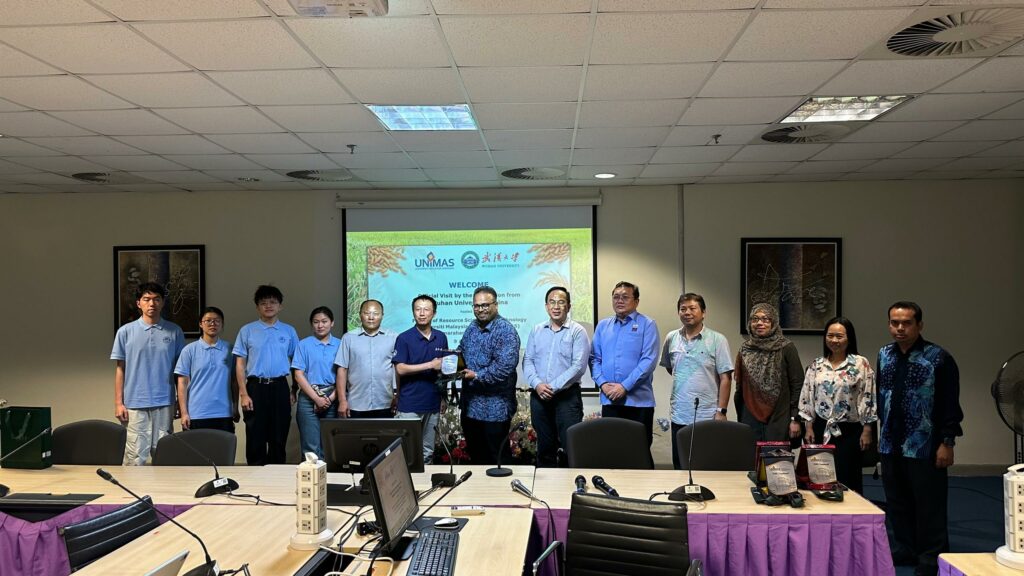
The programme concluded with an exchange of souvenirs and a group photograph, marking the close of an engagement with clear scientific content and strategic value.
The visit went beyond ceremonial purposes and demonstrated how international academic exchange can further develop research partnerships. It deepened mutual understanding of each institution’s scientific strengths and priorities and opened avenues for further discussion on the utilisation of local rice germplasm, the integration of hybrid rice technologies, joint research, and talent development.
The engagement also supported FRST’s broader agenda across research visibility, international networking, and postgraduate academic development.
Overall, the visit helped define a shared direction for advancing Sarawak rice research, from biodiversity and scientific discovery to validated innovation, translational impacts, and long-term food security.
Prepared and written by: Prof. Dr. Ho Wei Seng