SADONG JAYA — On 19 August 2026, Year 1 Doctor in Public Health (DrPH) students from Universiti Malaysia Sarawak (UNIMAS) brought adolescent health education to life through the “THRIVE 360°: Healthy Mind, Healthy Body, Healthy Relationship” community programme at SMK Sadong Jaya.
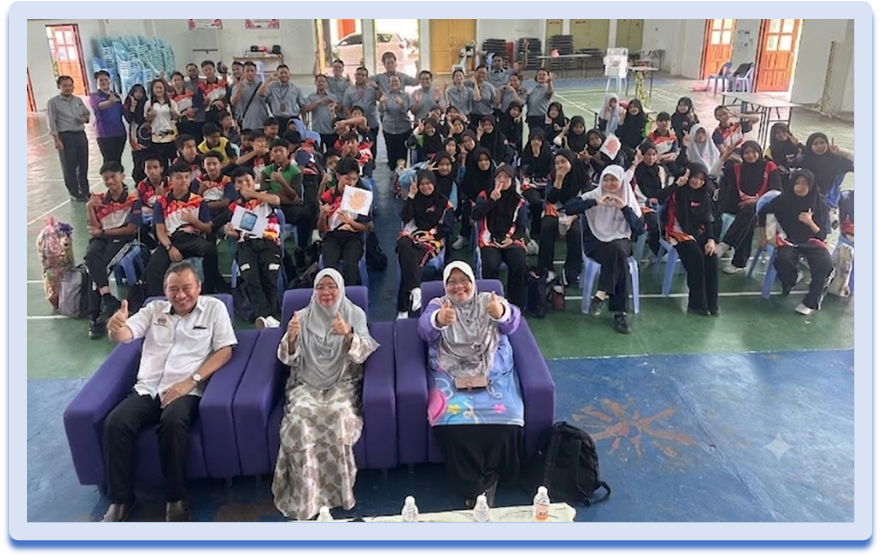
The half-day programme brought together 50 secondary school students aged 13 to 17 years identified through the school’s Minda Sihat screening programme as requiring additional support. The initiative focused on key adolescent health issues including sexual and reproductive health, mental wellbeing, healthy relationships, personal safety, digital responsibility and help-seeking.
Rather than relying on conventional health talks, THRIVE 360° used interactive games, role-play, group discussions and hands-on activities to help students build practical skills, make safer decisions and develop confidence in seeking support.
From Health Messages to Hands-On Learning
The programme began with an ice-breaking activity designed to strengthen communication and teamwork before participants rotated through five interactive stations
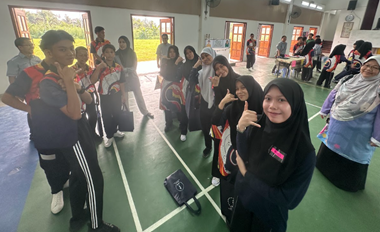
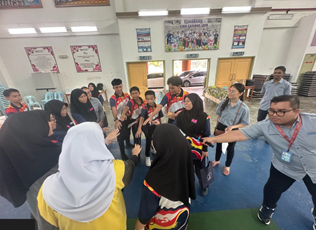
Photo 2.0: Students during the ice-breaking session
● Station 1: Mitos atau Fakta
Students explored common misconceptions about sexual and reproductive health, mental health, healthy relationships, personal boundaries and help-seeking.
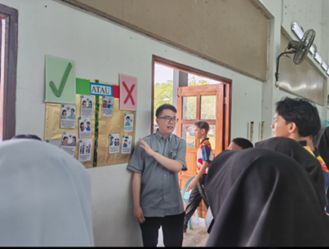
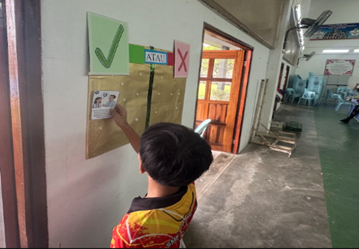
Photo 3.0: Students deciding whether health statements are myths or facts.
● Station 2: Tali-Tali Kehidupan
Teams guided a duckling through a maze while answering questions related to relationship pressure, emotional wellbeing, personal safety, reproduction and social media risks.
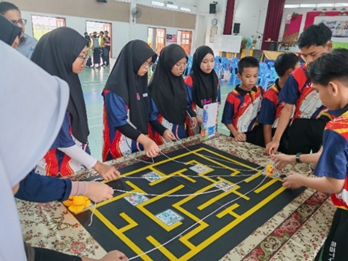
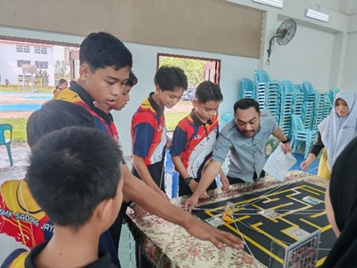
Photo 4.0: Students working together during the Tali-Tali Kehidupan maze activity.
● Station 3: Interactive Secret Talk
Male and female students participated separately and submitted anonymous questions about relationships, consent, emotional wellbeing, responsible behaviour and help-seeking.
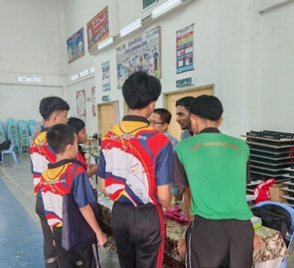
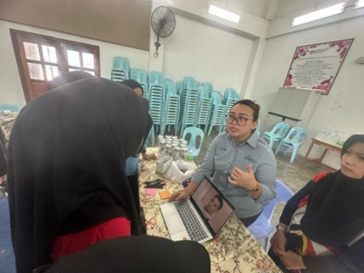
Photo 5.0: Students participating in the gender-specific Interactive Secret Talk session.
● Station 4: Siapa Boleh Bantu?
Through role-play, students practised identifying trusted adults and appropriate sources of support, including parents, teachers, counsellors and healthcare professionals.
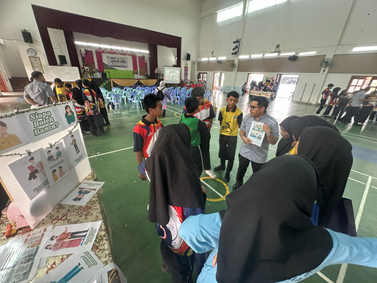
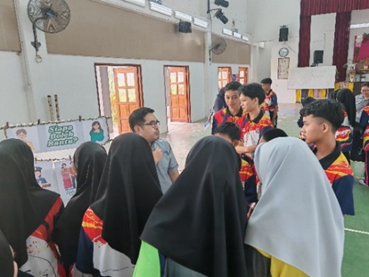
Photo 6.0: Students participating in role-play activities to practise appropriate help-seeking.
● Station 5: Notifikasi Selamat
Students assessed simulated online conversations as “Selamat,” “Berhati-hati” or “Tidak Selamat” and discussed ways to respond safely to online risks.
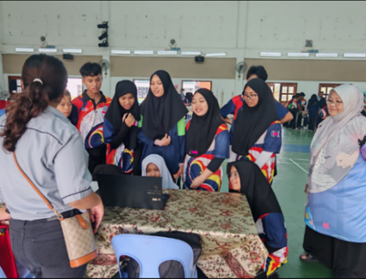
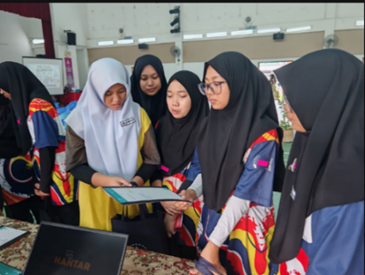
Photo 7.0: Students deciding whether simulated online conversations are safe, suspicious or unsafe.
Building a Bridge Towards the Future
The highlight of the programme was “Jambatan Masa Depan”, a one hour reflective team challenge. Students constructed symbolic bridges representing protective factors such as self-respect, healthy relationships, trusted adults, school aspirations, digital responsibility, accurate information and early help-seeking. Through the activity, students reflected on how these protective factors could help them overcome challenges and build a healthier future.
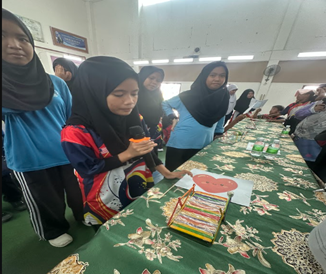
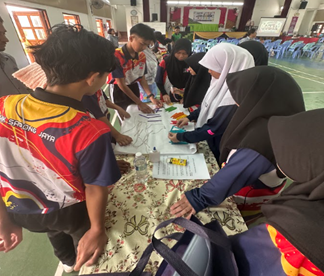
Photo 8.0: Students collaboratively constructing their “Jambatan Masa Depan” and presenting their vision for the future.
Students Respond Positively
The programme received an overall satisfaction score of 4.07 out of 5 with all 50 participants completing the evaluation. The highest rated aspect was the students’ perception that the programme improved their sexual and reproductive health and mental health knowledge with a mean score of 4.36 out of 5.
A total of 80% of students agreed or strongly agreed that the programme improved their knowledge, while 82% agreed or strongly agreed that the programme environment was comfortable and supportive for learning.
Students particularly appreciated the practical and participatory approach. Their feedback highlighted learning about sexual health, sexually transmitted infections, emotional management, personal safety, sexual harassment and self-protection. “Jambatan Masa Depan” emerged as the most popular activity.
From Knowing to Doing
The programme also assessed changes in knowledge, attitudes and intention to practise appropriate behaviours using pre- and post-tests.
While overall knowledge scores remained relatively stable increasing slightly from 7.90 to 7.92 out of 10, students demonstrated a significant improvement in their intention to practise positive coping strategies and safe behaviours with the mean practice score increased by 0.17 points (p = .005).
These findings reinforce the importance of moving beyond simply providing health information. By giving adolescents opportunities to practise decision making, problem solving and help-seeking, health promotion can become more meaningful and applicable to everyday life.
A Step Towards Stronger Help-Seeking
Help-seeking was another important focus of the programme. Through activities such as Siapa Boleh Bantu? and Interactive Secret Talk, students were given opportunities to practise identifying appropriate sources of support and communicating their concerns.
The programme emphasised a simple message: “You are not alone.”
Students were encouraged to reach out to trusted adults, school counsellors and healthcare professionals whenever support is needed.
Building Healthier Futures Together
The THRIVE 360° programme demonstrates how public health education can be transformed when adolescents are given opportunities to move, discuss, decide, create and reflect.
While the one day intervention cannot establish long term behavioural change, the findings suggest that the programme successfully created a positive and engaging learning experience and strengthened students’ immediate readiness to apply health messages.
The THRIVE 360° programme exemplifies the value of experiential and community-based learning in Doctor of Public Health (DrPH) training. Through engaging with real public health challenges in a school setting, the postgraduate students were able to apply principles of needs assessment, health promotion, programme planning, implementation, monitoring and evaluation beyond the classroom environment. The experience strengthened key competencies expected of future Public Health Physicians, including leadership, communication, intersectoral collaboration, community engagement, critical thinking and evidence-based decision-making. Equally important, it provided an opportunity for the postgraduate students to better understand the complex social, behavioural and environmental factors that influence adolescent health. Such learning experiences play an important role in preparing future Public Health Physicians who are not only technically competent, but also responsive to community needs and committed to improving population health outcomes.
Written by Dr. Edna Lim Su Sing¹, Faculty of Medicine and Health Sciences
Edited by Associate Prof. Dr. Deburra Peak Ngadan¹
Photo Credits: Sri Vithia A/P Sathia Moorty¹
¹Doctor in Public Health, 2025/2026 – Semester 3, Community Medicine and Public Health Department