Written by Siti Khatijah Zamhari
Second-year students from the Development Planning and Management programme recently participated in a practical field session on the Mini Stream Assessment Scoring System (MiniSASS) as part of the SSR2023 Environmental Dimensions of Development course. The session provided valuable first-hand experience in river health monitoring and freshwater ecosystem assessment.
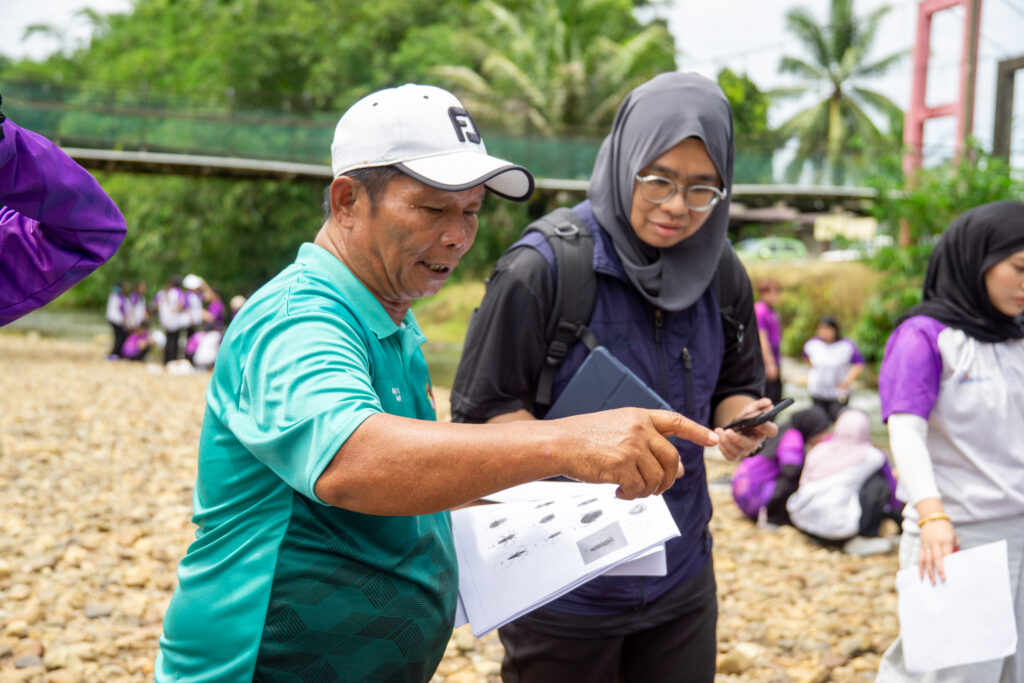
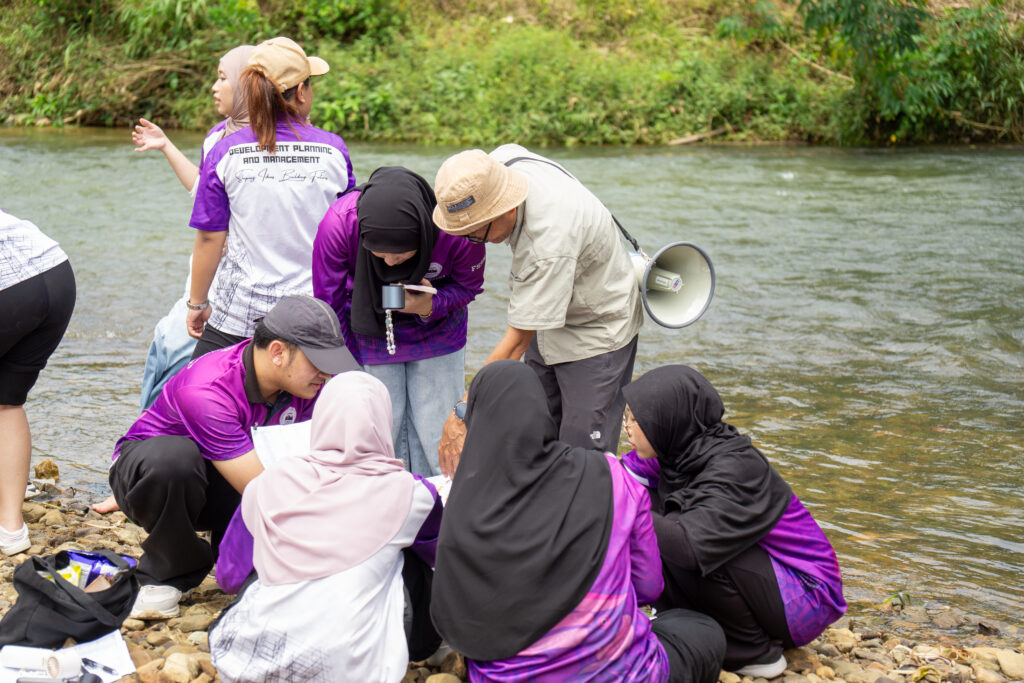
The practical session was conducted at Kampung Terbat Mawang, a village well known for its successful Tagang System, a community-based river conservation initiative that promotes sustainable river management and fish preservation. The activity provided students with an opportunity to connect classroom learning with real-world environmental assessment practices.
The session was guided by Dr. Jongkar, a freshwater ecology expert from the Institute of Biodiversity and Environmental Conservation (IBEC), UNIMAS. Drawing from his expertise in freshwater ecology and river ecosystems, Dr. Jongkar introduced students to the fundamentals of MiniSASS and demonstrated how biological indicators can be used to evaluate river health.
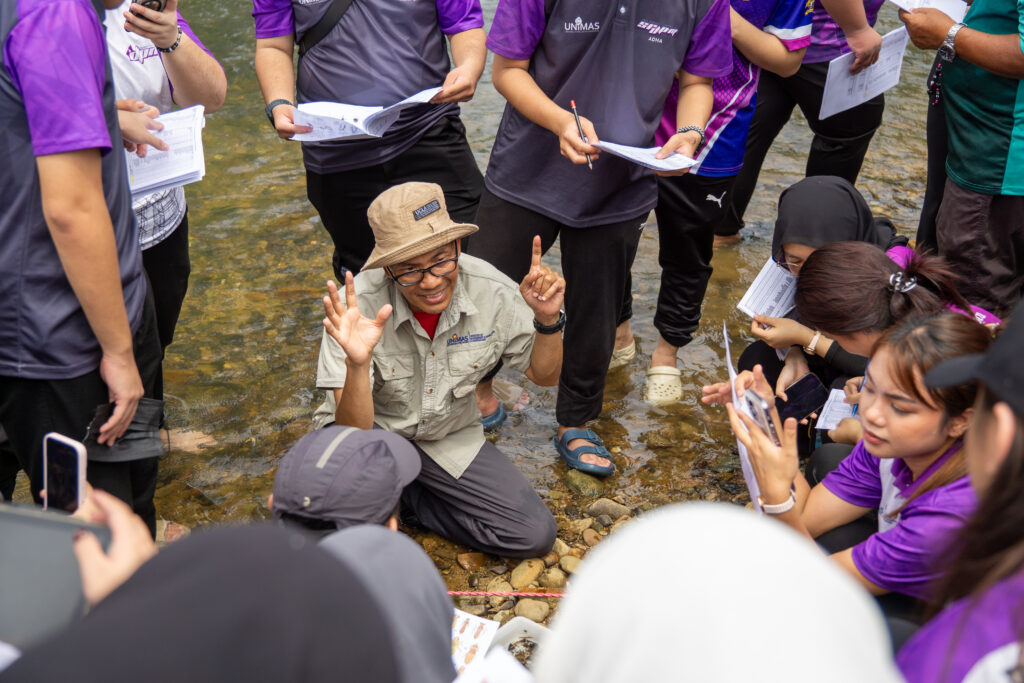
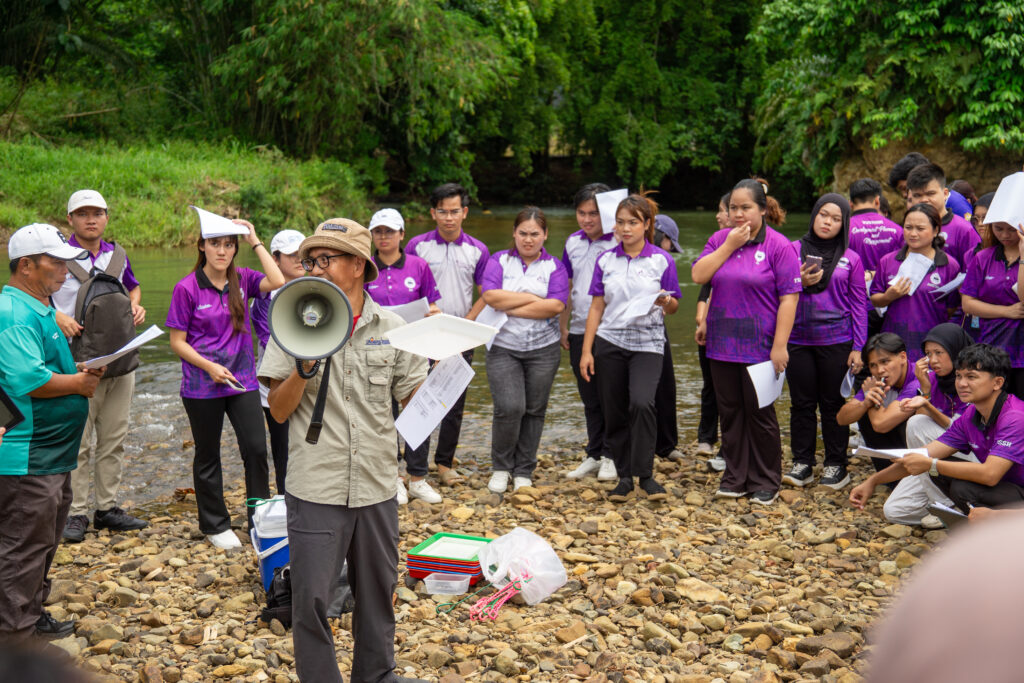
MiniSASS, or the Stream Assessment Scoring System, is a simplified river monitoring tool designed to help communities assess water quality using aquatic macroinvertebrates found in streams and rivers. As a community river health monitoring tool, MiniSASS enables local communities, schools, and non-science groups to actively participate in environmental conservation through citizen science approaches. By observing the diversity and sensitivity of aquatic organisms, users can determine whether a river is healthy, moderately impacted, or polluted.
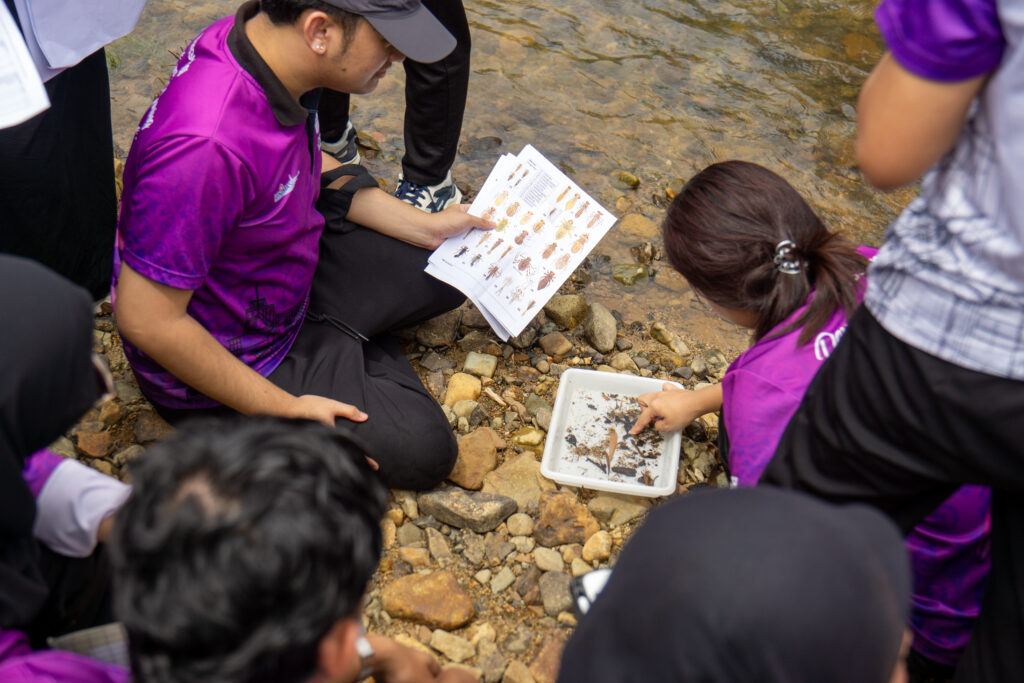
For many of the students, the session marked their first experience conducting stream assessment scoring. Coming from a social sciences background, most had little prior exposure to ecological fieldwork or freshwater monitoring techniques. The activity therefore offered an interdisciplinary learning experience that highlighted the importance of environmental knowledge in development planning and community management.
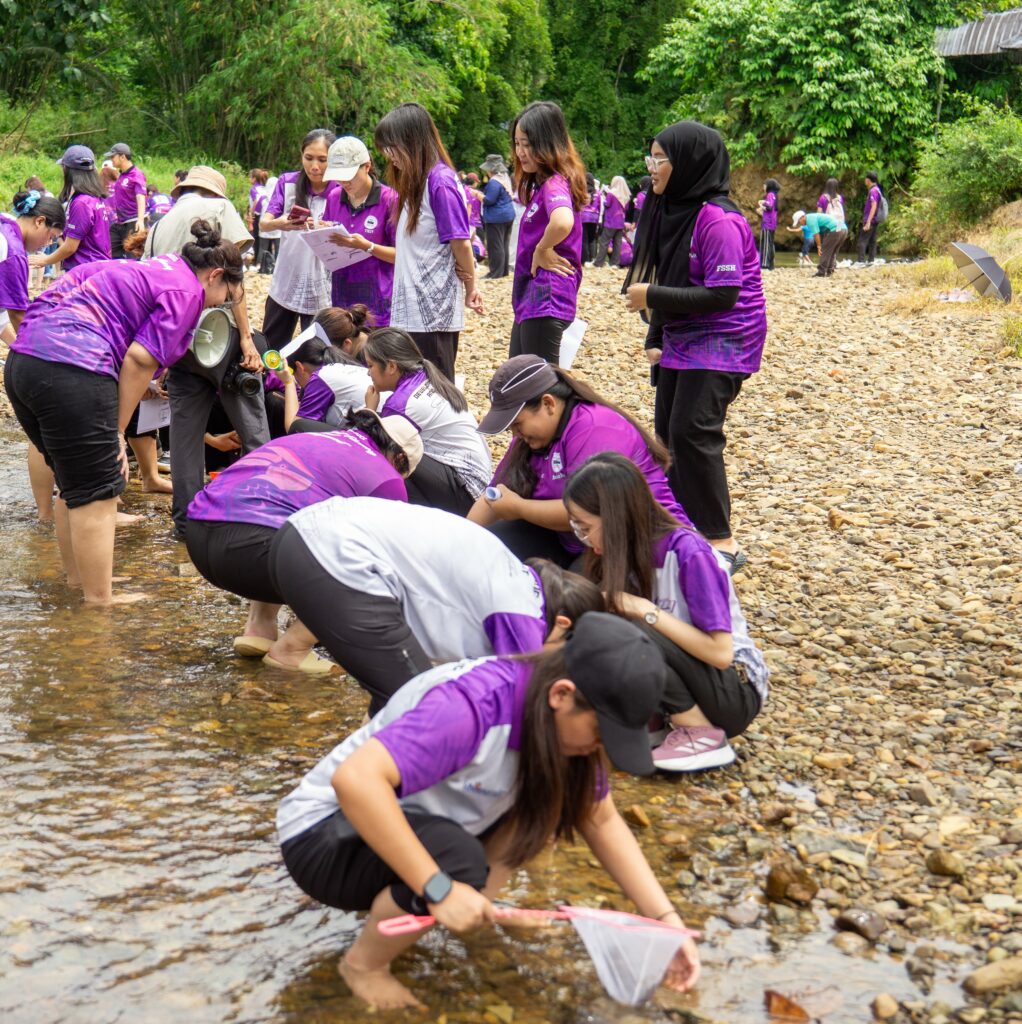
During the practical exercise, students were divided into 10 groups, with each group assigned to a specific location along the river. Equipped with sampling tools and identification sheets, the students collected aquatic organisms from the stream and analysed their findings using the MiniSASS scoring method. Under the guidance of Dr. Jongkar and facilitators, the students learned how different species respond to water quality conditions and how ecological indicators can be translated into river health scores.
After completing the field assessment, each group presented their findings and discussed the condition of their assigned river section. The presentations encouraged critical thinking, teamwork, and data interpretation while allowing students to compare results from different parts of the river.
At the end of the session, the overall findings were compiled and shared with the village headman. The students also informed the community about the current quality and condition of the river based on the MiniSASS assessment results. This engagement reflected the role of participatory environmental monitoring in supporting local awareness and sustainable river management.
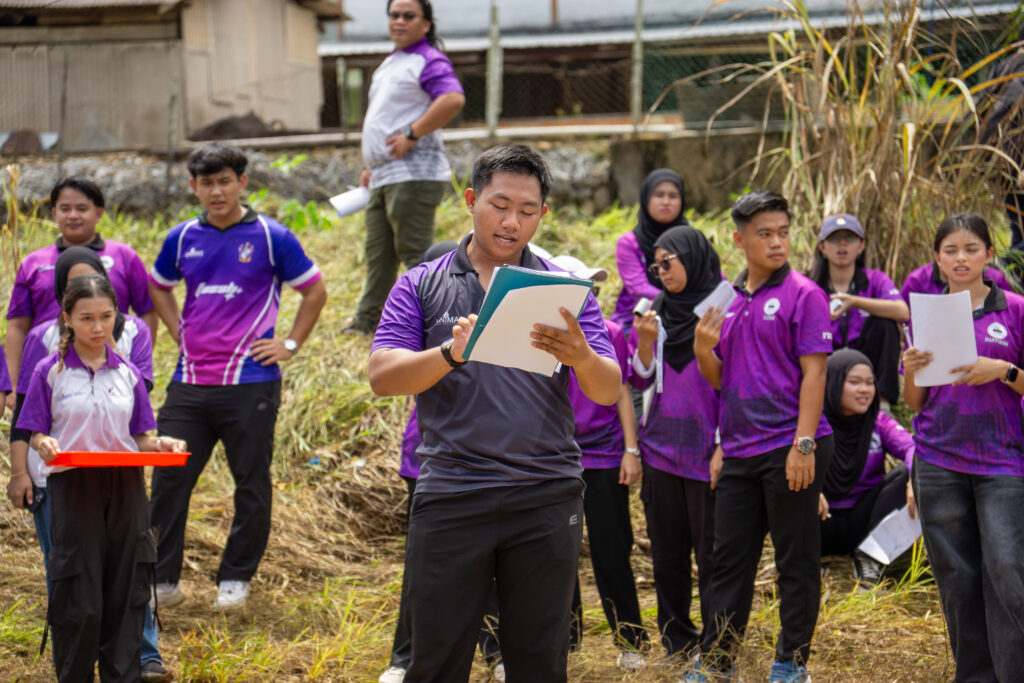
The field activity not only strengthened students’ understanding of environmental assessment methods but also demonstrated how collaborative efforts between scientists, students, and local communities can contribute to freshwater conservation. Through the MiniSASS programme, students gained practical skills while appreciating the importance of protecting river ecosystems for future generations.
FSSH – A Partner for Social Change