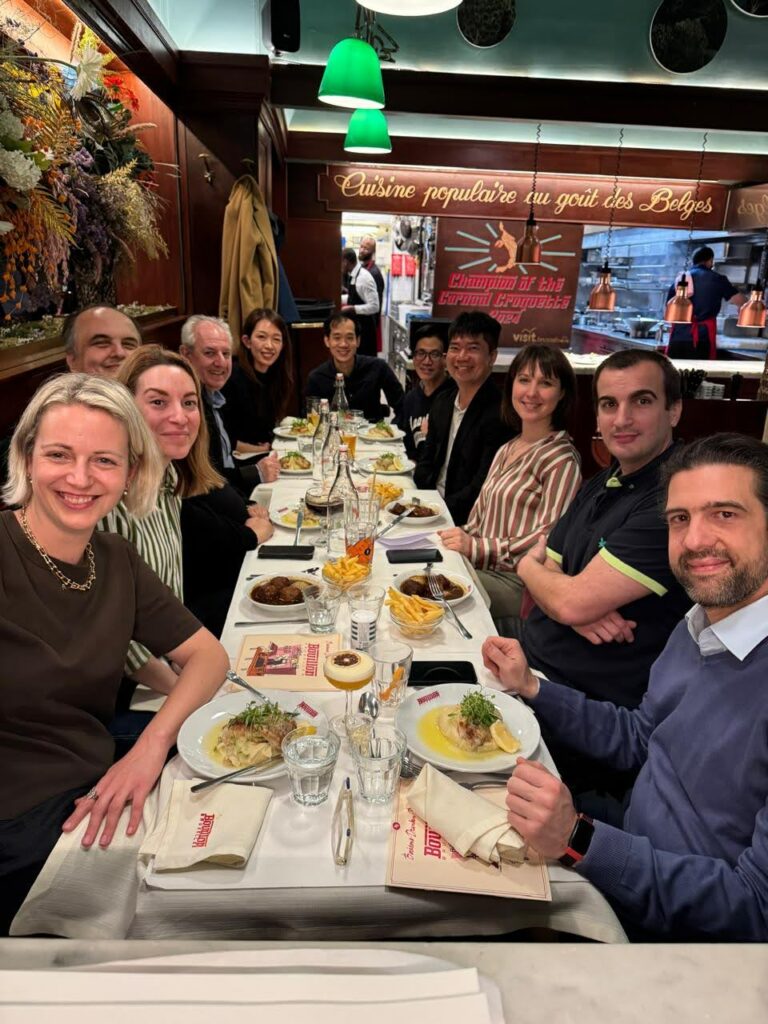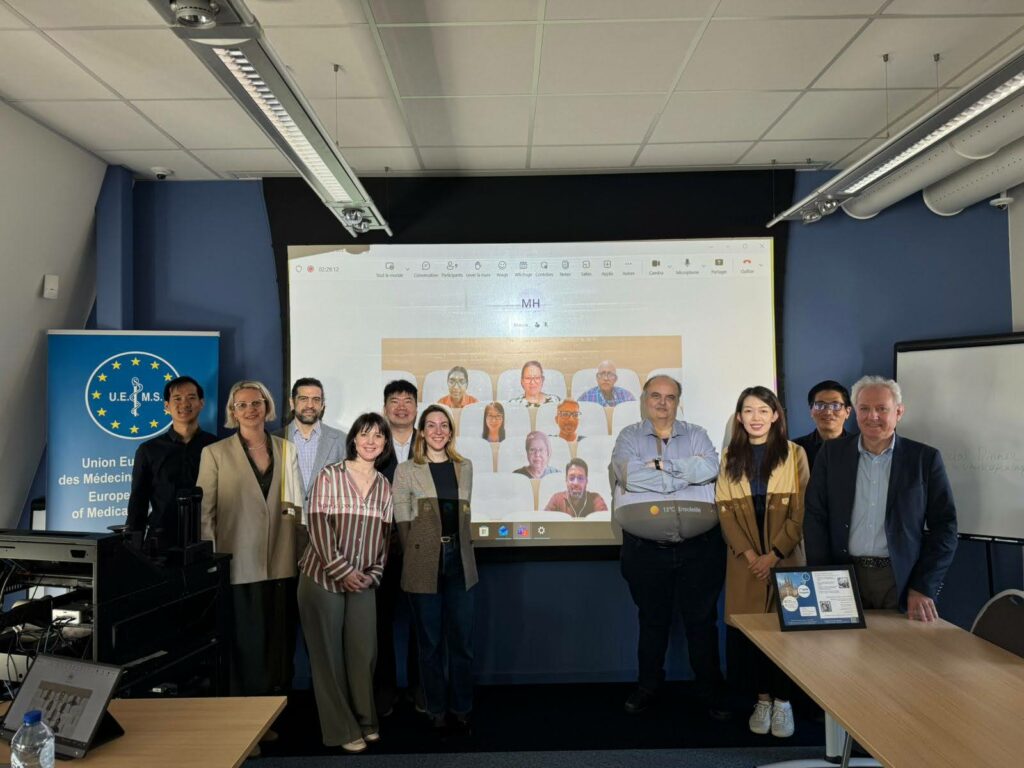
The Upskilling Malaysian Healthcare for Empathy and Communication through Virtual Reality (UM-HEART-VR) initiative reached a major milestone with its official kick-off meeting held in Brussels from 17–19 March 2026. This pivotal gathering brought together a diverse consortium of international partners to align their goals and set the foundation for a project designed to transform healthcare education through Virtual Reality (VR). Guided by the visions of #VRforEmpathy and #SeeWithHEART, the initiative aims to bridge the gap between advancing technical technology and the essential human element of clinical practice, ultimately fostering more compassionate communication skills in future healthcare professionals.
The consortium is led by the Aristotle University of Thessaloniki in Greece and features a strategic collaboration between European and Malaysian institutions. European partners, including the Karolinska Institutet from Sweden and the European Union of Medical Specialists from Belgium, provide technical expertise in VR platforms, digital scenario authoring, and international accreditation frameworks. These resources are integrated with the local academic expertise and national healthcare priorities of the Malaysian partners: Universiti Malaya (UM), Monash University Malaysia (MUM), and Universiti Malaysia Sarawak (UNIMAS). This structured cooperation ensures that the three Malaysian healthcare schools can enhance their soft skills training while remaining aligned with global patient-centered care standards.
The UNIMAS team is led by Associate Professor Dr. Ooi Chor Yau from the Faculty of Medicine and Health Sciences. The team also comprises Professor Dr. Chew Keng Sheng, and Madam Shalin Lee Wan Fei from the same faculty, along with Associate Professor Dr. Suriati Khartini Binti Jali and Dr. Mohamad Imran bin Bandan from the Faculty of Computer Science and Information Technology.
This project addresses a significant challenge in modern medical and nursing education: the difficulty of teaching empathy and communication in high-pressure or emotionally complex environments. Traditional methods, such as classroom lectures or role-play, often struggle to simulate the nuanced realities of patient interaction. In Malaysia’s multicultural healthcare landscape, training in these soft skills has historically been fragmented or limited. By introducing immersive VR simulations, the UM-HEART-VR project provides students with a safe, reflective setting for experiential learning, allowing them to better understand patient perspectives before entering real-world clinical settings.
Ultimately, the UM-HEART-VR project represents a strategic response to the rapid digital transformation of the healthcare sector. By embedding immersive technology into structured training frameworks, the initiative facilitates capacity building and curriculum modernization across participating institutions. Through shared governance and a commitment to knowledge transfer, the consortium aims to ensure a sustainable impact that extends well beyond the project’s duration, shaping a future where clinical competence and digital literacy are matched by a deep, grounded sense of compassion.