Written by Dr Leha Saliman
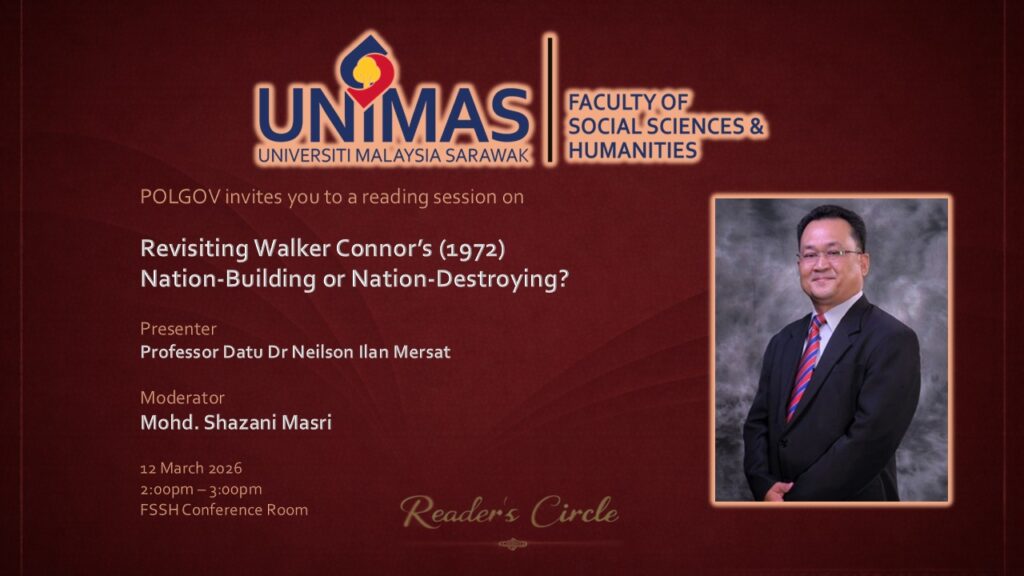
The Politics and Government Studies Programme (PolGov) successfully hosted a Reading Circle on 12 March 2026, bringing together lecturers, undergraduate students, and postgraduate researchers for an intellectually engaging session. The forum provided a platform for critical reflection and interdisciplinary discussion, fostering a vibrant culture of scholarly exchange within the programme and the Faculty of Social Sciences and Humanities (FSSH).
The session focused on Walker Connor’s seminal 1972 essay, “Nation-Building or Nation-Destroying?”, a foundational work in the study of nationalism and ethnic politics. The discussion was led by Professor Datu Dr Neilson Ilan Mersat, with Mr Mohd Shazani Masri as moderator. Despite being published more than fifty years ago, Connor’s essay continues to inform contemporary debates on identity, governance, and national cohesion in multicultural societies.
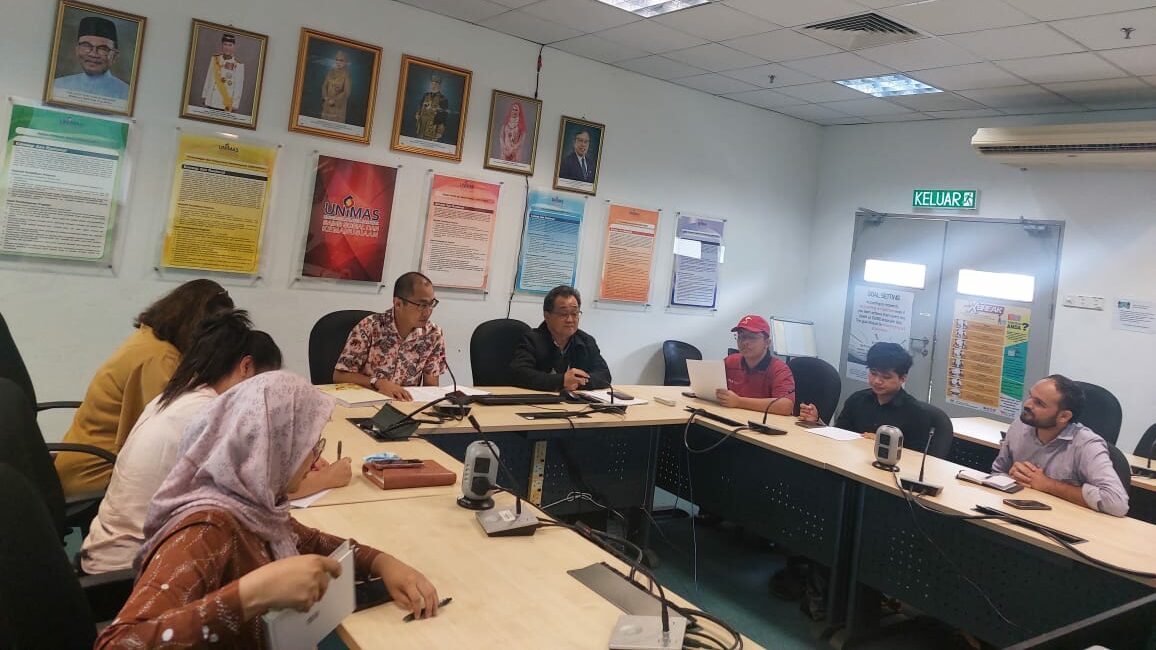
Professor Datu Dr Neilson explained that the reading circle aims to facilitate the sharing of ideas and insights from key scholarly texts, contributing to the broader corpus of knowledge within the field. He emphasised that such sessions are important for fostering intellectual exchange among colleagues in a collegial environment, where participants can collectively reflect on theories, debate interpretations, and deepen their understanding through open and constructive discussion. He also noted that while empirical data is important, it remains incomplete without a strong grasp of the theoretical foundations that help interpret and contextualise research findings.
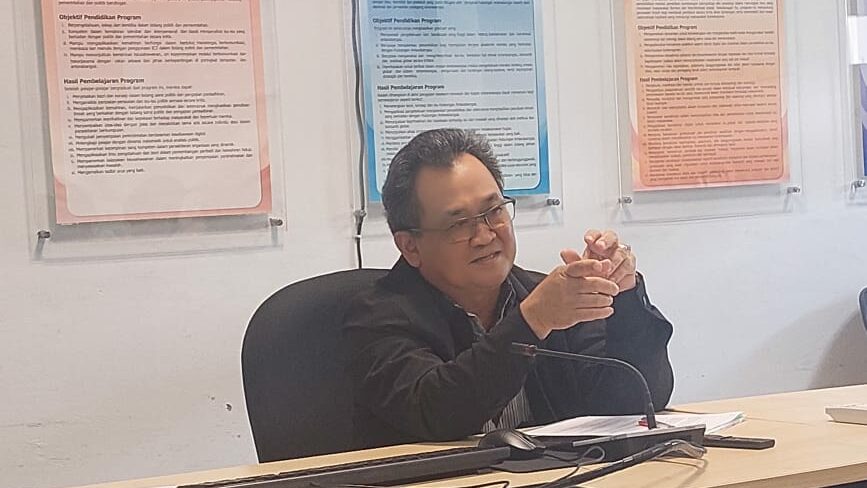
During the session, participants examined Connor’s critique of post–World War II nation-building theories, especially the assumptions of modernisation theory, which posited that economic development, education, and communication would gradually diminish ethnic divisions and produce cohesive nation-states. Connor challenged this view, arguing that modernisation can, in fact, intensify ethnic consciousness and amplify demands for recognition or autonomy. He highlighted the distinction between the state, a political and institutional entity, and the nation, an emotional and psychological community rooted in shared identity, culture, and historical experience.
The discussion also explored Connor’s caution that state-led attempts to impose a singular national identity through linguistic standardisation, cultural assimilation, or uniform education may provoke resistance in ethnically diverse societies. In this context, Professor Datu Dr Neilson emphasised that state-building, grounded in strong institutions, inclusive governance, and political stability, may offer a more pragmatic and sustainable approach than the idealised model of nation-building, particularly in pluralistic societies.
Participants further engaged with contrasting perspectives from scholars such as Benedict Anderson, who conceptualised nations as “imagined communities,” and Ernest Gellner, who linked nationalism to industrialisation and social transformation. These comparisons enriched the debate and encouraged critical evaluation of differing theoretical approaches to nationhood, identity, and governance.
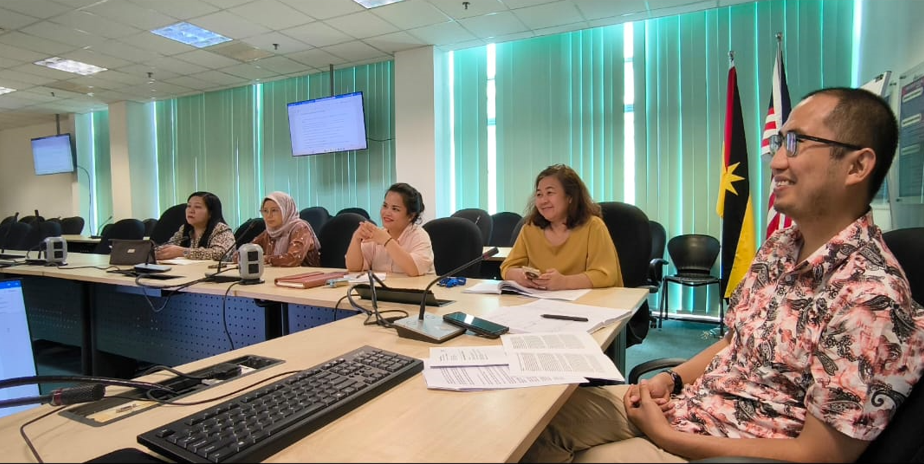
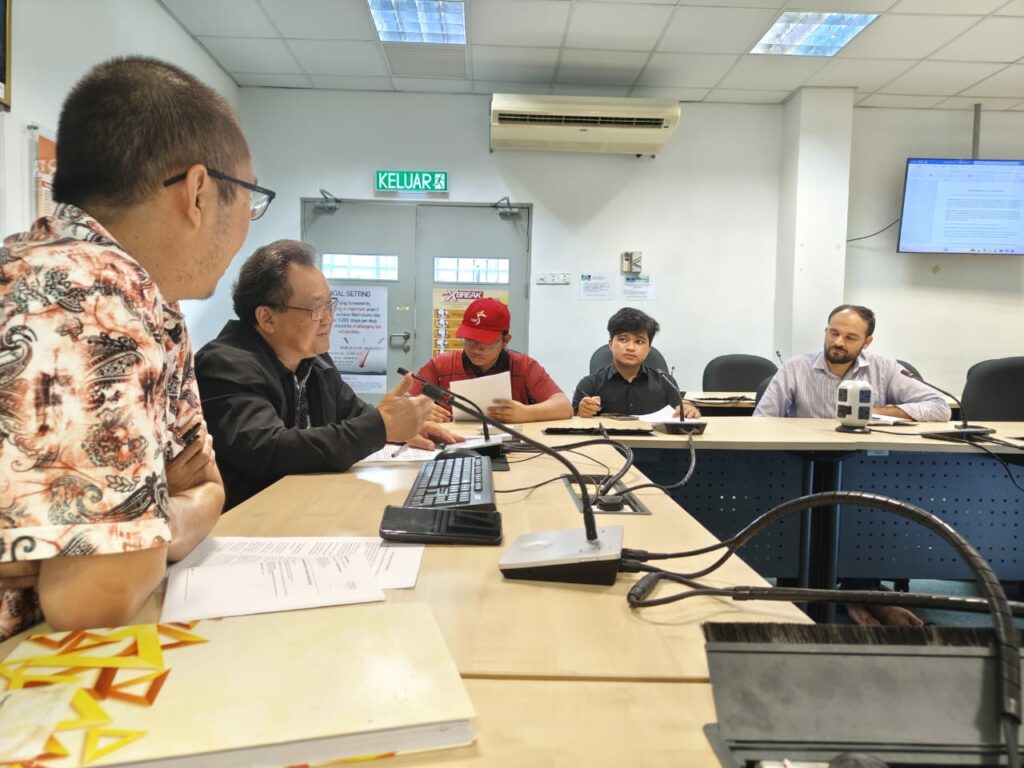
Overall, the PolGov Reading Circle was a resounding success, generating lively discussion, active participation, and critical engagement across academic levels. The programme strengthened understanding of classical political science scholarship, enhanced insight into ethnic and national politics, and fostered a collaborative academic culture among lecturers and students alike.
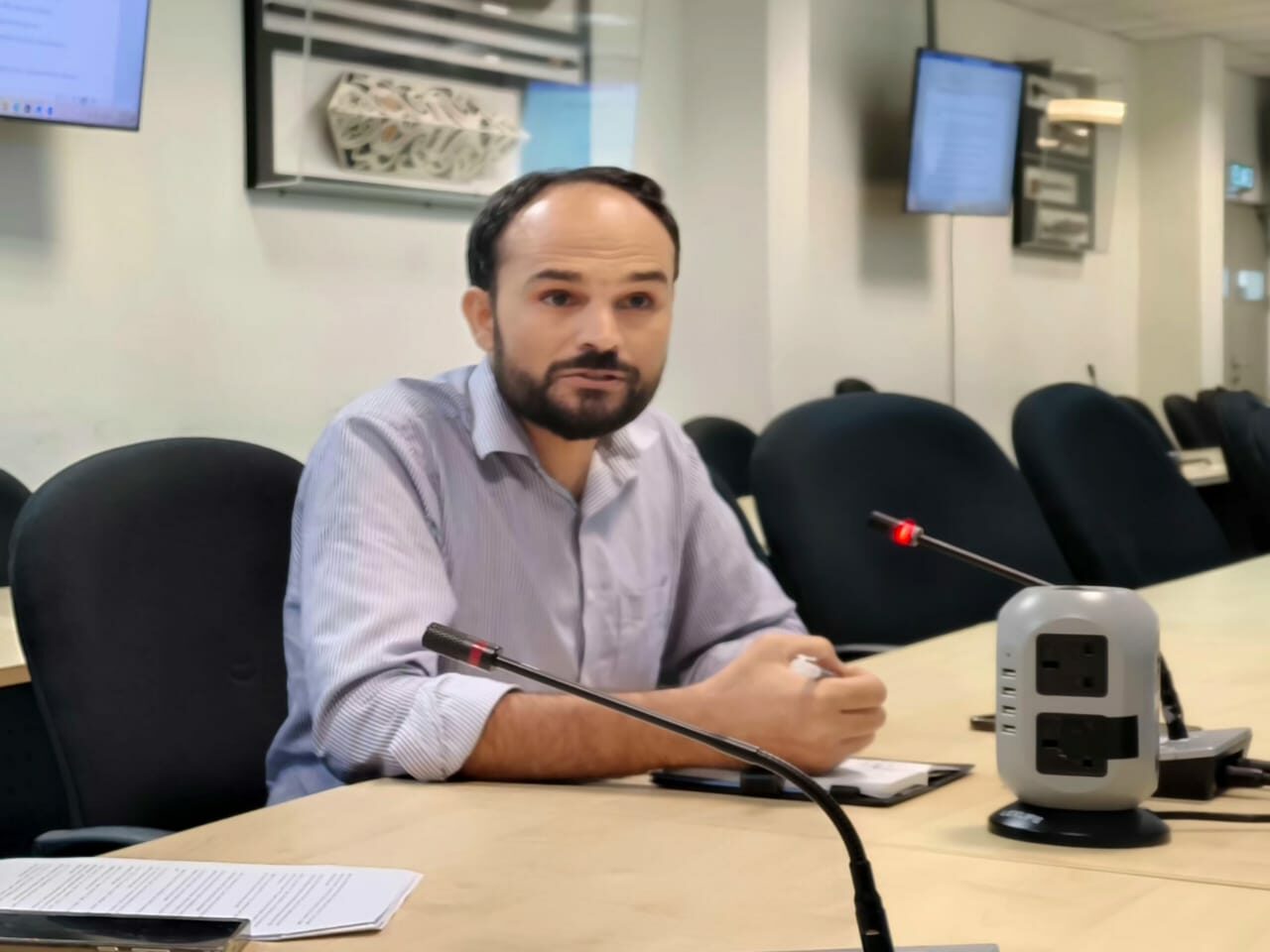
Sajjad Ahmed, a postgraduate student at FSSH, said he learned a lot while attending the Reading Circle. “I had been struggling to connect what I had read and my arguments to a broader theoretical framework., and after listening to the presentation, it has become much clearer,” said Sajjad after the session.
Organisers expressed hope that the Reading Circle will continue as a regular intellectual platform within FSSH, promoting sustained engagement with foundational texts and stimulating informed discussion on contemporary political issues.
FSSH – A Partner for Social Change