Written by Jesica Jen (Politics and Government Studies Programme)
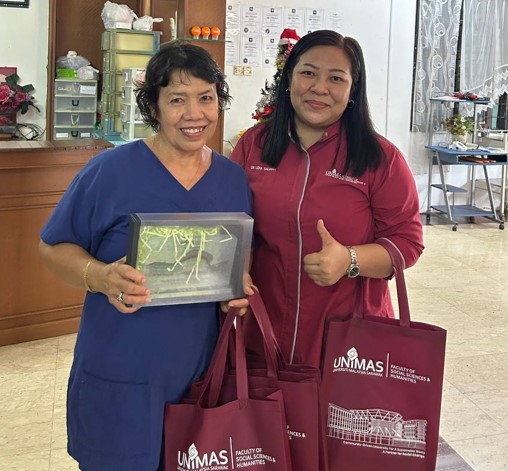
Community-based programmes at the university level play a vital role in enriching student learning beyond the classroom while fostering holistic, empathetic, and well-balanced personal development. In an increasingly fast-paced and individualistic society, such programmes provide students with valuable opportunities to reconnect with human relationships and to better understand the lived realities of elderly individuals, who often face challenges related to loneliness, health, and limited social support. In line with this objective, the third-year students of the Politics and Government Studies programme, Faculty of Social Sciences and Humanities (FSSH), organised POLGOV Bond: Building Warmth Across Ages at the Splendid Care Centre, Kuching. The programme successfully involved 22 students and six lecturers, including the Programme Advisor, Dr Leha Saliman, during the visit held on 12 December 2025.
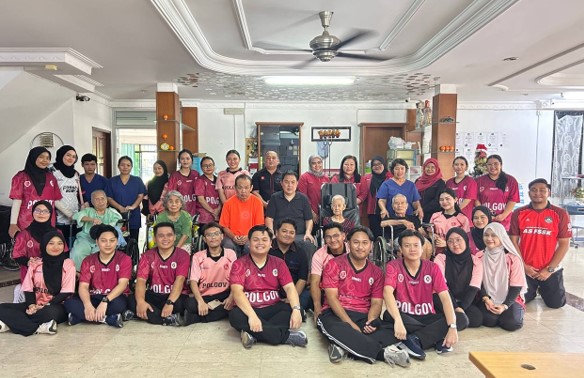
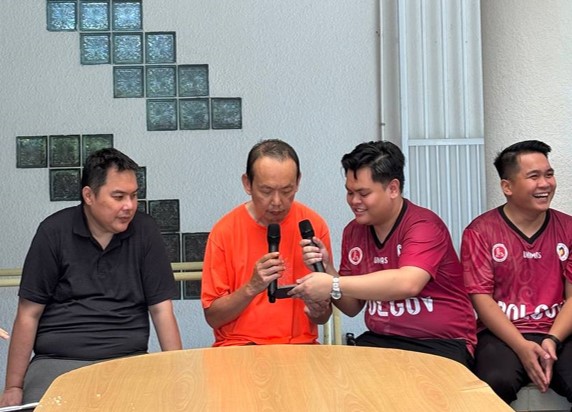
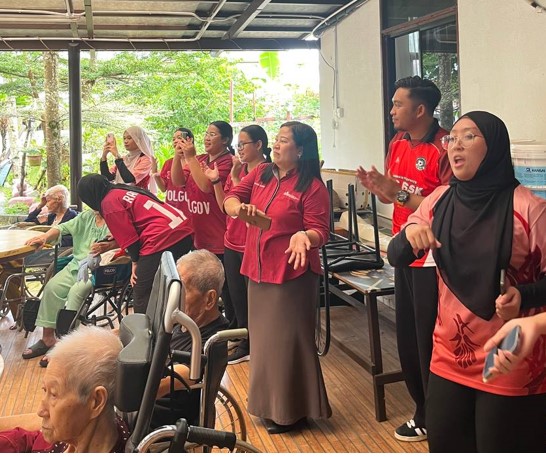
Organised under the POLGOV Society, the programme was guided by clear objectives to nurture humanitarian values, enhance intergenerational communication, and cultivate a strong spirit of volunteerism among students. The half-day programme commenced with a warm welcoming address by a representative of the Splendid Care Centre, Ms Miting, who encouraged participants to remain socially responsible and attentive to the needs of elderly members of society (Figure 2). The programme continued with a series of mini activities and interactive games, including group singing sessions (Figure 3), which successfully created a joyful and welcoming atmosphere while strengthening bonds between students and residents of the care centre.
Overall, the programme supports several Sustainable Development Goals (SDGs), particularly SDG 4: Quality Education, by promoting inclusive, meaningful, and experiential learning. Through direct community engagement, students were able to apply communication skills and humanities-based values such as empathy, teamwork, and social responsibility in real-life contexts. In relation to SDG 10: Reduced Inequalities, interactions between students and elderly participants helped bridge generational gaps and reinforced the importance of social inclusion. Meanwhile, SDG 11: Sustainable Cities and Communities was reflected in efforts to foster a caring, inclusive, and harmonious community environment where individuals of all ages feel valued and respected.
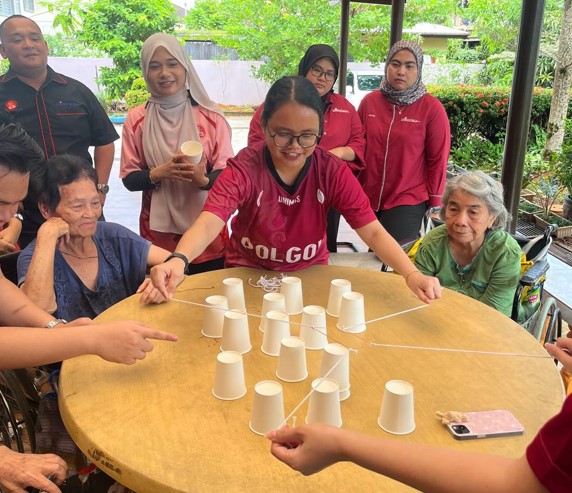
In conclusion, POLGOV Bond: Building Warmth Across Ages demonstrates that community service and social engagement not only bring meaningful benefits to elderly participants but also cultivate empathy, civic responsibility, and social awareness among younger generations. Through simple yet impactful activities, the programme illustrates how cross-generational relationships can be nurtured in enjoyable and meaningful ways, contributing to the development of a more inclusive and compassionate society.
FSSH – A Partner for Social Change