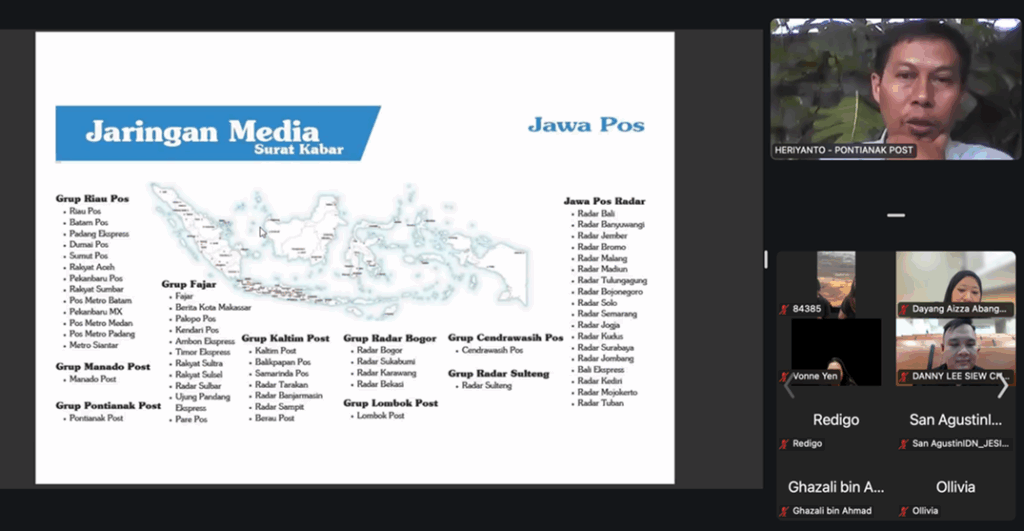
The Jawa Pos portal showcases collaborative journalism in action, as stories and visual content are shared across its network of newspaper agencies to enable large-scale, multi-platform news production across Indonesia.
By Dr Dayang Aizza Maisha Binti Abang Ahmad (Senior Lecturer, Strategic Communication Programme, FELC)
The importance of ethical journalism and media integrity in today’s digital landscape took centre stage during a special international lecture under the Faculty of Education, Language and Communication (FELC) Diverse/Global Learning (DGL) initiative on 4 December 2025. The session was organized as part of the Strategic Communication Programme’s core course PBK4194 Seminar on Issues in Strategic Communication and featured Pontianak Post, the oldest and largest newspaper in West Kalimantan, Indonesia, under the Jawa Pos Group.
Founded in 1973 and formerly known as Akcaya, Pontianak Post shared its professional practices in navigating the complex challenges of digital journalism through a lecture delivered by its Chief Editor, Heriyanto Sagia. The session provided students with critical insights into how media organizations balance speed, technology, and ethical responsibility in contemporary news reporting.
Heriyanto explained how the rapid expansion of mobile phone usage, internet access, and social media platforms in Indonesia has transformed news consumption patterns. To remain relevant, Pontianak Post has actively strengthened its digital presence through its website and social media platforms, allowing news to reach wider audiences beyond traditional print circulation. However, he stressed that technological advancement must always be guided by ethical principles and professional accountability.
A key discussion centred on the ethical responsibility of journalists in reporting sensitive issues such as border-related news. These areas, which are closely linked to immigration, trade, and national security, require careful verification to prevent misinformation. Environmental reporting, including disasters such as floods, illegal logging, and palm oil plantation activities, was also highlighted as an area that demands high ethical sensitivity, particularly in the use of visual content to accurately reflect community realities.
The lecture also highlighted the role of collaborative journalism within the Jawa Pos media network, where stories and visual materials are shared across its newspaper agencies nationwide. Although this allows for large-scale, multi-platform news production, Heriyanto emphasized that ethical gatekeeping and editorial oversight remain essential to ensure accuracy and integrity across all shared content.
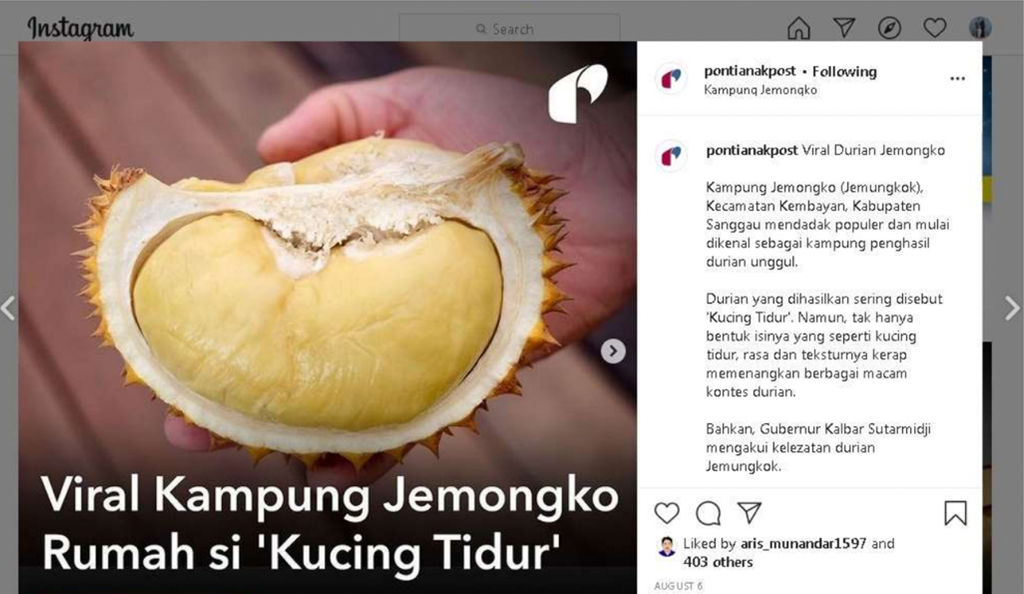
Social media ethics formed another major focus of the session. Instagram-based visual storytelling was discussed as an effective tool for audience engagement, with the viral story of Durian Jemongko in Entikong serving as a case example. The viral coverage brought renewed attention to the border town between Indonesia and Malaysia and contributed to increased local durian sales. Such engagement may benefit local communities, but Heriyanto advised that viral culture must not compromise verification, context, and journalistic responsibility.
He further warned that the speed of social media and messaging applications has intensified the spread of misinformation and disinformation. Without proper verification, misinterpretation of content may easily occur, triggering public confusion and even social conflict. This, he stressed, reinforces the crucial role of professional journalists in safeguarding public trust.
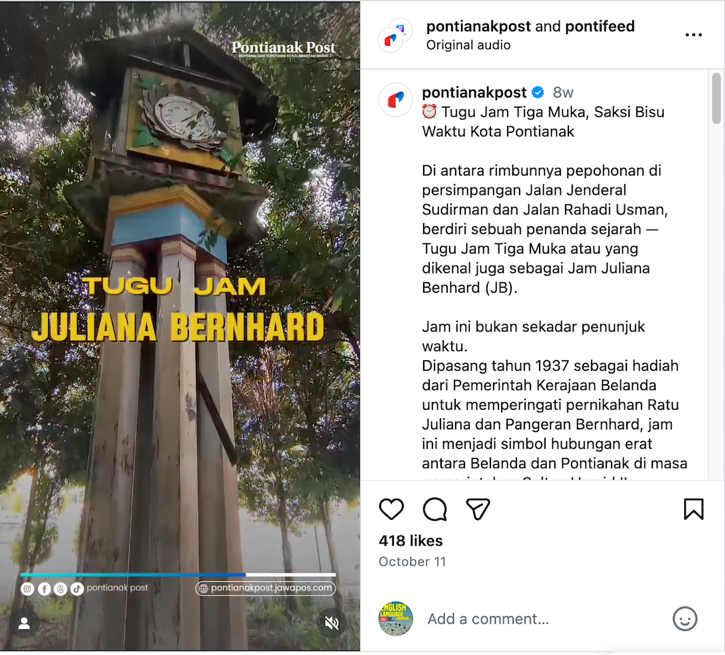
The ethical implications of artificial intelligence (AI) in journalism were also critically examined. Although AI is increasingly used for language editing, search engine optimisation (SEO), and the enhancement of historical visuals, Heriyanto emphasised that AI can never replace human judgement, humanitarian values, and narrative depth. He cited the example of the historic Tugu Jam Tiga Muka or Jam Juliana Bernhard (JB) in Pontianak, installed in 1937 as a gift from the Dutch royal government. A digitally enhanced archival video revived public interest in the heritage site, eventually prompting restoration efforts by the local authorities.
Despite such positive outcomes, Heriyanto cautioned strongly against the unethical use of AI, particularly deepfake technology that threatens media credibility. He stressed that AI-generated content must be disclosed transparently and should never be used to manipulate photo visuals, as visual exaggeration directly undermines public trust and journalistic integrity. Human editors, he affirmed, must remain the final decision-makers in all editorial processes.
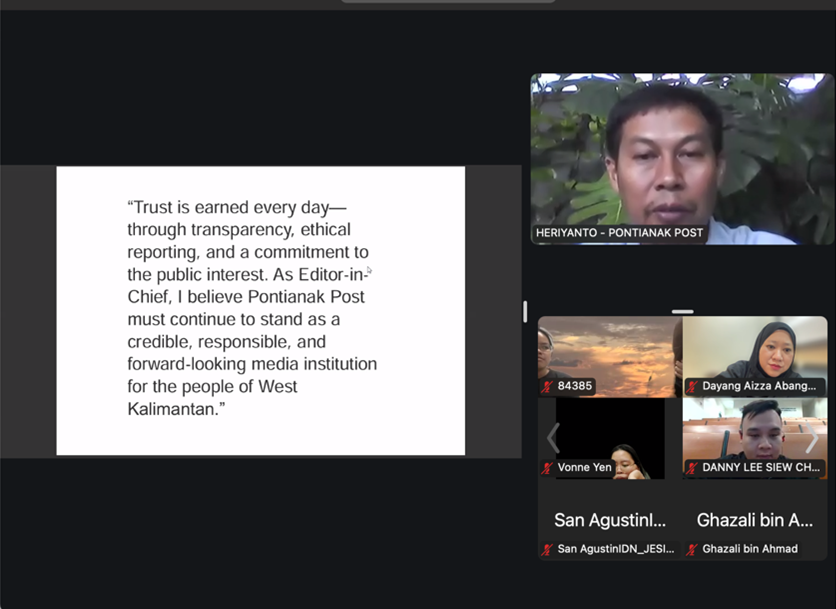
Journalism ethics during politically sensitive periods, especially elections, were also emphasised. Students were reminded to maintain neutrality, avoid conflicts of interest, and exercise professional restraint in both written and visual reporting. Trust, Heriyanto reiterated, is the foundation of credible journalism and the cornerstone of public accountability.
The session also examined ethical responsibilities during crisis reporting. In crisis situations, public safety must always take precedence over breaking news. Media personnel must position themselves behind official operations, conduct on-site verification, and practice responsible reporting at all times. Students were also introduced to Indonesia’s Undang-Undang Informasi dan Transaksi Elektronik (ITE), which governs electronic transactions and citizen journalism. Under this law, individuals can face legal action for digital misconduct, reflecting stricter governance over online content and reinforcing legal accountability in the digital media environment. These regulations also protect content creators and media publishers, supporting the sustainability of responsible journalism.
This special lecture session reflects FELC’s Strategic Communication Programme’s continuous commitment to cultivate ethical, globally informed communication professionals through the DGL initiative. Delivered through physical, hybrid, and fully online platforms, the initiative actively engages international speakers from both academia and industry to enhance students’ global awareness, cross-cultural understanding, and professional values.
The session, aligned with PBK4194’s course learning outcomes, help students analyze real-world strategic communication issues within society, supporting SDG4 (Quality Education) by strengthening critical thinking and media literacy. In addition, the involvement of international industry partners reinforces SDG 17 (Partnerships for the Goals) by exposing students to collaborative, cross-border perspectives. Through these engagements, students learn to develop informed, contextually grounded responses to contemporary communication challenges.
The session attracted over 100 participants, comprising students and academic staff from UNIMAS and partner universities.
For collaborations on media and communication talks or seminars, enquiries may be directed to the PBK4194 Course Coordinator, Dr. Dayang Aizza Maisha Abang Ahmad, at aadamaisha@unimas.my.