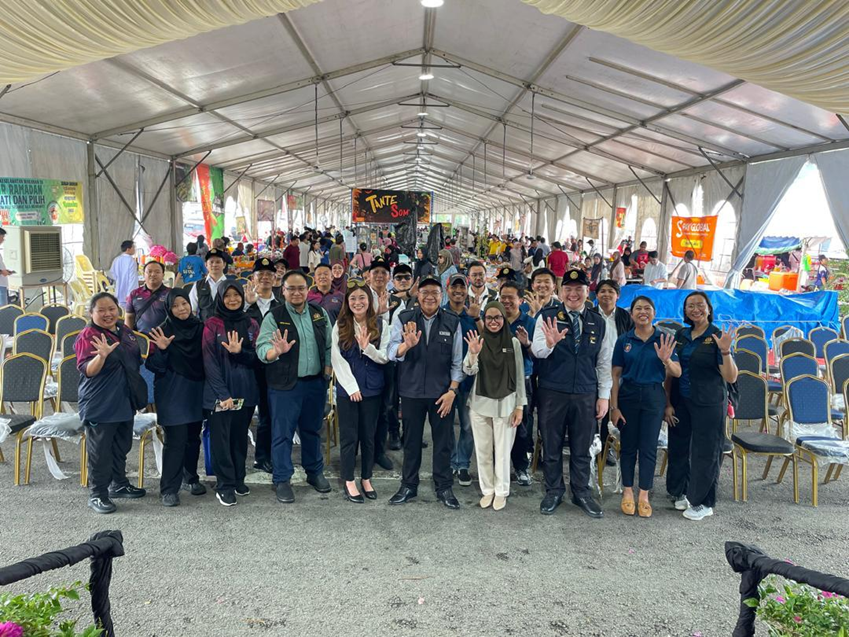
By: Cohort XVI MPH 2025/26
For those of us in the Master in Public Health (MPH) programme, public health law often feels like a collection of dense textbooks and complex legal clauses. However, this March, our cohort traded the lecture hall for the “real world” to see how Malaysia’s health legislation actually breathes when the sun hits the pavement.
More Than Just a Walk in the Bazaar
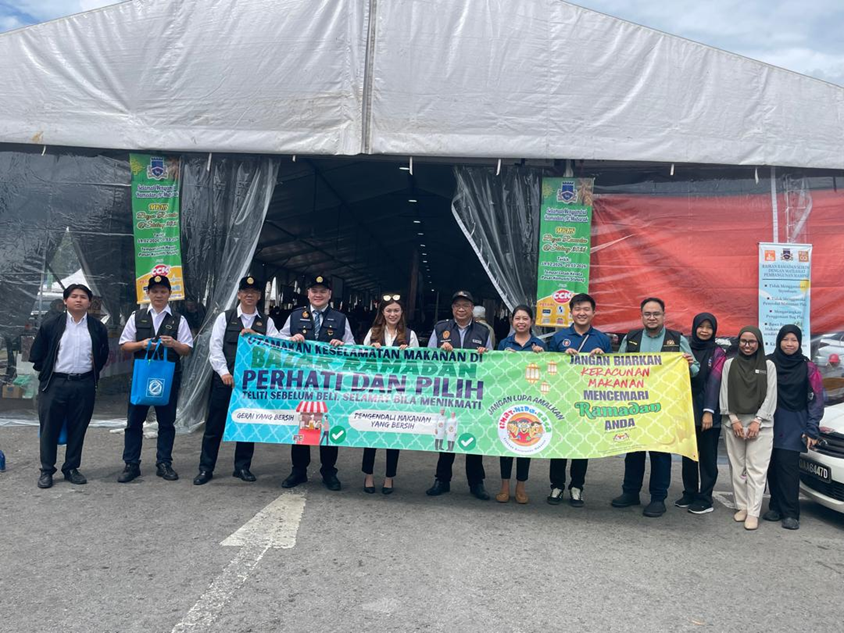
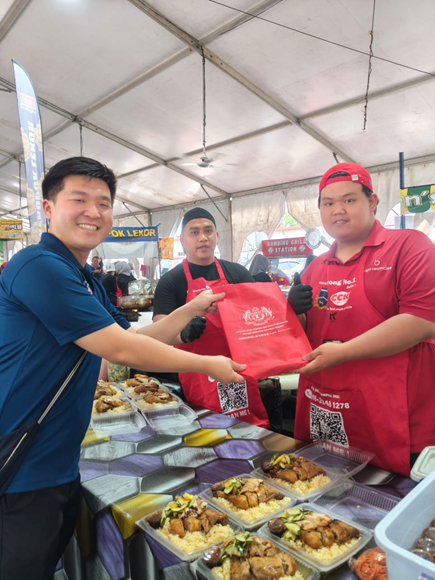
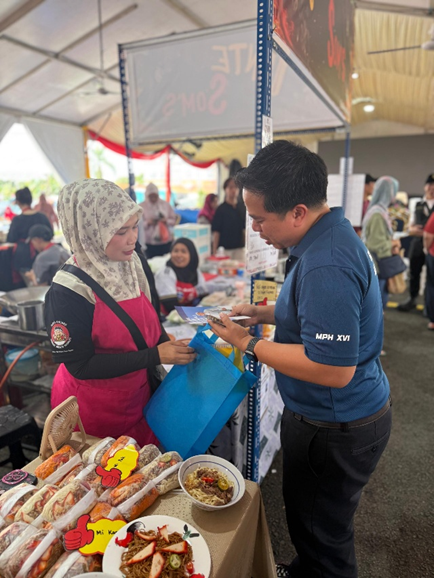
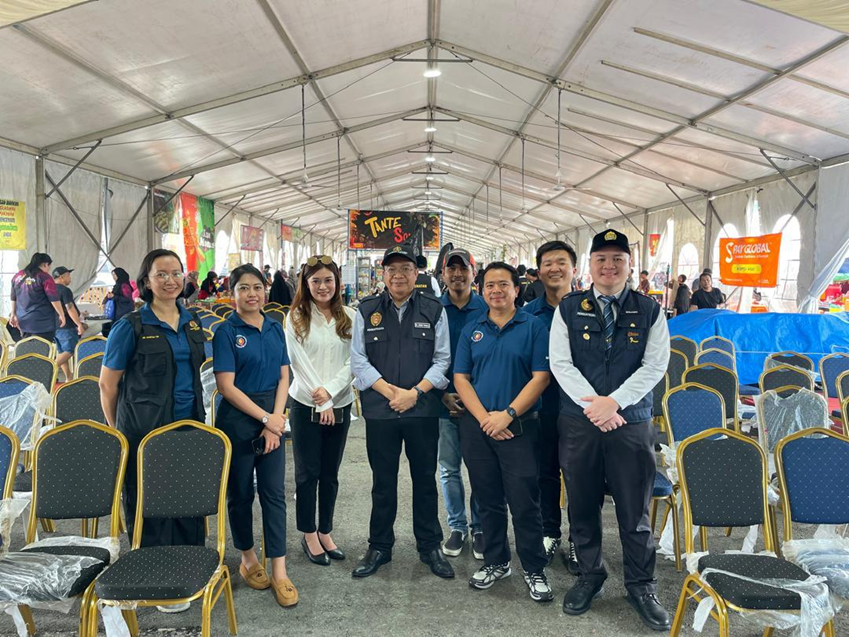
On 6 March 2026, we joined the Kuching Divisional Health Office and the Kuching South City Council (MBKS) for a walkabout at the Stutong Ramadan Bazaar. It was not just about the sights and smells of the food; it was a masterclass in the Food Act 1983. Watching officers inspect stalls taught us that food safety isn’t just about “checking boxes.” It is a delicate balance of enforcement and education. We realised that a simple hairnet or a clean apron is not just a rule but it is the primary defence against a foodborne illness outbreak that could affect hundreds of families. Seeing the Food Safety and Quality Section in action showed us that public health is as much about building a rapport with local vendors as it is about issuing notices.
Navigating the “No-Smoking” Zones
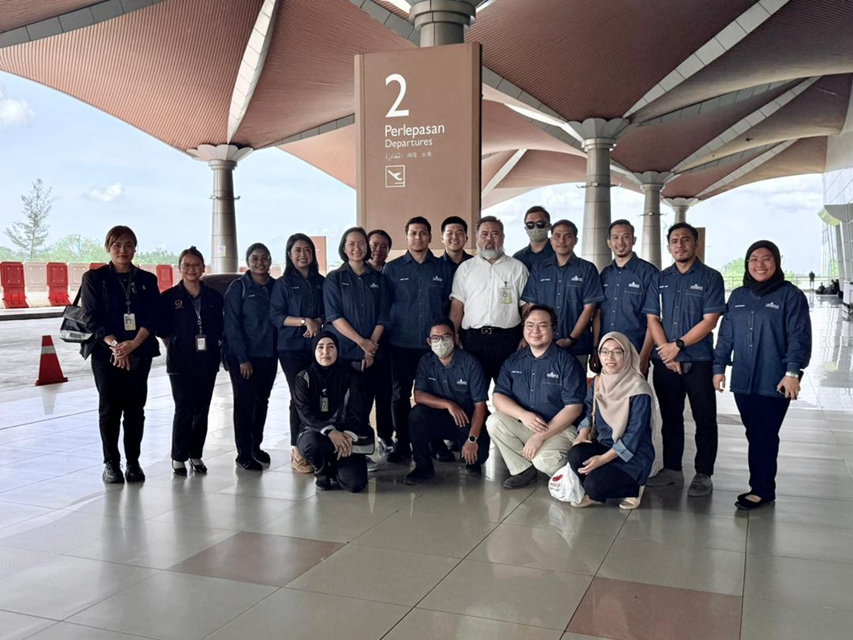
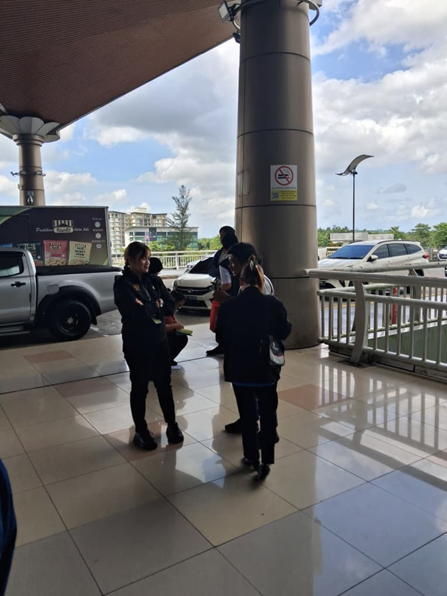
A week later, on 12 March, the environment shifted to the high-pressure corridors of Kuching International Airport. Here, the focus was the newly implemented Act 852 (Control of Smoking Products for Public Health Act 2024).
Working alongside the Royal Malaysia Police (PDRM), we saw firsthand the complexities of managing smoke-free zones in a space that never sleeps. It was an eye-opener: How do you enforce a ban firmly yet politely in a crowd of hurried travellers? It is one thing to read a “No Smoking” sign; it is quite another to witness the logistics required to organise and maintain clean air for the public.
The Big Picture: Bridging the Gap
These field sessions bridged a massive gap for us. We walked away with three key realisations:
- Law is a tool, not just a rule: Effective enforcement often requires 80% communication and 20% documentation.
- Collaboration is vital: Public health cannot function in a vacuum; it relies on the seamless cooperation of city councils, the police, and the community.
- Empathy drives policy: Seeing the faces of the people these laws protect makes our future roles as health officers feel much more “real.”
A Note of Thanks We would like to extend our deepest gratitude to Kuching Divisional Health Officer Dr Johnny Pangkas for facilitating this invaluable experience. To the Assistant Environmental Health Officers and the PDRM team at KIA: thank you for your patience and for showing us the “grit” behind the technicalities of public health policy.