By Audrey Liwan
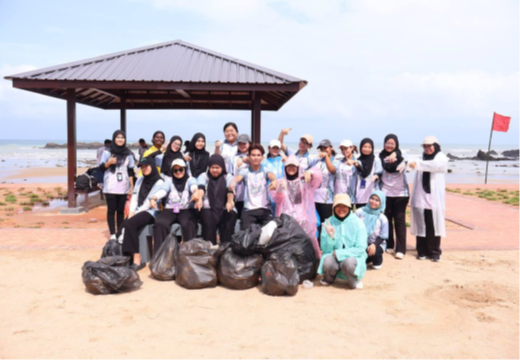
A community-based clean-up initiative titled “Program Jalinan Komuniti” was successfully conducted on Saturday, 10 January 2026, at Kampung Telok Melano, Sematan, involving village and beach cleaning activities that emphasized environmental responsibility and community engagement. The program was organized as part of the EBC2013 (Resource and Environmental Economics) course and involved 92 second-year students from the Business Economics Program, Faculty of Economics and Business, Universiti Malaysia Sarawak (UNIMAS). The initiative directly contributed to Sustainable Development Goal (SDG) 11, which focuses on building sustainable cities and communities through improved waste collection and management practices.
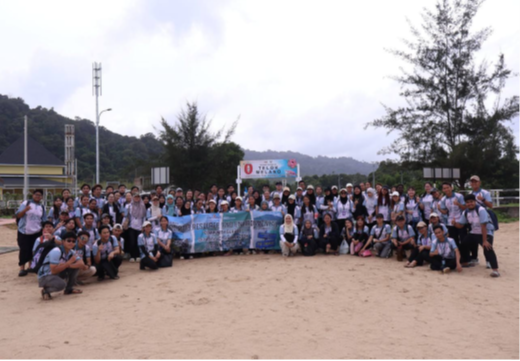
“Program Jalinan Komuniti” is an integral component of the EBC2013 curriculum, designed to bridge academic learning with real-world community engagement. Through collaborative and meaningful activities, the program aims to strengthen the bond between university students and local communities while aligning academic objectives with civic duty. This particular edition sought to foster a spirit of togetherness, promote shared social responsibility, and encourage mutual support within the Telok Melano community.
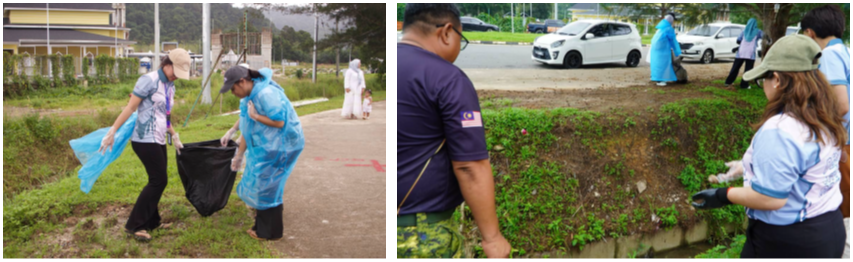
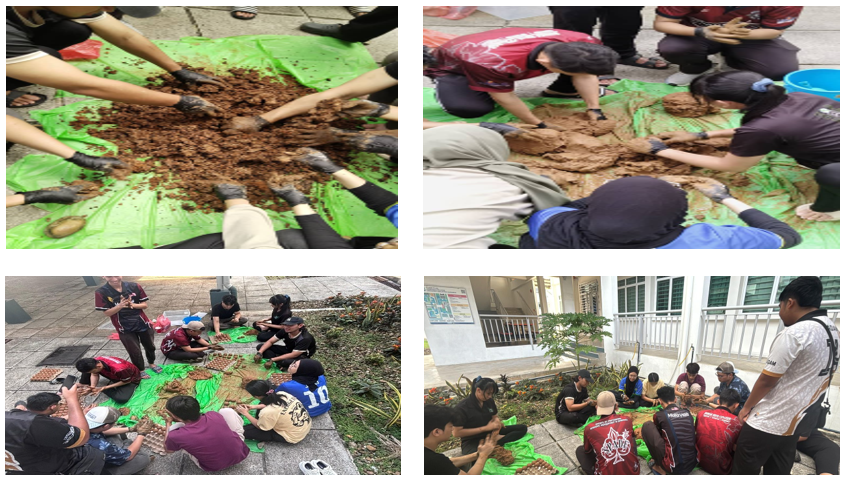
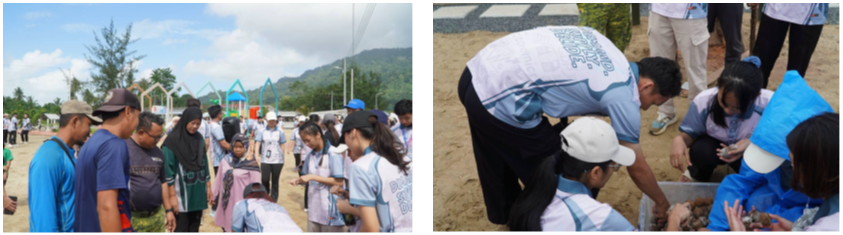
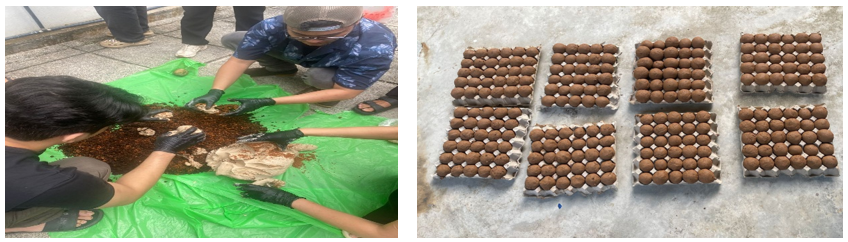
The clean-up activity was carried out using a combined mudball and nature walk approach. Participants engaged in the preparation and use of mudballs, a method often associated with environmental remediation, as part of the waste management and clean-up process. This was complemented by a coordinated nature walk along the beach, during which students and community members systematically collected scattered rubbish and solid waste. The approach ensured thorough cleaning of the coastal area while allowing participants to engage directly with the natural environment.
The program produced several positive impacts for both the community and the university. It functioned as an educational platform that increased community awareness and participation, highlighting the importance of environmental sustainability and responsible solid waste disposal practices. The involvement of lecturers and students also positioned them as role models and advocates for environmental stewardship, encouraging positive behavioural change and the continuation of similar initiatives in the future. In addition, the program successfully strengthened university–community ties, fulfilling the core aim of jalinan or connection between UNIMAS and the residents of Kampung Telok Melano.
From an academic perspective, students gained valuable hands-on experience in planning and implementing a community outreach program. The activity enhanced their understanding of environmental economics and community project management by translating classroom knowledge into practical and real-world applications. Overall, the beach cleaning and waste management initiative at Kampung Telok Melano stands as a commendable example of an academic–community partnership. By improving the local environment, fostering social responsibility, and enriching student learning, the program demonstrated how higher education institutions can contribute meaningfully to sustainable development goals while strengthening their engagement with local communities.